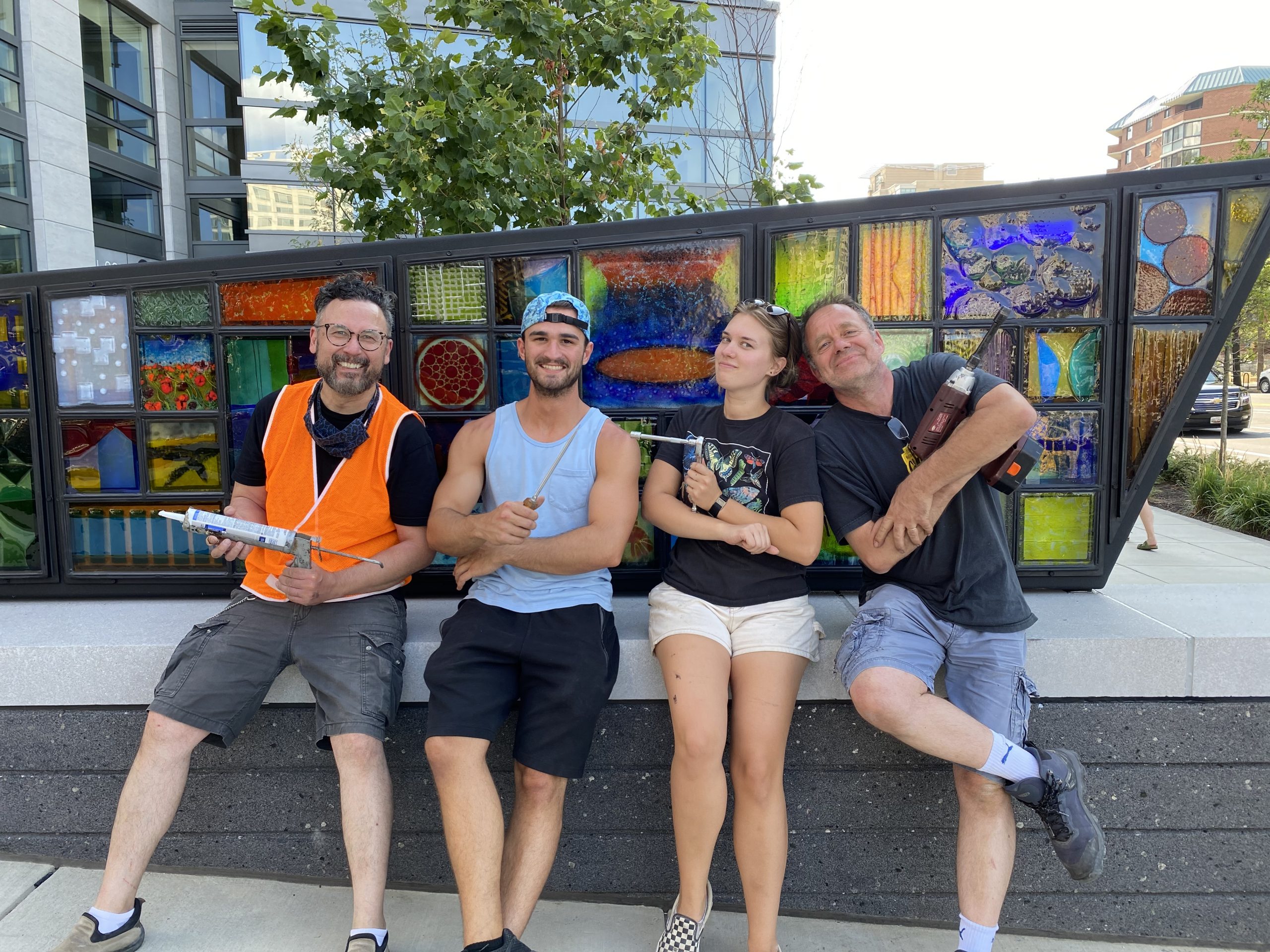
WGS Resident Artist Spotlight: John Henderson, Jr.

“The rhythm of the drum…

For Washington Glass School resident artist John Henderson, Jr., working with glass is both a creative pursuit and a spiritual practice. Since discovering kiln-formed glass at WGS, he has embraced the material’s beauty, technical challenges, and inherent unpredictability.

Discovering Glass

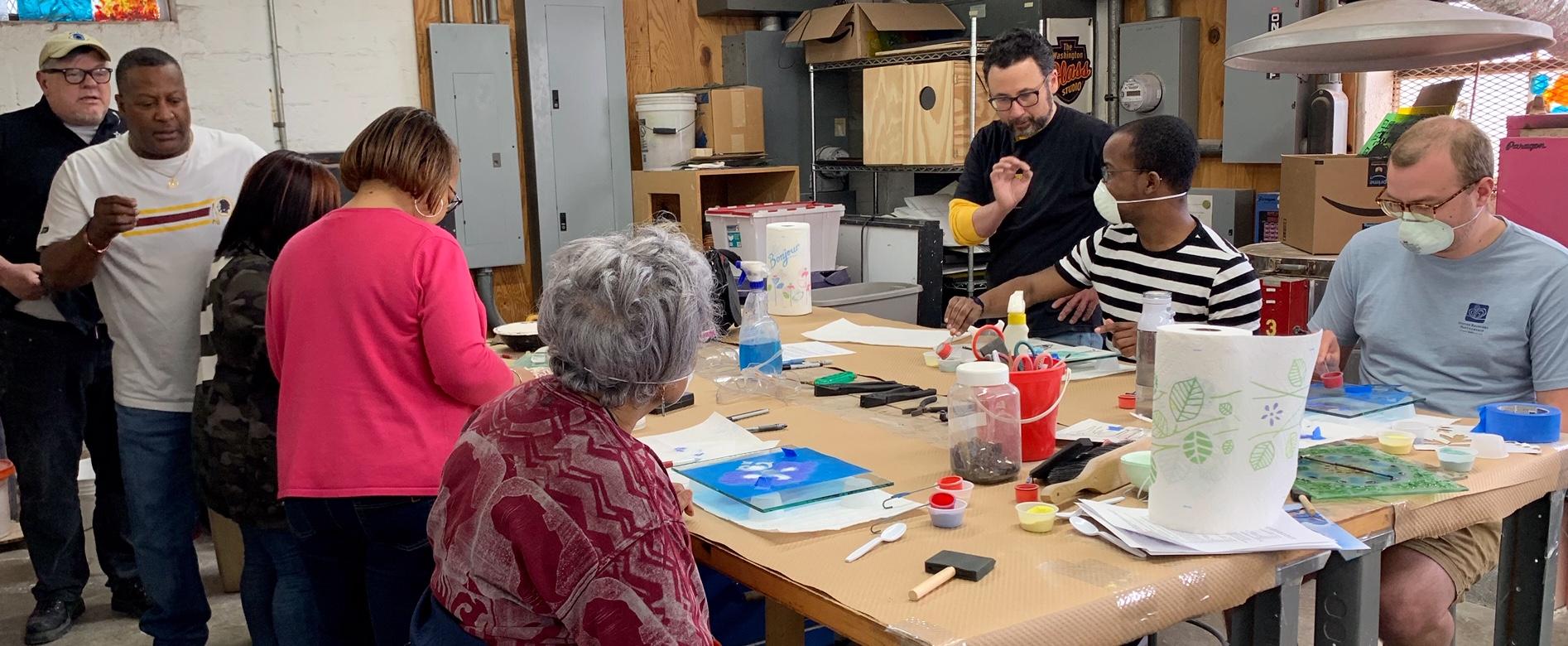
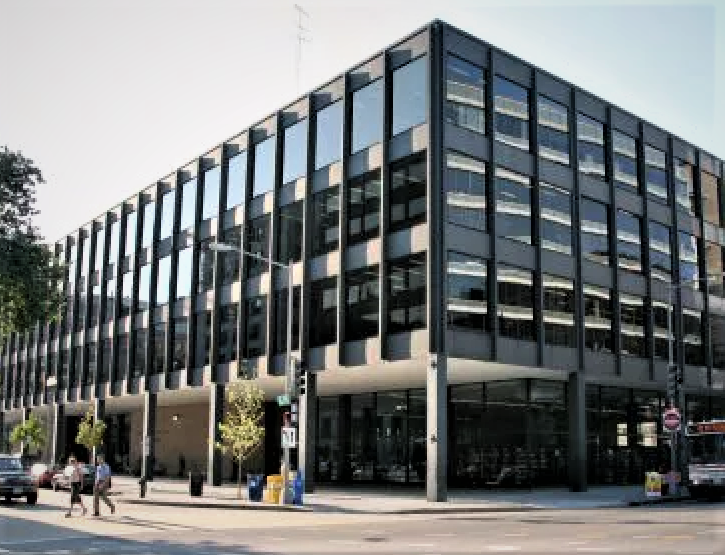
John’s introduction to Washington Glass School came while taking a stained glass class in the shared building that housed both the Washington Sculpture School and WGS.

“I had never worked with fused glass before,” he recalls. “As a result of taking a class at WGS, I became hooked on the process.”

What first attracted him was glass itself—its remarkable range of colors and textures, and the technical possibilities it offered. But it was something less tangible that kept him coming back.

“I enjoy working with my hands and creating beautiful objects,” he says. “The material has a spiritual quality due to its unpredictability when fire is applied. Not knowing the outcome is, in itself, stimulating and emotional.”

John Henderson “Warrior Shield”

Finding a Voice

Early in his artistic journey, John recognized something significant: very few Black artists were working primarily in glass.

Black Artists of DC (BADC) visit John Henderson’s studio space, October 2025. L-R Sharon Robinson, Jimmy James Green, Evalyn Hamilton & John Henderson at his studio in WGS.

“Glass as an artistic medium was not an established art form within the African American community,” he explains.

As his practice developed, opportunities followed—including exhibiting work, organizing exhibitions, and becoming an active member of the Washington Glass School community. Those experiences helped shape both his artistic direction and his commitment to expanding representation within the field.

John Henderson installs his work in the WGS Gallery.

The Value of Community

For John, one of the greatest strengths of Washington Glass School is the environment created by artists working together.

“I find working in a shared environment stimulating,” he says. “Sharing information with fellow artists, exchanging ideas, and participating in constructive conversations continues to influence my work.”

That collaborative atmosphere, he believes, is one of the things that sets WGS apart.

“There is no other facility in the DMV that provides a collective space for practicing artists whose primary medium is glass.”

Looking Ahead

As Washington Glass School celebrates its 25th anniversary, John reflects on being part of its continuing story.

“It is an honor and privilege to be a studio artist at WGS,” he says. “WGS has evolved into an artistic and educational center for everything having to do with the practice and techniques of using glass as an artistic material.”

His hope for the future is straightforward and ambitious:

“That Washington Glass School will be known as one of the premier glass centers in America.”


One More Question

If your work had a soundtrack, what would be playing?

“The rhythm of the drum.”

As Washington Glass School marks its 25th Anniversary, the celebration continues this fall with a major exhibition featuring works by Washington Glass School artists at the Brentwood Arts Exchange in Brentwood, Maryland. Running from September 10 through October 31, 2026, the exhibition will showcase the extraordinary diversity, innovation, and storytelling that have defined the School for a quarter century — offering audiences a chance to experience some truly remarkable contemporary glass art.

The exhibition opening reception will be held on September 19, 2026, bringing together artists, friends, collectors, students, and the larger arts community in celebration of 25 years of Washington Glass School. An artist talk is scheduled for October 17th, 2026.

The Experiment That Lasted 25 Years

Tim Tate co-founded the Washington Glass School to break every rule he’d inherited. A quarter century later, it’s still running — and so is he.

Washington Glass School in Mt Rainier, MD

The first thing you should know about Tim Tate is that he didn’t expect any of this to last.

When he and his co-founders — Michael Janis and Erwin Timmers — opened the Washington Glass School in the early 2000s, Tate gave the whole project maybe three years. He was running an experiment, not building an institution. The question driving it was deceptively simple: what would a glass school look like if it wasn’t tethered to the conventions of classic studio glass? Could it survive? Could it actually make something?

Twenty-five years and thousands of students later, the answer is self-evident.

Tim Tate circa 1999. (so young!)

Tate began his art career as a young HIV-positive queer man in the full, brutal heat of the AIDS crisis. He was the founder and director of the Triangle Artist Group in Washington, DC, and the director of the city’s first Art Against AIDS charity event — a benefit that raised funds for the newly established DC LGBTQ+ Community Center and the HIV-positive children’s ward at Washington Children’s Hospital. He was shaped by that community, trained in its values, fluent in its urgency. Civil rights and human justice weren’t themes he would later introduce into his work. They were the water he swam in from the beginning.

Tim Tate, “Two Paths Taken”, photo by Pete Duvall

That formation never left him. It structured how he thought about art, about purpose, and eventually about what a school could be.

_________________________________

The Washington Glass School was founded on a principle that sounds obvious but is, in practice, radical: everyone’s success is not achieved at the expense of anyone else’s. Tate had spent time in studios corroded by envy, watching artists diminish each other. He wanted something different. A rising tide, he believed, floated all boats — and so the school was built with that ethos embedded in its architecture.

Images from The Washington Post newspaper article about the Glass School, 2002. Photos by Mark Sypher.

The governance structure reflects the same logic. Tate, Janis, and Timmers operate as equal co-directors, each carrying a different set of responsibilities. When disagreement arises, they vote — and two out of three must agree. “We all had the same goal,” Tate says simply. “To keep the school alive and thriving.”

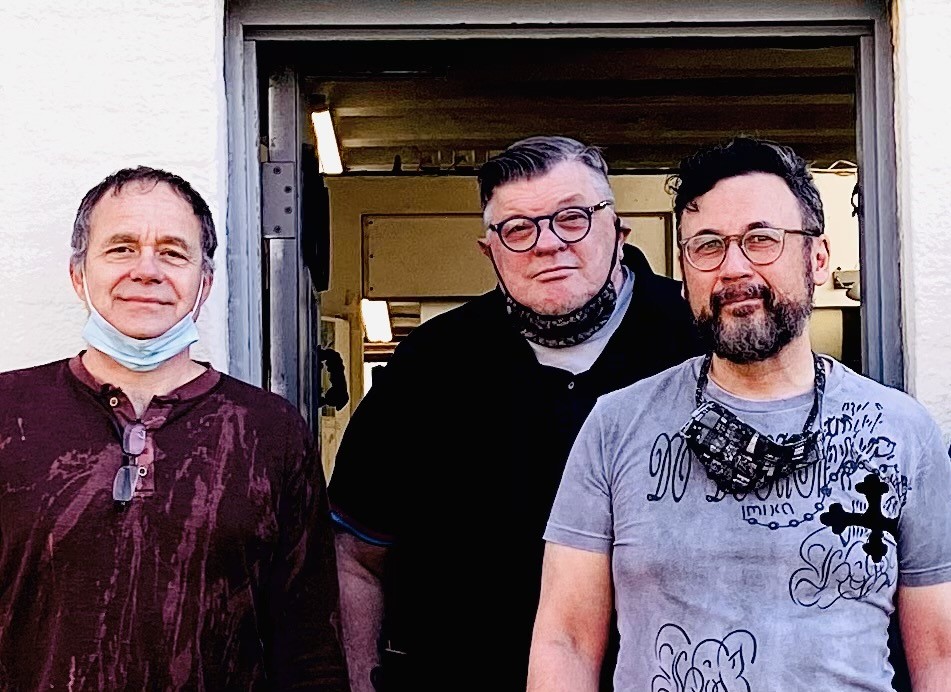
Washington Glass School directors in 2022, L-R the oh-so-handsome and super sexy compelling Michael Janis, Tim Tate and Erwin Timmers.
L-R Washington Glass School trinity: Michael Janis, Tim Tate, Erwin Timmers

That structure has held for 25 years. Not because there have been no disagreements, but because the underlying commitment was always shared.

_________________________________

The artistic agenda was never modest. Tate wanted to use electronics. Video. Wood, plastic, ceramics, paint. He wanted to find out what glass could become when it wasn’t required to stay within the boundaries drawn by 20th-century studio tradition.

Early on, he and William Warmus — the former curator of glass at the Corning Museum — founded a Facebook discussion group they called “Glass Secessionism,” a deliberate echo of Alfred Stieglitz’s Photo Secessionism movement. The name alone provoked. People were annoyed. Definitions were demanded. The two men eventually produced a 17-page warrant articulating what they meant.

Tim Tate and William Warmus reviewing artwork at Chicago art fair, 2014

Monica Moses, the then-editor of American Craft Magazine told them the controversy would be short-lived — that the ideas would simply become the norm. “And so it did,” Tate says now, with something closer to relief than triumph.

American Craft Magazine, April May 2014

Technology in his work, he explains, was never an end in itself. It was a tool. A metaphor. “A video was worth a thousand words” — an expansion of a single image, a way of deepening what glass alone could carry.

_________________________________

The work deepened alongside the politics. What had seemed to wane in the calmer early 2000s — the appetite for socially engaged art — came back hard as the political climate grew more charged. Today, one of Tate’s favorite classes to teach is called “Using Glass for Social Justice.” The curriculum, in a sense, is his biography.

Tim Tate, 12 Souls, 12 Resurrections, photo by Pete Duvall

His sculptures move through reliquary traditions and Victorian curiosity cabinets, through early cinema and the formal logic of Georges Méliès. They are blown and cast, embedded with video screens, built around found objects, animated by the tension between fragility and permanence that glass uniquely embodies. They hold names, poems, histories.

His piece Nine Future Supreme Court Justices imagines an LGBTQ+ legal future — nine figures, each identified, each carrying biographical weight. In Service, In Secret animates archival photographs of queer men and women in uniform, from the Civil War through World War II. When the Armor Becomes Wings places two glass figures in the act of shedding the armor of survival — one holding a crocus, one a red bird — beneath a blown glass dome crowned with a winged heart.

These are not decorative objects. They are arguments in glass.

_________________________________

The recognition has arrived steadily, and Tate wears it carefully. He has shown at the Venice Biennale exhibitions three times. He exhibited at the State Hermitage Museum in St. Petersburg before the Russia–Ukraine war made that world inaccessible. His work is held in the permanent collection of the Smithsonian American Art Museum and the Renwick Gallery. He designed the New Orleans AIDS Memorial.

New Orleans AIDS Memorial

He carries all of it back to DC deliberately. “I want DC and the glass school to be realized as major players in the art world,” he says. “It’s such a great city with astounding artists. I add what I can.”

_________________________________

Now comes the largest undertaking of his career.

Imagining Utopia: What Would America Look Like If It Were a Queer Accepting Country? is a major solo traveling exhibition that opens in September 2027 at the Katzen Arts Center at American University in Washington, then travels to the Lowe Art Museum in Miami, the Asheville Art Museum, and finally the Palm Springs Art Museum, where it runs through all of 2029. It is the kind of show that, as Tate acknowledges quietly, he couldn’t have imagined mounting a decade ago. He credits a seven-month collaborative relationship with the MacArthur Fellow Joyce Scott — an artist who works at the intersection of beadwork, performance, and social critique — as a turning point. Scott showed him the scale his thinking could reach.

Tim Tate, Charter of 36 Points of the LGBTQIA+ Bill of Rights, kiln cast glass, mixed media

The exhibition poses its question directly, without softening. It does not ask audiences to abstract the politics into aesthetics. It asks them to imagine — concretely — what a more accepting America would look like, feel like, be.

The piece The Common Thread, a six-foot collaborative cast glass tile wall made with Michael Janis, anchors the exhibition’s material ambition. The Resurrections series — which includes 12 Souls, 12 Resurrections — enacts a different kind of memorial, one that refuses finality.

Six-foot cast glass tile wall titled The Common Thread, collaborative artwork by Tim Tate and Michael Janis, presented as part of the Imagining Utopia exhibition. The work uses layered fused glass panels to explore collective memory and social justice themes alongside the Resurrections series (12 Souls, 12 Resurrections), which reframe memorialization through contemporary glass sculpture.
Tim Tate & Michael Janis, The Common Thread, 2026, 3′-0″ H x 6′-0″W, kiln cast glass, mixed media. Photo by Pete Duvall.

_________________________________

Ask Tim Tate what he’s most proud of that has nothing to do with his own artwork, and the answer comes without hesitation: Over 6,000 students in 25 years. A school that chose DC and that DC chose back.

Ask him what belief he’s completely reversed in 25 years: “That there is but one way to do anything. Everything has numerous paths.”

Ask him what he would do if he couldn’t make glass for five years: “I would become the world’s best pie maker.”

And ask him what would happen if that 25-year-old version of himself walked into the studio today — the young HIV-positive artist navigating the AIDS crisis, running benefits, learning to make things out of fire — and he pauses.

“He would probably start crying tears of joy.”

Stay tuned for exhibit updates!

_________________________________

The Washington Glass School celebrates its 25th anniversary this year, with a group exhibit at Brentwood Arts Exchange in Brentwood, MD. Tim Tate’s touring exhibition Imagining Utopia opens at the Katzen Arts Center at American University in September 2027.

The Art of the Fragment and the Necessity of Collage

Washington Glass School artists Michael Janis and Tim Tate featured in Rip! Tear! Collage as Critique at the Eye Street Gallery, opening June 11.

DC Commission on the Arts rip tear collage as critique art exhibit in washington, dc features acclaimed studio glass master Michael Janis

There is a particular kind of honesty in the torn edge. Unlike the clean cut, which implies control, intention, the world of the maker, a torn surface tells the truth about force. Something resisted; something gave way. The fragment that remains carries the memory of what it once belonged to, and the wound where it parted is part of the meaning.

When the DC Commission on the Arts and Humanities invited 23 District artists to explore collage and assemblage as forms of disruption, critique, and reconstruction, the exhibition they assembled — Rip! Tear! Collage as Critique, opening June 11 at the Eye Street Gallery — landed on something that feels genuinely urgent. This exhibition deliberately expands collage beyond paper: it includes quilting, video, sculpture, ceramics, and, importantly, glass – all aimed at mirroring the “fractured pace and layered realities of contemporary life.” It’s an exhibition grounded in disruption and reassembly.

For Michael Janis – Co-Director of the Washington Glass School and one of DC’s most rigorously conceptual glass artists – this isn’t metaphor, it’s method. His glass practice already is collage-like: each kiln-formed panel accumulates imagery and material in layers. Collage for Janis is not a style but a condition: as he has said, his work “explore[s] raw emotions and the fragility of the soul” by showing how one might present a calm facade while “distracted by inconsistent thoughts, beliefs, or attitudes”. In this way, Janis’s work embodies the exhibition’s premise that the self itself is a collage – held together by nothing more than the frame we choose to stand inside.

Michael Janis - a foremost voice in contemporary glass art creates acclaimed sculptural glass art that combines fused glass with video
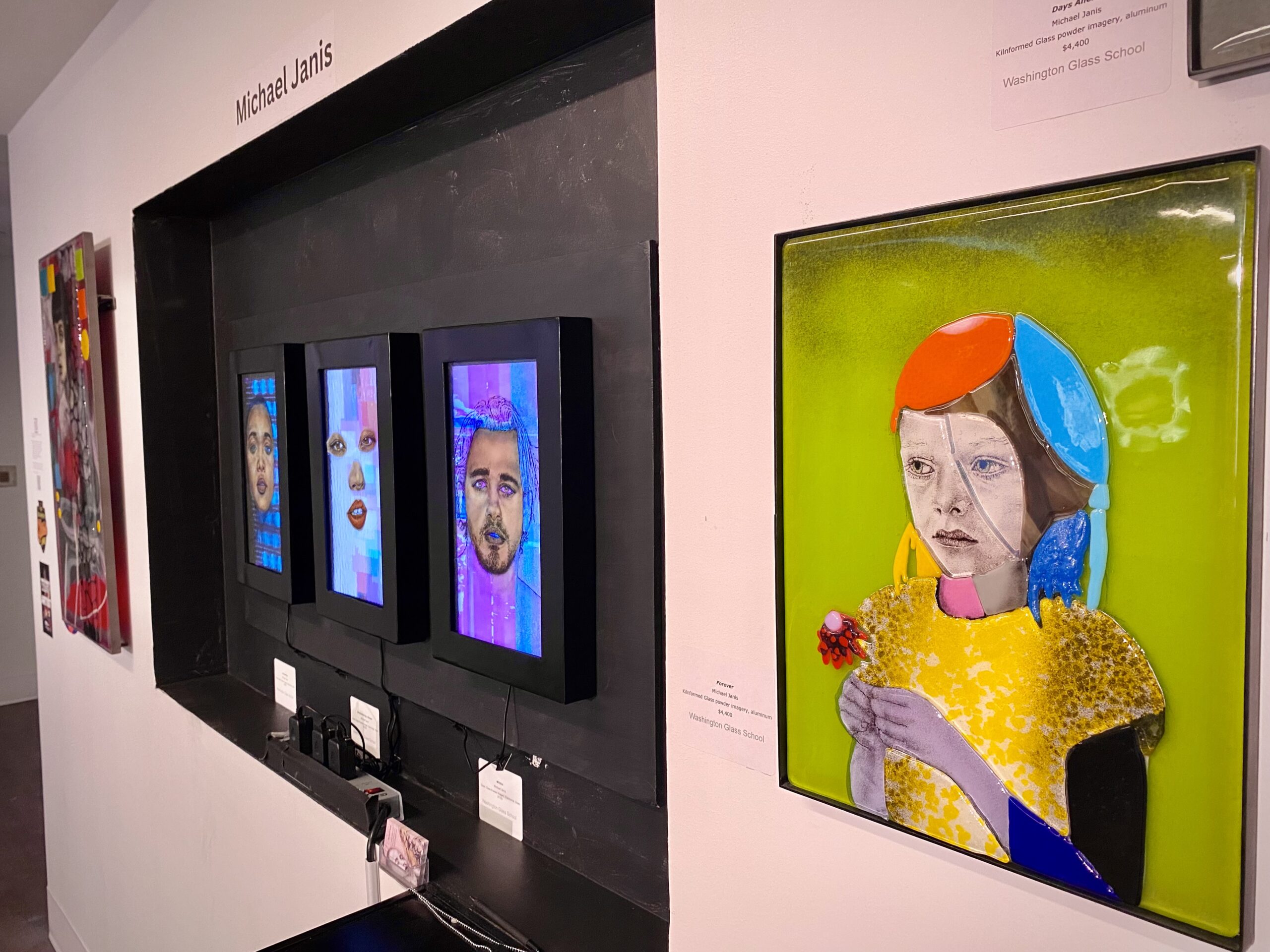
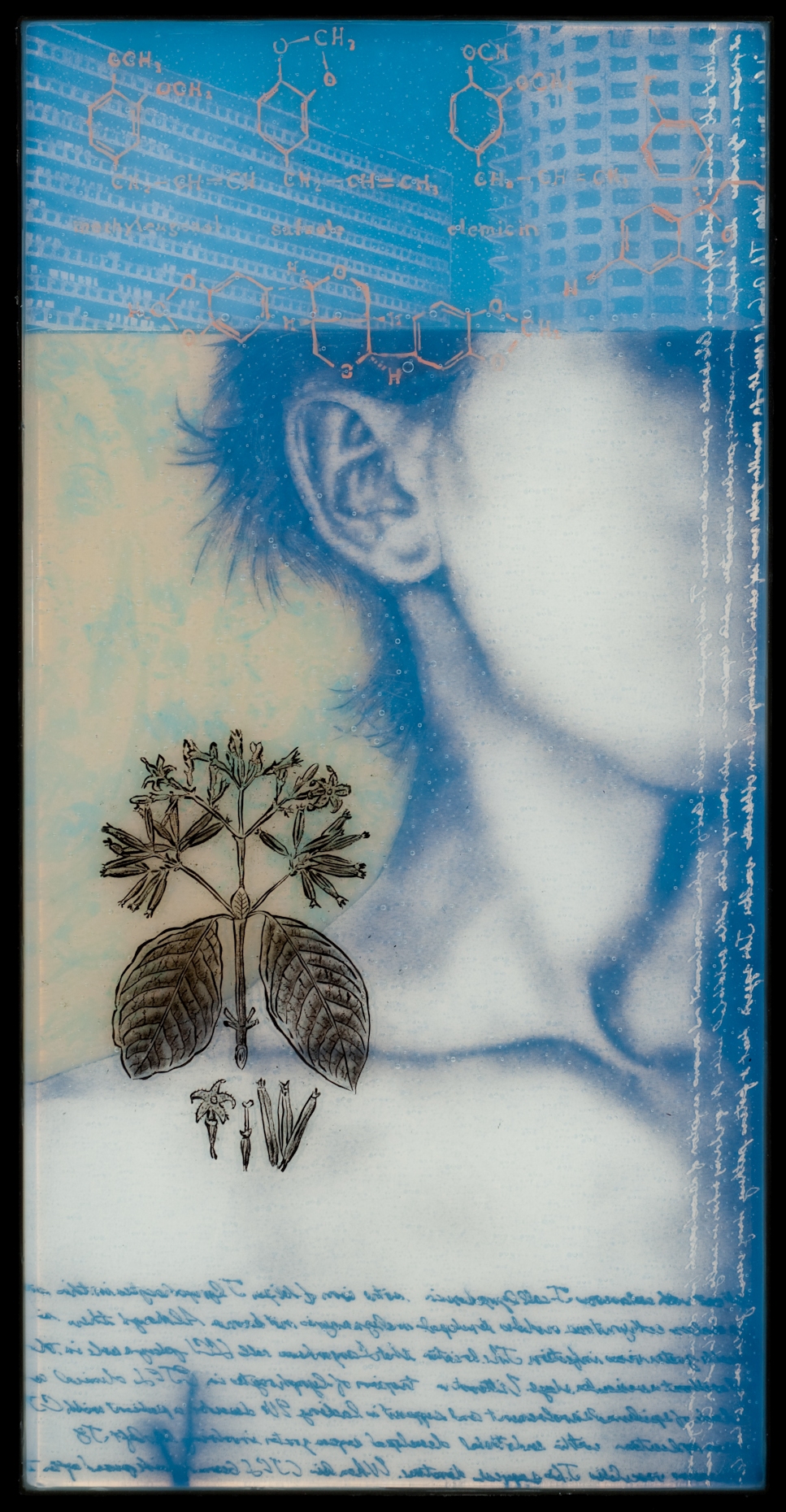
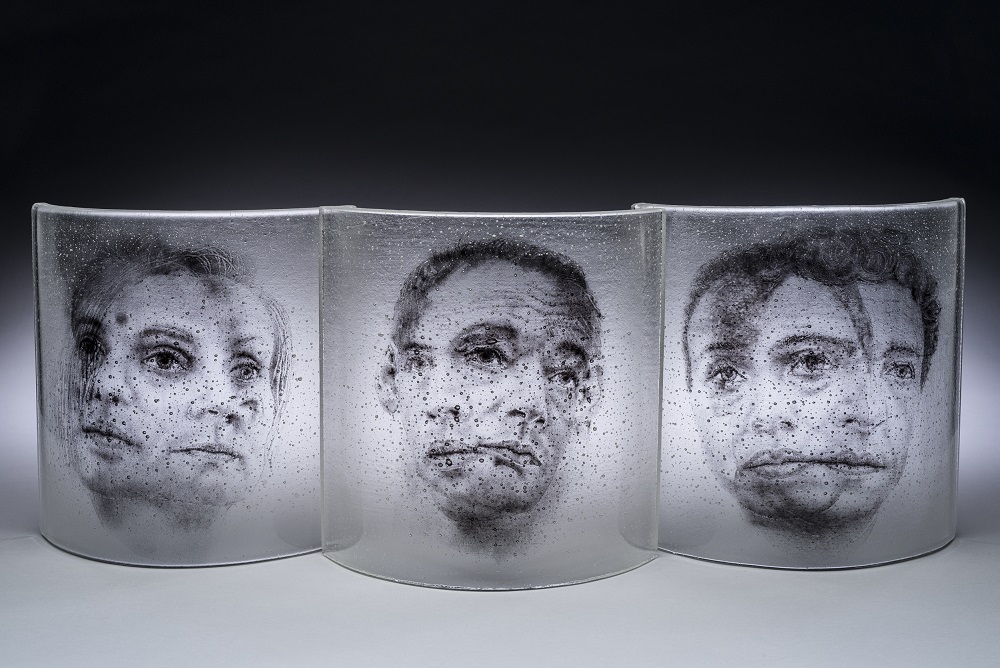
The Face in the Digital Hurricane- Michael Janis, “Within” 2024, Glass Powder Imagery, Electronics, Video, steel, 12”W x 18”H x 1.5”

For Rip! Tear!, Janis contributes a glass-and-video work titled “Within”. The piece centers on an unidealized human face – textured beard, a weary expression – looking out at the viewer. It is literally a portrait in kiln-formed glass powder, where each subtle shift of translucency was carefully applied. Behind and within that glass portrait, however, plays a flickering video loop of abstract light and color patterns. The digital animations pulse and flow behind the face, as if emerging from beneath the skin. In practical terms, this is collage: video and glass combined, layered to form a single image. In conceptual terms, it’s even richer. The face meets the viewer directly, “not performing” for the camera, while the embedded video suggests the private stream of digital noise we all carry in our heads – “the endless scroll” of images and information we can never turn off.

Janis describes Within as capturing “the unbearable contemporary condition of being a person with a screen in your brain.” We present ourselves – our faces – to the world, but behind that public image the “digital hurricane” swirls unseen. The effect is that Within is collage as philosophy: it asserts that identity is inherently fragmented. One reads a visage in the foreground, but the subject is held together by overlapping layers of memory, media, and meaning. This fusion of portraiture and video under glass deepens the show’s theme: collage here isn’t just about cutting and pasting materials, but about revealing how modern life is already a patchwork of contexts. Within fits naturally in an exhibition about reassembly, because it literally reassembles reality – a physical face and a moving digital backdrop – into a new image.

tim tate glass
Tim Tate, 12 Souls, 12 Resurrections, 2026, glass, mixed media, video

Tim Tate: Preservation as Resurrection
Washington Glass School founder Tim Tate is also featured in Rip! Tear!, with a new sculpture work. Tate’s approach resonates with collage’s spirit of salvage, though he comes at it from a different angle than Janis. As one critic noted, “Tim Tate could truly be described as a mixed-media artist” – his signature reliquaries combine hand-blown glass cases, found objects, electronic circuitry and small video screens. In his work in Rip! Tear!, Tate takes archival photographs – often of queer couples and individuals erased from mainstream histories – and “resurrects” them with an inventive re-creation as a looping video that brings a semblance of life or motion back to the images. A static portrait becomes something like a flickering memory, protected yet animate.

In Rip! Tear!, Tate’s inclusion signals how collage can be temporal as well as material. His work literally preserves and animates the fragments of history. He creates an intimate shrine to personal identity: the glass reliquary is both fragile and enduring, “it might have been found in an old church somewhere, flickering away in the darkness for centuries,” preserving something precious. By doing so, Tate reminds us that collage has always been about putting the forgotten or discarded back into the frame. Where Janis looks inward at our digital selves, Tate looks backward at the analog past. Together they show two sides of the same coin: that both individual identity and collective memory are made of pieces we must hold together.

Washington Glass School in the Exhibition
What Rip! Tear! makes visible – and what the presence of Janis and Tate confirms – is that glass has urgent relevance in a collage context. Glass is a medium of paradox: it’s transparent yet opaque, fragile yet millennia-old, immediate yet containing ages. As a material practice, glass itself collages light and shadow. Janis and Tate have spent decades treating glass as a conceptual tool, not just a craft. This exhibition places their work alongside 21 other artists (painters, sculptors, video artists, quilters, etc.) using collage tactics. It opens a conversation about DC’s creative community: about how art can reconstruct meaning from rupture, whether social, personal or historical.

Together, Janis and Tate embody Washington Glass School’s broader mission. Their work pushes glass beyond studio technique into contemporary discourse – into public art, memorial, media theory, and social justice. Seeing Within next to fabric quilts or a sound collage underscores that a glass panel can carry the same weight as any painting or sculpture in discussing today’s fractured world. For WGS, Rip! Tear! is a chance to champion glass as a cutting-edge medium for critique and change.

Opening Reception: Wednesday, June 11, 2026, 6–8 PM at the DC Commission on the Arts and Humanities (Eye Street Gallery)
.
Exhibition Dates: June 11 – August 7, 2026 (Eye Street Gallery, 200 I St. SE, Washington, DC 20003)
.
Hours: Free and open to the public Monday–Friday, 9 AM–5:30 PM

RSVP: Eventbrite link HERE

“Rip! Tear! Collage as Critique” Jurors:

Helina Metaferia, Zoe Charlton, Teri Henderson

Curated by Michelle May-Curry, Ph.D., Curator, DC Commission on the Arts and Humanities.


.

Michael Janis and Tim Tate Featured at Glass 54 with New Collaborative Work The Common Thread

the handsome sexy artist Michael Janis sits adjacent to the narrative glass artwork sculpture titled "The Common Thread" and collaborator Tim Tate.
Artists Michael Janis and Tim Tate with their glass/mixed media artwork “The Common Thread”. photo by Pete Duvall

This April, Washington Glass School Directors Michael Janis and Tim Tate are featured at Glass 54, Habatat Galleries’ International Contemporary Glass Invitational, held April 22–26 in Royal Oak, Michigan. Known for bringing together leading voices in contemporary glass, the exhibition offers a focused snapshot of where the medium is now—and where it’s heading.

At the heart of this year’s event is a special “show-within-the-show” spotlighting Janis and Tate, whose long-standing dialogue—spanning more than two decades of shared ideas, experimentation, and advocacy—comes into sharp focus through both their individual works and a new collaborative installation, The Common Thread. The piece reflects an ongoing exploration of connection: between artists, between narratives, and between material and meaning.

detail of narrative portrait made in crushed glass powder (frit) in a painterly manner
Detail of “The Common Thread” artwork by Michael Janis & Tim Tate.

For Michael Janis, the works on view mark a continued evolution of his distinctive visual language. Known for his masterful use of sgraffito (drawing with crushed glass frit) and layered glass imagery, Janis creates compositions that are at once graphic and deeply psychological. His figures—often distorted, fragmented, or caught in ambiguous gestures—inhabit charged spaces where identity, perception, and emotional tension intersect.

michael janis' kilnformed glass narrative abstract portrait titled "What Shines Thru"

The new pieces presented at Glass 54 push further into this territory. Faces and bodies emerge through saturated color and bold contour, at times obscured or refracted through reflective and mirrored surfaces. Viewers may find themselves implicated in the work, their own image pulled into the composition—an echo of Janis’ ongoing interest in perception and the instability of truth. These works resist easy narrative, instead offering a kind of visual poetics: suggestive, uneasy, and quietly confrontational.

Tim Tate’s contributions, known for their integration of video, electronics, and sculptural glass forms, provide a compelling counterpoint. Where Janis leans into the psychological and painterly, Tate often engages time-based media and narrative structure, creating works that expand the boundaries of what glass can contain and communicate.

Everything Rises(2026) by artist Tim Tate. photo by Pete Duvall

Together, their collaboration The Common Thread becomes a synthesis of these approaches—a dialogue made tangible. The installation weaves together their shared histories and divergent practices, suggesting that connection is not about sameness, but about resonance across difference.

Presented within the larger context of Glass 54, this focused exhibition offers collectors, curators, and viewers a rare opportunity to experience both the individual strengths and the collaborative energy of two artists who have helped shape the trajectory of contemporary glass.

For more information on the exhibition and the featured presentation, visit:
https://glass54.com/tate-janis

Virginia Athenaeum Sculpture Invitational features WGS Directors

Curated by Alison Sigethy and produced by Veronica Szalus, “Eclipse” is an invitational sculpture show opening Jan 16th at the Athenaeum that examines light and shadow, liminal space, and the passage of time.

An exhibition titled “Eclipse” evokes themes of transformation, obscuration, revelation, and the interplay of light and shadow. The works of Washington Glass School artists Tim Tate, Erwin Timmers, and Michael Janis seems to fit so seamlessly into such a thematic framework, each offering a unique interpretation of these ideas through their distinct techniques and narratives.
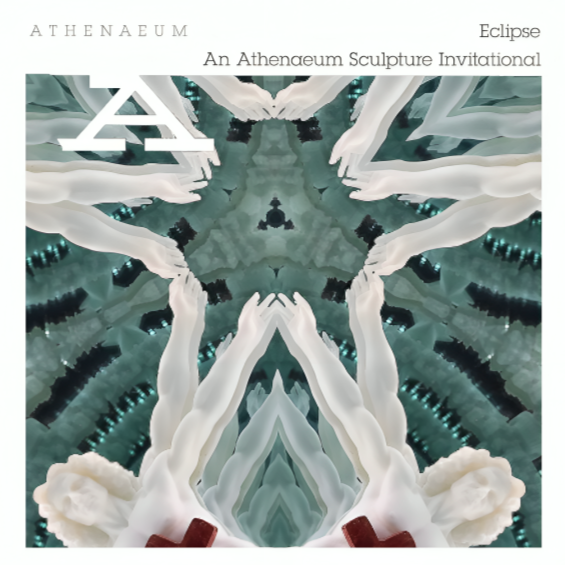
Detail of Tim Tate’s work in the “Eclipse” exhibit

Tim Tate is known for combining traditional glass craft with modern video elements and digital media to create mixed-media sculptures that explore themes of memory, mortality, and the passage of time. His works often embody themes of transformation, obscuration, revelation, and the interplay of light and shadow. In this exhibition, Tate’s work symbolizes the moment of revelation that occurs during an eclipse, where hidden truths or forgotten histories come to light. His lenticular prisms that shift between imageries effectively capture the fleeting moment of an eclipse where light is temporarily blocked yet still visible in other forms.
Said Tate: “In my lenticular series, I aim to capture the nature of memory and perception. By layering multiple images within a single lens, I create a sense of depth and dimensionality that shifts and changes as the viewer moves.”
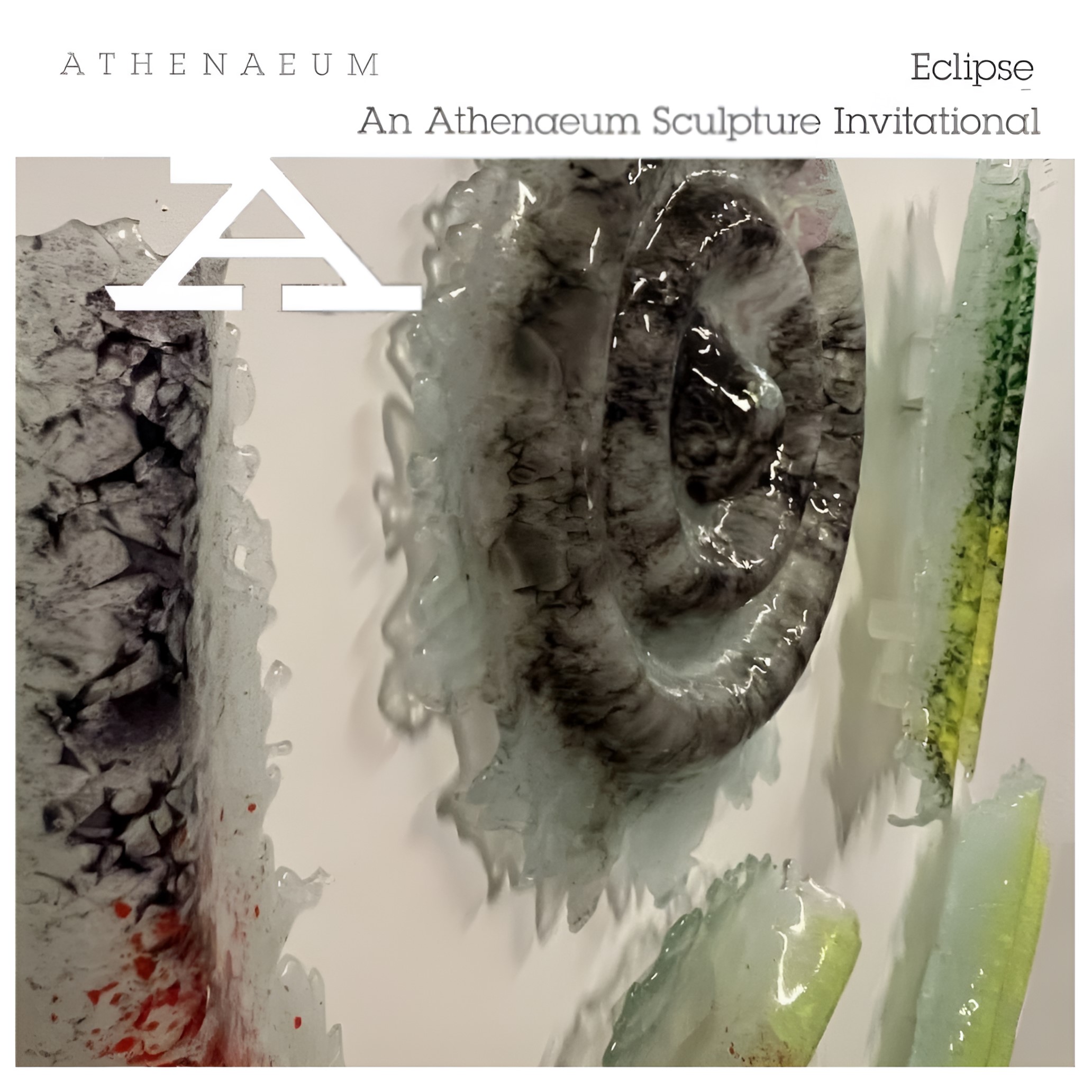
Detail of Erwin Timmer’s cast recycled glass artwork featured in “Eclipse” exhibit.

Erwin Timmers is deeply committed to environmental sustainability, and his works crafted from recycled glass introduce a theme of renewal and regeneration within the “Eclipse” exhibition. Timmers uses discarded materials to create beautiful forms, highlighting the potential for transformation in the most unexpected places—much like an eclipse, which temporarily alters perception and understanding. His work often conveys a narrative of reclaiming what is cast aside, fitting well into the exhibition’s overarching theme of cycles of destruction and rebirth. Once destined for landfills, the recycled materials are reborn as testaments to the power of transformation and the importance of reexamining our relationship with the natural world. Timmers’ recycled glass sculptures also play with light, given the translucent nature of glass, adding a dynamic interplay of illumination and shadow.
Said Timmers about his work in the Eclipse series: “I explore the intersection of environmental waste and beauty. By casting discarded materials into sensuous forms, I aim to reveal the beauty hidden within the discarded and the forgotten. As we stand at the edge of ecological crisis, I believe that art can serve as a catalyst for change, inspiring us to reimagine our place within the delicate balance of the ecosystem.”
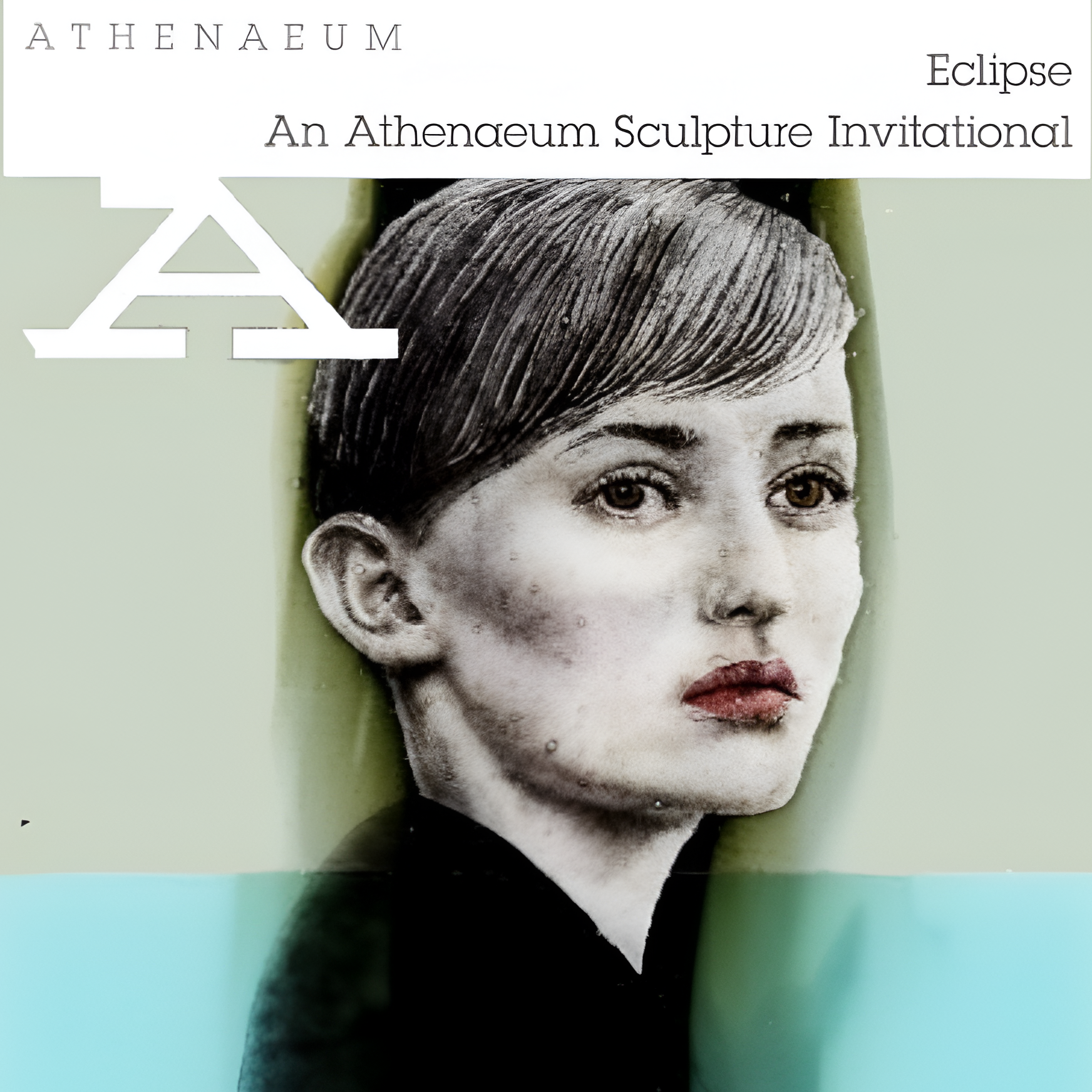
Detail of Michael Janis’ “A New Dawn” glass artwork featured in “Eclipse” exhibit.

Michael Janis’ sgraffito glass portraits, which often explore identity, human emotion, and societal themes, align with the “Eclipse” theme by focusing on the layers of human experience and the partial obscuration of self. His technique of layering powdered glass to create complex imagery is akin to the way an eclipse gradually reveals or conceals—shadows and light playing across the surface, revealing deeper meanings. His works evoke the internal eclipses we face—moments where parts of ourselves or our histories are hidden or revealed depending on the perspective or light shed on them. Janis’ portraits also symbolize the personal and psychological aspects of an eclipse, dealing with identity, transformation, and the hidden aspects of the self that come to light.

Said Janis of his frit powder portraits: “Each element of my artwork serves as a kind of representation of the chaotic nature of human existence. By abstracting the realistic figures, I highlight the intricate layers that shape our identities, both internal and external. These divisions symbolize the diverse aspects of our personalities, experiences, and cultural influences that converge within a single being.”

Eclipse
An Athenaeum Sculpture Invitational
Curated by Alison Sigethy
January 16, 2025 – February 23, 2025
Artist Reception: Friday, January 17, 6 – 8 pm
Artist Talk: Sunday, February 23, 2 pm
Participating artists:
Michael Janis
Lori Katz
Mike Price
Carol Prusa
Sarah Hood Salomon
Salih Zeki Sayar
Murat Sener
Michael Enn Sirvet
Tim Tate
Erwin Timmers
Maduka Uduh

The Athenaeum is home to the Northern Virginia Fine Arts Association (NVFAA), an organization dedicated to the maintenance and preservation of the building and the celebration of regional arts.
The Athenaeum Gallery
201 Prince Street, Alexandria, VA 22314
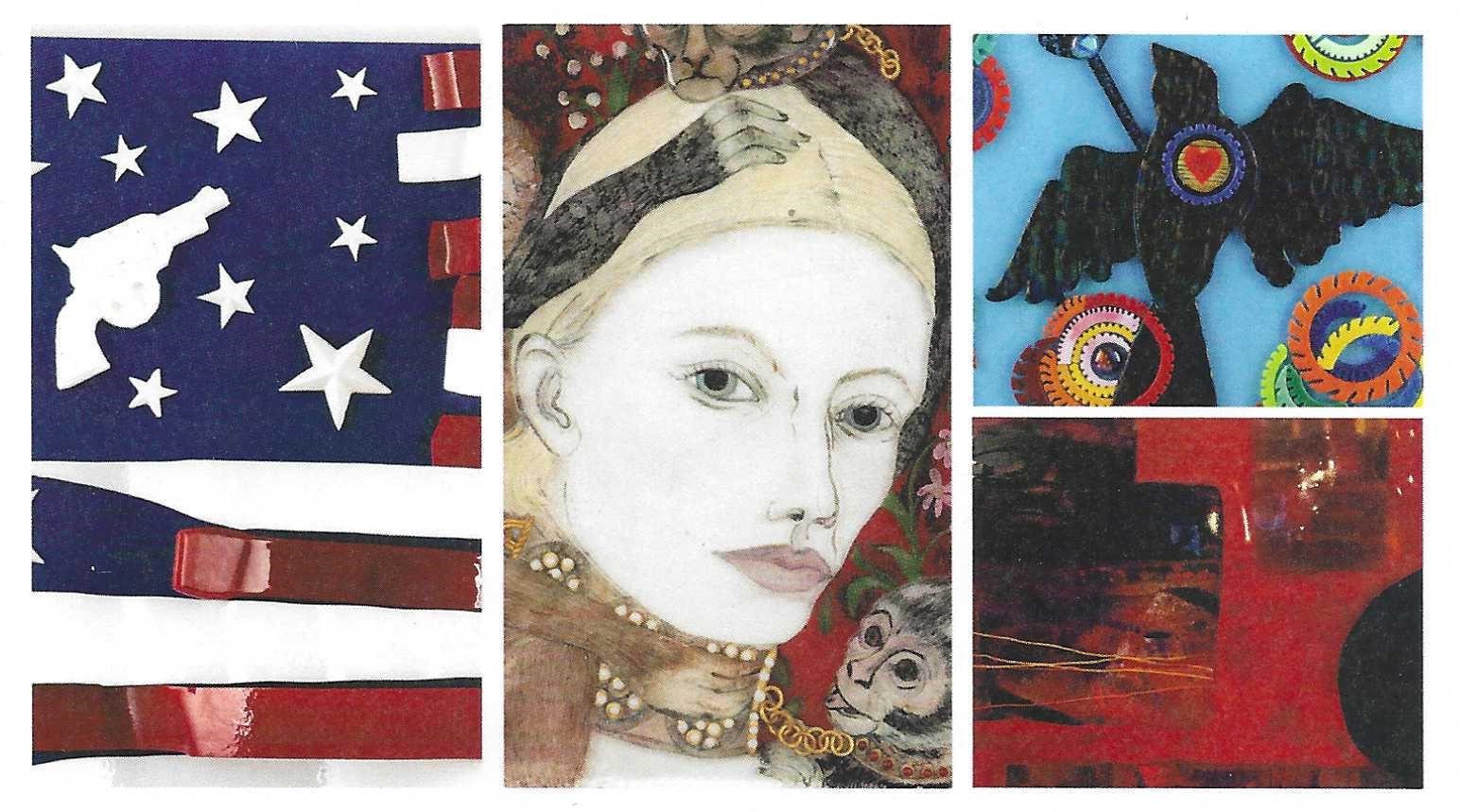
Connections and Conversations at Montpelier Arts Center

L-R: The Divided States of America; Trish Kent, Le Singe; Patricia de Poel Wilberg, Rejoice O Windup Bird; Kate Barfield, Twisting, John Henderson

Get ready to experience an artistic revolution and discover the future of sculpture. The Montpelier Arts Center of the M-NCPPC, Department of Parks and Recreation in Prince George’s County, proudly presents its 43rd annual invitational sculpture exhibition. Curated by Howard Cohen, this show, titled “Connections and Conversations” features the visionary talents of artists of the Washington Glass School, with a spotlight on the transformative medium of glass, where boundaries are pushed and traditions redefined.

Echoes; Michael Janis

Join us to see how these remarkable artists illuminate the diverse worlds we live in, using glass to spark conversations and create profound connections. This isn’t just an exhibit—it’s a vibrant conversation about our diverse world. Don’t miss this chance to see how glass can tell stories, bridge gaps, and ignite inspiration through community engagement and artistic innovation. 

Don’t miss this chance for an unforgettable journey through art, innovation, and community and discover the endless possibilities of glass as a medium.

Connections and Conversations: Works by Artists from the Washington Glass School

Exhibition Dates: June 7 – July 28, 2024

Public Reception: June 7, 2024, 7 – 9 PM

Lunch and Lecture: June 14, 2024, 12 Noon (Reservations Required – Call 301-377-7800)

Montpelier Arts Center

9652 Muirkirk Road   Laurel, MD 20708

www.pgparks.com

Washington’s Innovative Glass Scene Seen at Artomatic 2024

trish kent, patricia de poel wilberg, nancy kronstadt, april shelford, graciela granek, kate barfield
Washington Glass School Co Founder Erwin Timmers outlines the Studio Glass Movement timeline to audience at Artomatic 2024.

In the 1960s, The American Studio Glass movement transformed glass from craft into fine art.

Artomatic helped create the movement, as after the 2000 Artomatic, the Smithsonian Museum acquired artist Tim Tate’s glass sculpture that was on display. Artist Erwin Timmers’ artwork was also on exhibit at that Artomatic, and after that show, the two began to collaborate, later teaming up to start the Washington Glass School & Studio with the funds from the sale of Tate’s glass artwork to the Renwick.

Washington Glass School Co-Founder Tim Tate’s work at Artomatic 2024.

In 2008, Artomatic organized an exhibit at the Washington Glass School, showcasing the unique approaches to glass sculpture in three “glass” cities: Washington, DC; Toledo, Ohio; and Sunderland, England, fostering international partnerships and collaborative ventures.

Glass works by VA-based artist Griffon Dillon on exhibit at Artomatic 2024.

As the 21st century unfolded, artists across various media have shown growing interest in glass as a creative medium, despite its technical challenges. The Washington Glass Scene has emerged as a hub of innovation, elevating glass to a significant position in contemporary art. The Washington Glass School encourages artists to push boundaries and redefine the possibilities of glass as a fine art medium.

There is a great example of works by DC glass creatives on display at Artomatic 2024, open now thru April 28th. Although the glass works are on many of the 8 floors of art, the 5th floor is the central spot to get ones glass fix. Some photos of Washington Glass School’s reception are featured in this post.

Glass artwork by artist Michael Janis seen at Artomatic 2024 on M Street.

The James Renwick Alliance will hold a craft tour of works on display at Artomatic 2024, March 24th, at 1-3PM More info here on the free tour: James Renwick Alliance Craft Tour – 5th Floor Washington Glass School Installation – Artomatic.

patricia de poel wilberg, kate barfield, april shelford
Curator Howard Cohen reviewing glass art on exhibit at Artomatic 2024.

Baltimore based art curator Howard Cohen came this past weekend to Artomatic to handpick glass artists from the DC area for a contemporary glass showcase exhibit at Montpelier Art Center this June. Howard was able to talk with many of the artists and get insight to their narratives and process. Looking forward to the upcoming show!

artomatic 2024

Artomatic, 2100 M Street NW, Washington, DC 20037

Happy Holidays from Washington Glass School and Studio

Tis the Season!

All of us at the Washington Glass School & Studio Wish You and Family a Joyous Holiday Season! And a Happy Healthy New Year!

Artists and Educators from the Washington Glass School

(L-R) Patricia De Poel Wilberg, Erwin Timmers, Christina Helowicz, Nancy Kronstadt, Kate Barfield, Tim Tate, April Shelford, Michael Janis, Trish Kent and John Henderson. Not pictured: Graciela Granek, Sean Robinson, Diane Cabe, Gabrielle Morris, Kyle Crosby, and Daphne Matyas.

Michael Janis Finalist in 2022 Contemporary Craft Prize

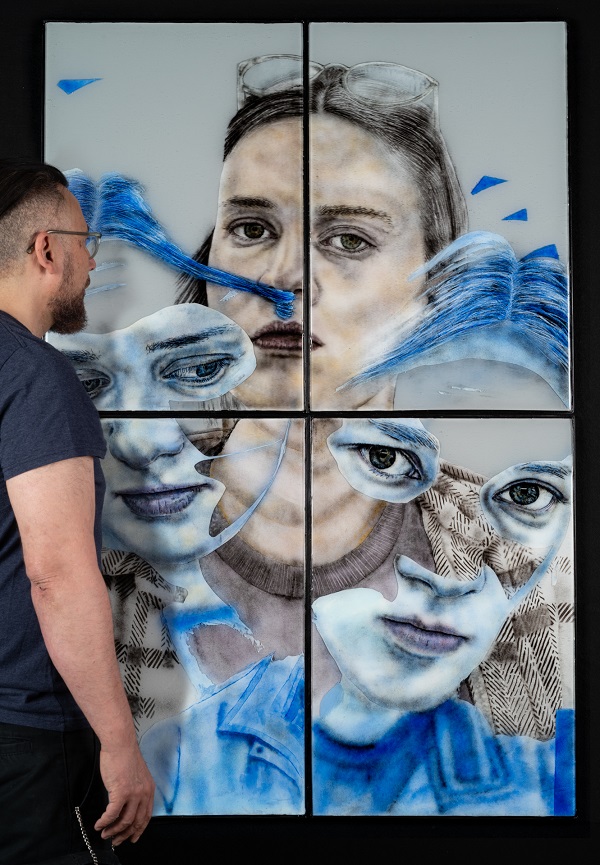
Michael Janis, “Allowing Our Past to Become Part of Ourselves” detail, 2022, fused glass, glass powder imagery. Photo by Pete Duvall.

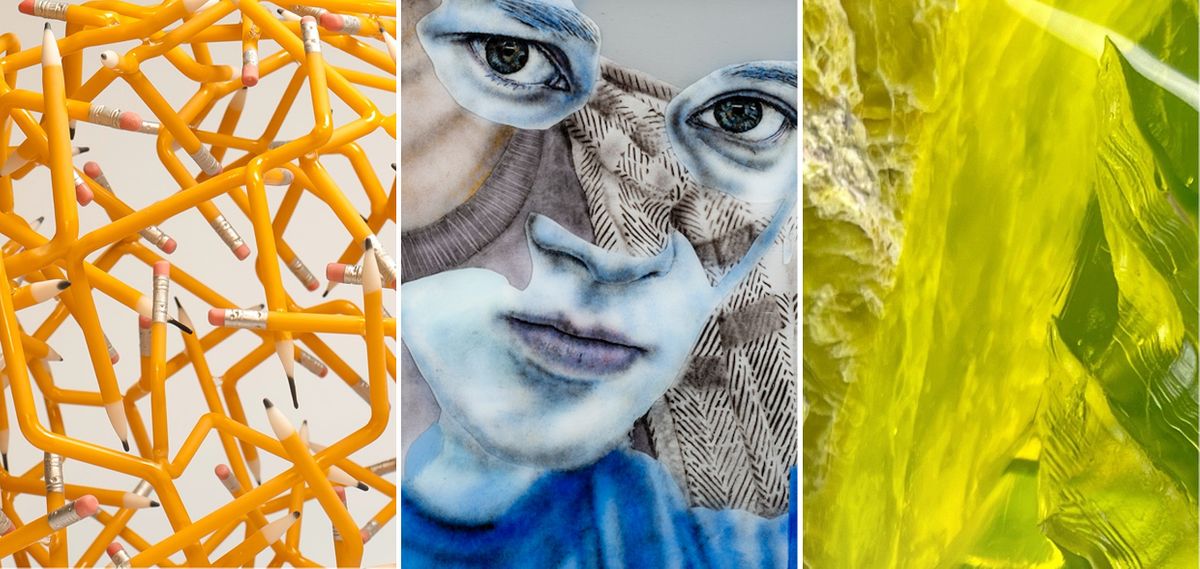
17 national and international finalists have been selected for this biennial exhibition in glass art, featuring newly created, innovative works.

Michael Janis glass art - title "Allowing Our Past to Become Part of Ourselves" 60"H x 40' W fused glass, glass powder imagery aluminum

Glass is itself a transformation: created when ordinary sand encounters extreme heat. In this breathtaking exhibition, glass is transformed again, this time by 17 contemporary artists from across the globe. The resulting work pushes the boundary of traditional craft techniques and takes glass from the realm of the ordinary to the extraordinary.

Transformation 11: Contemporary Works in Glass is Contemporary Craft’s 2022 Elizabeth R. Raphael Founder’s Prize juried exhibition. The winning artist and their work will be announced and presented at the public opening of the exhibition on Friday, September 9, 2022, where they will receive a cash prize. The 2022 prize will be awarded in the category of glass, and must meet the requirement that it has been made within the last 12 months and addresses the theme of “transformation.” Seventeen contemporary artists from across the globe explore creative concepts and innovative approaches in their use of the glass medium, with the winning artist sending additional works to demonstrate the breadth of their work.

The 2022 Raphael Prize finalists are: Dean Allison, Pittsburgh, PA; Eunsuh Choi, Rochester, WI; Donald Friedlich, Madison, WI; Michael Janis, Washington, DC; Lauren Kalman, Detroit, MI; David King, Danville, KY; Eriko Kobayashi, Carbondale, IL; Weston Lambert, Tacoma, WA; Patrick Martin, Emporia, KS; Hisayoshi Muto, Yatomi, Aichi, Japan; Aya Oki, San Bernardino, CA; Miroslava Ptackova, Zlín, Zlínský kraj, Czech Republic; David Schnuckel, Rochester, NY; Michaela Spruzinova, Ústí Nad Labem, brná, Czech Republic; Ben Wright, Stanwood, WA; Ayano Yoshizumi, Everard Park, SA, Australia; and Hoseok Youn, Toledo, OH.

The jury for the 2022 prize includes Anna Rothfuss, Project Development Manager, Derix Art Glass Consultants, LLC U.S., Portland, OR; Heather McElwee, Randi & L. Van V. Dauler, Jr. Executive Director, Pittsburgh Glass Center, Pittsburgh, PA; Alexandra Raphael, enameller, London, England; Catherine Raphael, metalsmith and writer, Pittsburgh, PA; Rachel Saul Rearick, Executive Director, and Kate Lydon, Director of Exhibitions (retired), Contemporary Craft, Pittsburgh, PA

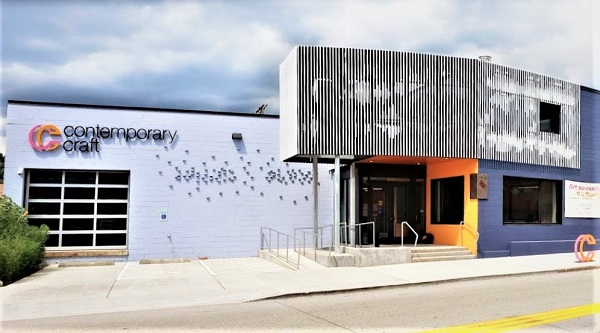
Contemporary Craft, 5645 Butler Street, Pittsburgh, PA 15201

Contemporary Craft hours: Mon-Sat: 10 AM – 4 PM

September 9, 2022 – March 18, 2023

This opening is free and open to the public.

ABOUT CONTEMPORARY CRAFT

Contemporary Craft presents contemporary art in craft media by regional, national, and international artists. Contemporary Craft offers cutting edge exhibitions focusing on multicultural diversity and contemporary art, as well as a range of artist-led studio workshops, community engagement programs, and a store. Located at 5645 Butler Street in the Upper Lawrenceville neighborhood of Pittsburgh, PA. For more information, visit www.contemporarycraft.org

Sean Robinson @ Cid Bolduc Gallery

WGS Studio artist Sean Robinson responded to the call for artists at Cid Bolduc Gallery in Provincetown, MA. Sean’s glass art was immediately selected for exhibition for the month of July! Congrats Sean!!

Artist Sean Robinson works his magic with glass at Cid Bolduc Gallery.

The Cid Bolduc Gallery (CBG) is located at 53 Badford Street in Provincetown, MA.

CBG is open for the 2022 season on Thursday, Friday and Saturday from noon to 5 p.m.