Washington Glass School is proud to share that several of our artists are featured in the groundbreaking exhibition “Women Artists of the DMV”!
This fall, curator and artist F. Lennox “Lenny” Campello launches a historic 16-venue, 300+ artist survey across DC, Maryland, and Virginia—celebrating the creativity and impact of women artists in our region.
WGS artists, including April Shelford, Trish Kent, Diane Cabe, Erin Antognoli, Patricia de Poel Wilberg, and Kate Barfield are amongst the talented voices included in this unprecedented show—equal parts cultural intervention and historical record.
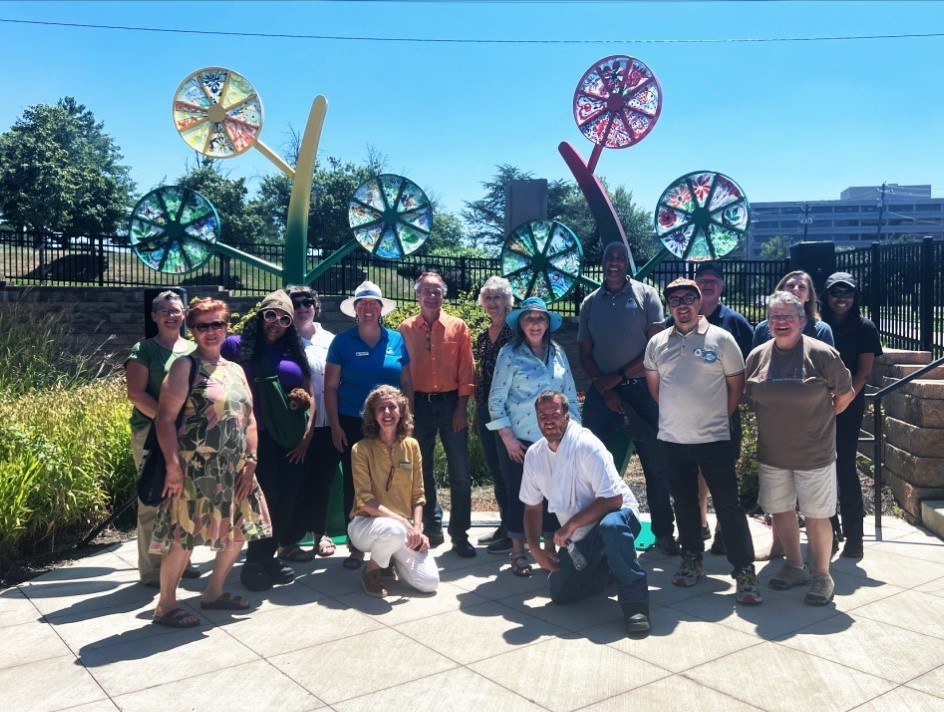
This past weekend, the City of Greenbelt, Maryland, celebrated the dedication of a stunning new public sculpture, The Beauty in a Garden Comes from More Than One Flower, created by Washington Glass School Co-Director and eco-artist Erwin Timmers.
Crafted from steel and recycled glass, the sculpture’s graceful petals carry a story far beyond their materials — they are the handiwork of the very community the artwork now welcomes. In a series of hands-on glass work sessions at the Washington Glass School in Mount Rainier, MD, residents of the new Motiva apartments and their Greenbelt neighbors joined Erwin in creating the vivid glass infill panels that make the piece glow with life and individuality.
“The concept was always about unity through diversity,” says Erwin. “Just like a garden thrives because it has many flowers, a community flourishes because of its different voices, talents, and hearts.”
The project, sponsored by Motiva, blossomed into more than just a public art commission — it became a joyful, collaborative journey. Over the course of multiple workshops, participants experimented with recycled glass, learned kiln-forming techniques, and left their personal creative mark on the sculpture.
The finished work now stands as both an artistic landmark and a symbol of connection — an invitation for all who pass by to remember that beauty is born from many hands working together.
💚 Washington Glass School is proud to have been part of this community-centered creation, bringing people into the making process and showing how recycled materials can tell vibrant new stories.
Congratulations to Erwin, to all the participating residents, and to Greenbelt Recreation Arts for championing public art that grows from — and for — the community.
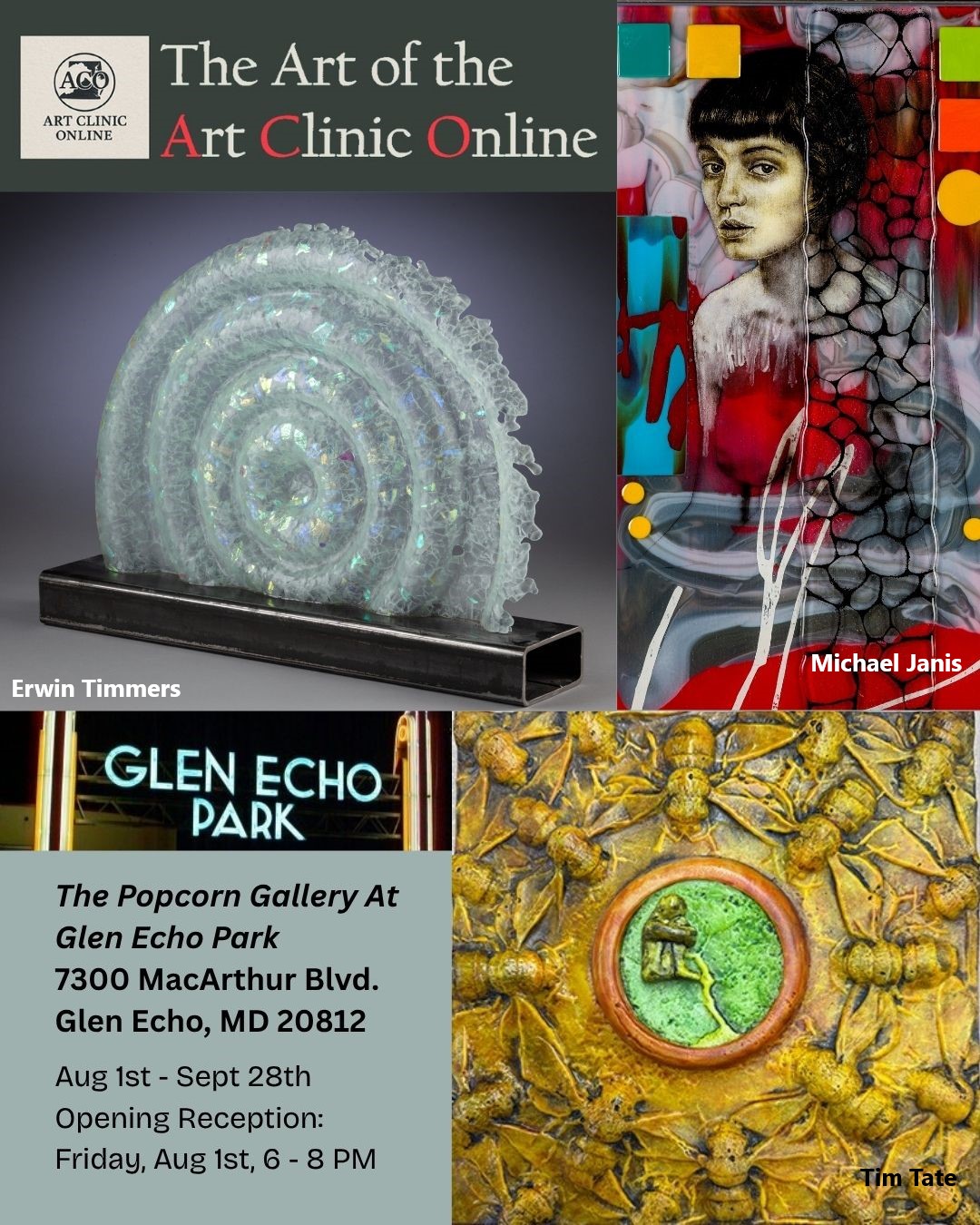
This Friday, August 1, The Art of the Art Clinic Online opens at Glen Echo Park’s Popcorn Gallery, showcasing an impressive lineup of over 30 artists from the DC-area Art Clinic Online (ACO) community—including Washington Glass School artists Erwin Timmers, Tim Tate, and Michael Janis.
Presented as part of Glen Echo’s First Friday Art Walk (6–8 PM), this group exhibition runs through September 28 and offers a compelling glimpse into the diversity of creative voices shaping the region.
📍 Popcorn Gallery Glen Echo Park 7300 MacArthur Blvd, Glen Echo, MD Free + open to the public
Founded in 2020, ACO has become a vibrant platform for community, conversation, and exchange among artists throughout the DMV. Every other Saturday, the group hosts online sessions where a featured artist presents their work and engages in lively dialogue with participants. The program’s inclusive spirit and broad range of voices are central to its mission—and now, those connections come off-screen and into the gallery space.
The Art of the Art Clinic Online is a reflection of the many practices and perspectives nurtured through ACO’s ongoing work, and we’re proud to see WGS artists included in this thoughtful and energetic survey.
Participating Artists Include: Blair Anderson, Maremi Andreozzi, Sondra Arkin, Julia Bloom, F. Lenox Campello, Eric Celarier, Aishwariya Chandrasekar, Schroeder Cherry, Jeffery Everett, Kate Fleming, Erin Fostel, Barbara Epstein Gruber, Ric Garcia, Sarah Jamison, Michael Janis, Robert Knudsen, Christine Lashley, Kyujin Lee, Laurel Lukaszewski, Akemi Maegawa, Dana Jeri Maier, Lindsay Mueller, Cory Oberndorfer, David Page, Erin Raedeke, Ephraim Rubenstein, Nicole M. Santiago, Tim Tate, Valerie Theberge, Erwin Timmers, Bennett Vadnais, Steve Wanna, Dawn Whitmore, and Andrew Wodzianski.
Make time to visit Glen Echo Park this summer—you’ll find a rich cross-section of the region’s creative talent and a strong sense of community threaded through every work on view.
Featuring Artists from the “Exercises for Emerging Artists” Program – E22: Glass for Social Justice
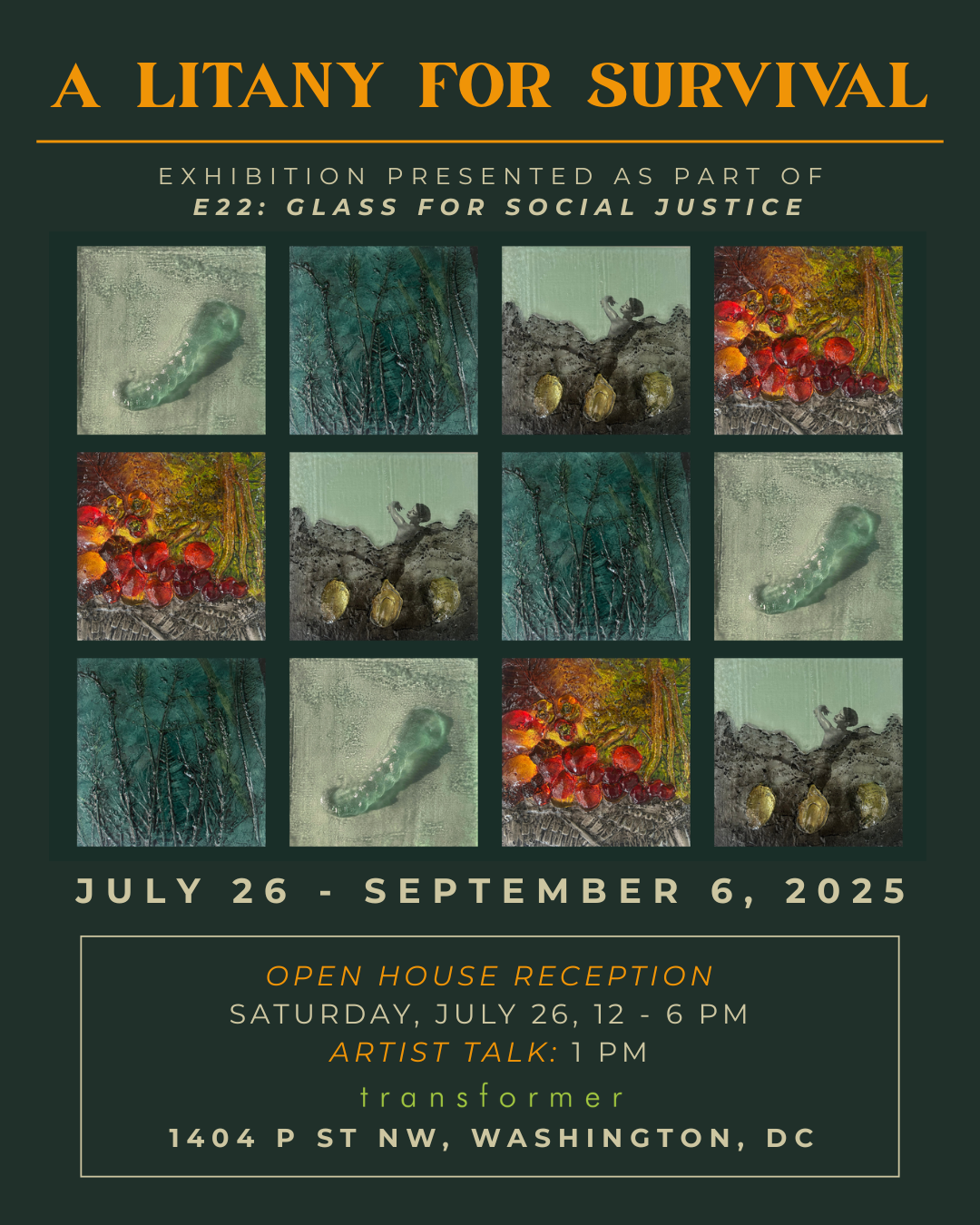
Washington Glass School is hosted this year’s Exercises for Emerging Artists program with Transformer DC – and the resulting exhibition, A Litany for Survival, opens July 26, 2025 at Transformer Gallery.
Now in its 22nd year, Transformer’s Exercises for Emerging Artists is a landmark mentorship program designed to support DC-based emerging artists at pivotal moments in their creative and professional development. Each year focuses on a different discipline, and for 2025, the spotlight is on glass as a medium for social justice.
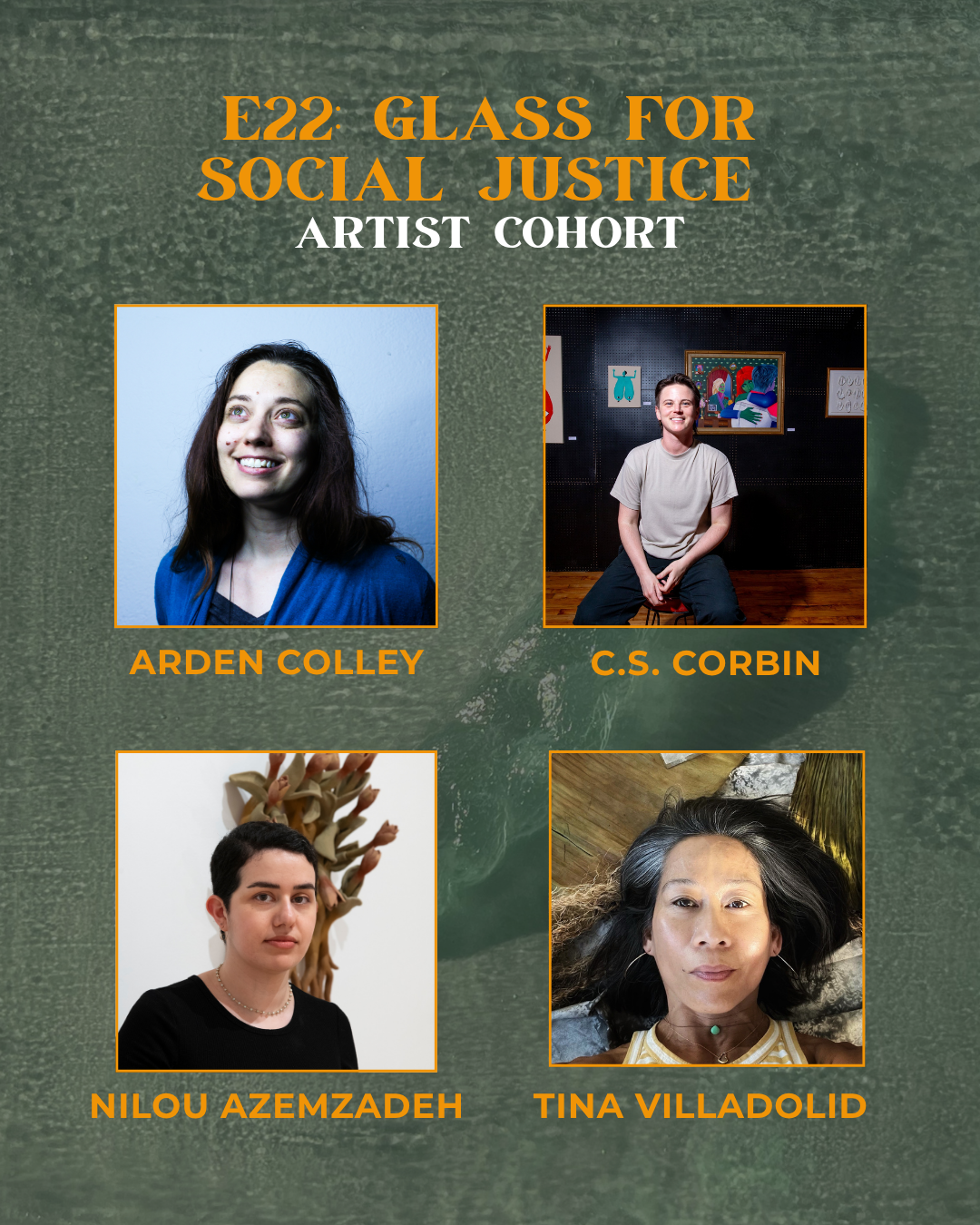
E22: Glass for Social Justice brings together four powerful voices in the DMV art scene — Arden Colley, C.S. Corbin, Tina Villadolid, and Nilou Kazemzadeh — for an intensive four-month residency of glassmaking and critique sessions, hosted here at the Washington Glass School. Under the lead mentorship of WGS co-founder Tim Tate, the participating artists explored deep relief dry plaster casting techniques in glass — a kiln-forming process that allows for nuanced, sculptural impressions rich in symbolism and narrative.
The exhibition’s title, A Litany for Survival, is drawn from the celebrated poem by Audre Lorde and sets the tone for the work on view: pieces that disrupt dominant narratives, honor resilience, and speak to the layered complexities of identity, memory, and activism. As the artists write in a shared statement:
“Translucent, metamorphic, solid yet fragile, glass speaks to the fluidity and complexity of our self-determination… So it is better to speak / remembering / we were never meant to survive.”
This year’s program was coordinated by Camille DeSanto, Exhibitions & Programs Coordinator at Transformer, with guest mentorship from an exceptional group of artists and curators including Therman Statom, Diana Baird N’Diaye, Cheryl Derricotte, Joyce Scott, Jabari Owens-Bailey, Jennifer Scanlan, and Geoffrey Bowton.
Founded in 2001, the Washington Glass School continues to champion community-based glass education, expanding the boundaries of what glass art can be. Said Tate: “I have learned that glass can shatter silence, that castings can hold history, and that the hands that make are also hands that heal. This knowledge rewired my spirit — I began to see my art as a tool, not just for expression, but for disruption, truth, and change.” We are honored to collaborate with Transformer to help shape the next generation of artists pushing the medium forward.
Exhibition Details:
A Litany for Survival Part of Transformer’s E22: Glass for Social Justice 🗓 July 26 – September 6, 2025 📍Transformer Gallery, 1404 P Street NW, Washington, DC
Don’t miss this powerful and timely exhibition. Visit transformerdc.org for more info.
The Washington Glass School is thrilled to celebrate the achievements of two of our talented resident artists, April Shelford and Kate Barfield, whose works have been selected for prestigious contemporary art exhibitions. Their unique glass artworks showcase the innovative spirit and technical mastery that define our studio’s creative community.
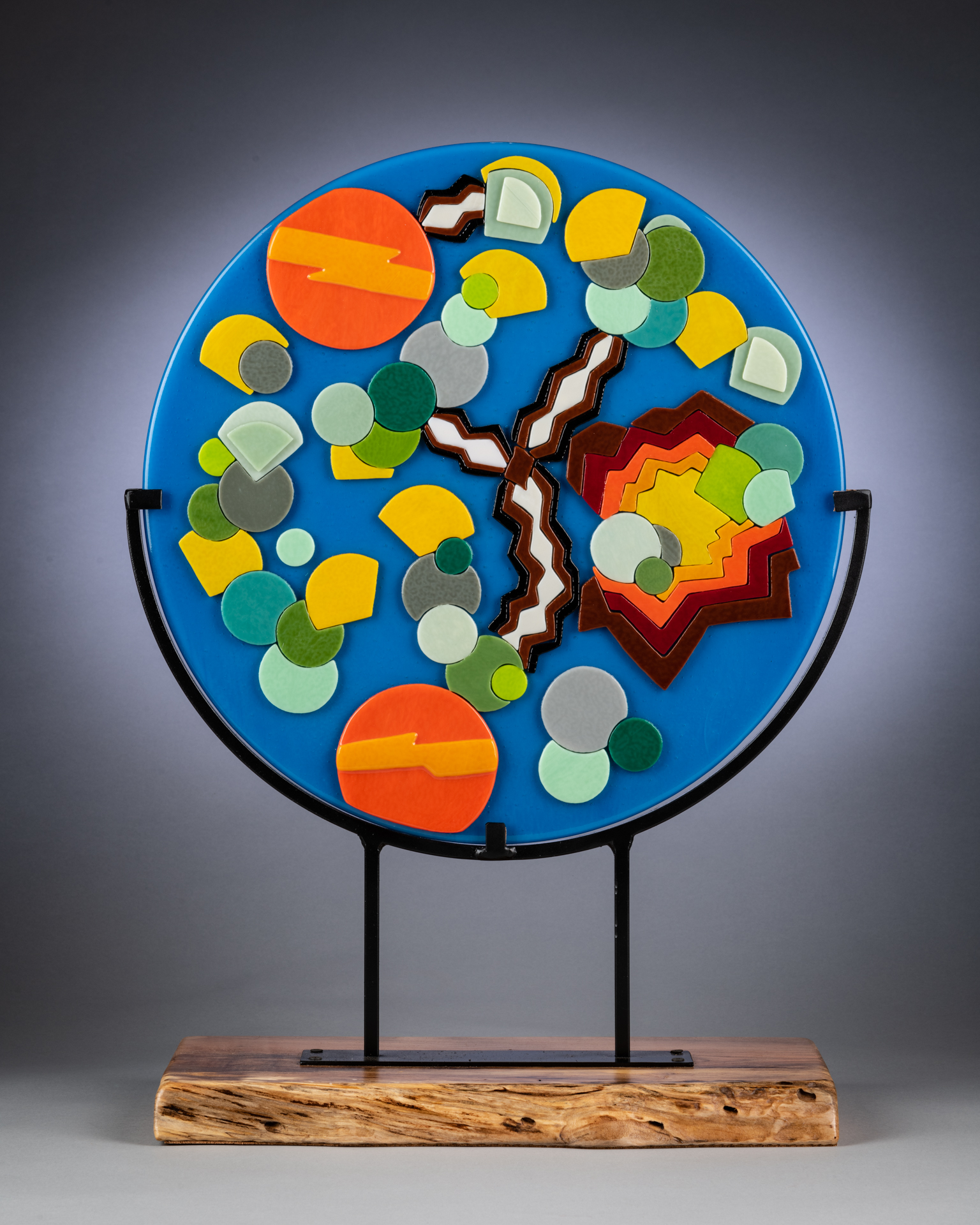
Artist: Kate Barfield; “Tribute to Ms. Mailou Jones”, Fused Glass, steel, wood; Photo Credit: Pete Duvall
Kate Barfield’s Vibrant Works at “The Power of Color” Exhibition
Kate Barfield’s captivating glass pieces, Tribute to Ms. Lois Mailou Jones and Rejoice Wind Up Bird, have been selected for the upcoming The Power of Color exhibition, sponsored by MD Fine Arts at the Circle Gallery in Annapolis, Maryland. This show highlights the dynamic use of color in contemporary art, and Kate’s work perfectly embodies this theme. Her piece Tribute to Ms. Lois Mailou Jones pays homage to the renowned Black DC painter, capturing the angular shapes, curves, and vibrant “POW!” of color that defined Jones’ work. Rejoice Wind Up Bird further showcases Kate’s ability to infuse glass with narrative depth and vivid expression. We invite you to visit the Circle Gallery to experience these stunning works in person and see how Kate’s artistry transforms glass into a powerful storytelling medium. MFA’S Circle Gallery from July 30th – August 23rd, 2025
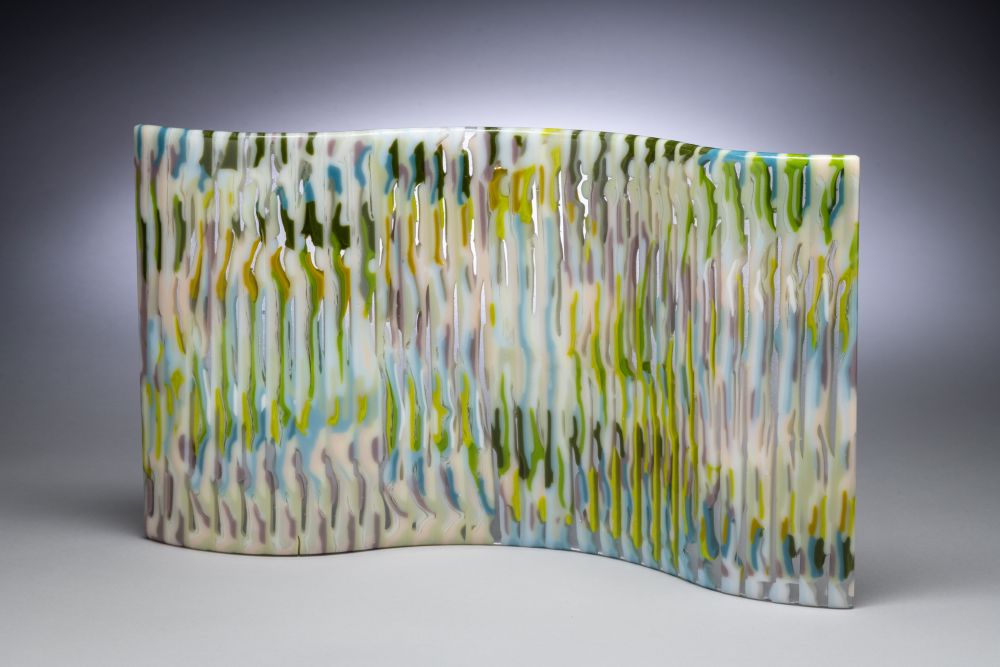
Artist: April Shelford; “To Monet”, Fused Glass; Photo Credit: Pete Duvall
April Shelford’s To Monet in “A Sense of Place” Online Exhibition
April Shelford’s evocative piece To Monet has been selected for the A Sense of Place online exhibition, launched on July 7, 2025, by the Contemporary Glass Society (CGS), the UK’s foremost organization supporting glass artists. This global celebration of glass art features 77 international artists, each exploring how glass captures personal and cultural connections to place. April’s To Monet reflects her signature focus on color and pattern, inspired by her meticulous attention to detail and questing curiosity. Her fused glass work, reminiscent of the historian’s craft, assembles diverse elements into a cohesive and meaningful whole, evoking a profound sense of place. This online exhibition offers a unique opportunity to explore April’s work alongside other visionary glass artists from around the world. Visit the CGS website to immerse yourself in this remarkable showcase.
Celebrating Our Artists’ Vision and Craft
Both Kate and April exemplify the Washington Glass School’s commitment to pushing the boundaries of glass as a medium for contemporary art. Their selections for these prestigious exhibitions highlight their individual talents and the vibrant creative energy fostered at our studio. We are incredibly proud of their contributions to the global glass art community and invite you to join us in celebrating their achievements.
Stay tuned for more updates on our artists’ exhibitions and events, and visit the Washington Glass School to discover the transformative power of glass art!
Join the Art Alliance for Contemporary Glass (AACG) on Friday, July 11, at 1pm Eastern time when they present Face to Face: The Language of Faces & Figurative Work. Aaron Schey of Habatat Galleries will facilitate a discussion about faces in work and figurative work with artists Dean Allison and Michael Janis. The program will include a presentation by each artist, followed by an in-depth question & answer session with the artists discussing their work and how the public responds to faces and figurative work versus abstract art.
Through glass powder portraits and cast glass sculpture, we explore how faces reveal what we hide and reflect who we truly are. Fired. Fractured. Fused. Every face tells a story.
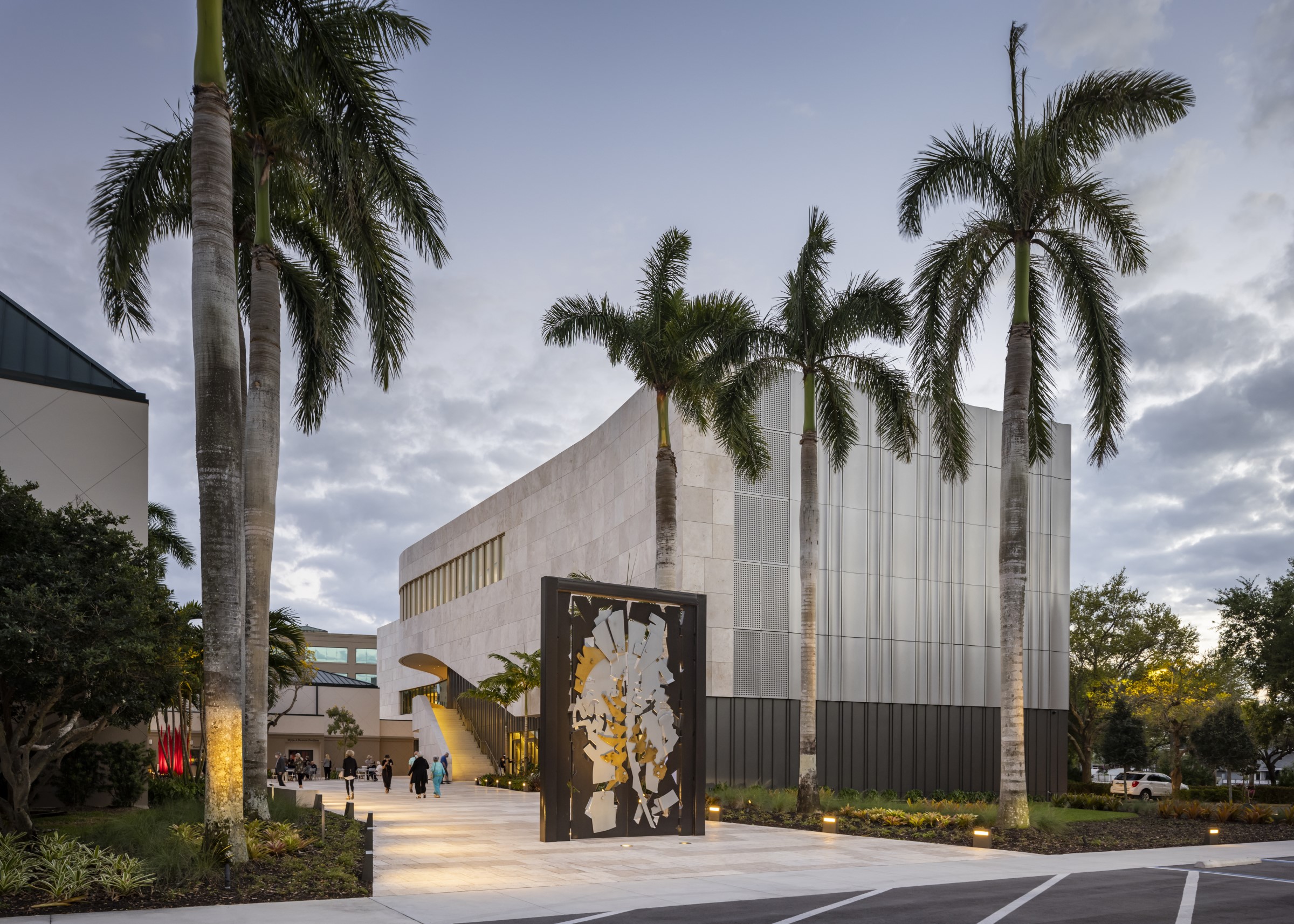
Washington Glass School is excited to share that co-directors Michael Janis and Tim Tate are among the artists included in a significant new acquisition by The Baker Museum in Naples, Florida. The museum has received The Dr. Laurence and Rita Sibrack Collection of Contemporary Glass and Ceramics, a gift that brings 74 works by 60 artists into the museum’s permanent collection.
The Baker Museum in Naples, FL
The Sibrack Collection includes works by some of the most influential names in contemporary glass and ceramics, including Dale Chihuly, Judith Schaechter, Amber Cowan, Preston Singletary, Lucio Bubacco—and now, Michael Janis and Tim Tate. This collection spans nearly every major glass technique, from flame-worked to blown and cast, and reflects a deep appreciation for material, form, and light.
The Baker Museum’s decision to fully integrate these works into its broader holdings marks a continued shift in how museums value glass and ceramics—not as separate from fine art, but as essential parts of its story. For Janis and Tate, who have each spent decades advancing contemporary glass as a narrative and conceptual art form, this recognition is especially meaningful.
“Our work is about storytelling through material,” said Michael Janis. “Being included in a collection like this, which treats glass as a vehicle for meaning and not just decoration, affirms why we do what we do.”
Tim Tate added, “What the Sibracks have built is not just a personal collection—it’s a statement about the relevance and emotional range of glass today.”
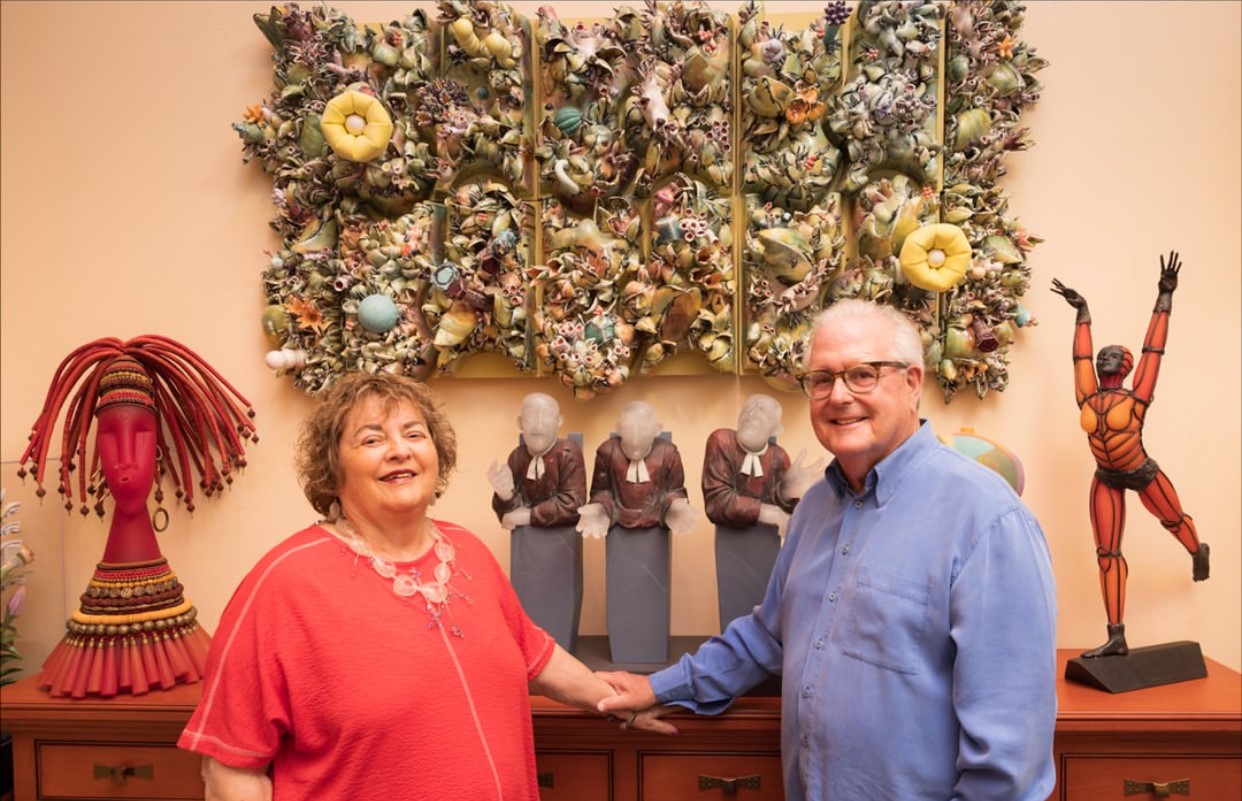
Rita and Dr Laurence Sibrak
The Sibracks, longtime supporters of Artis—Naples, were first inspired by a 2000 exhibition of Chihuly’s work at the museum. Their decision to make this donation stems from a long commitment to both the institution and the idea that art should be lived with, shared, and accessible to all.
This acquisition places the work of two DC-based artists into one of the most respected collections in the region, further establishing the impact of the Washington Glass School on the national stage. We’re proud to see Michael and Tim’s work recognized alongside such powerful voices in the field and grateful to the Sibracks and the Baker Museum for helping bring greater visibility to the language of glass.
The collection will be celebrated in the upcoming exhibition “The Passion of Collecting: Stories in Glass and Ceramics from the Sibrack Collection,” opening January 10, 2026 at The Baker Museum and remaining on view through the fall.
Following is a complete list of artists in the The Dr. Laurence and Rita Sibrack Collection of Contemporary Glass and Ceramics: Dean Allison, Adrian Arleo, Michael Behrens, Susan Beiner, Alex Bernstein, Charles Birbaum, Christina Bothwell, Peter Bremers, Emily Brock, Lucio Bubacco, Jim Budde, Nancy Callan, Dale Chihuly, A-Mi Choi, Amber Cowan, Dan Dailey, Stefen Dam, Laura Donefer, Michael Glancy, Peter Hora, Agnes Husz, Jannet Iskander, Martin Janecky, Michael Janis, William Kidd, Sabrina Knowles, Velarde Kukuli, K. William LeQuier, Dianne Martin Lublinski, Emma Luna, Robert Mickelsen, Shelley Muzylowski Allen, Harumi Nakashima, Sybelle Peretti, Lindsay Pichaske, Jenny Pohlman, Clyfford Rainey, David Regan, Colin Reid, Ross Richmond, George Rodriquez, Davide Salvadore, Judith Schaechter, Livio Seguso, Preston Singletary, Carmen Spera, Kristen Stingle, April Surgent, Matthew Szösz, Etsuko Tashimu, Tim Tate, Tip Toland, Margit Tóth, Hidenori Tsumori, Sam Tuffnell, Janusz Walentynowicz, Patti Warashina, Ann Wolff, Loretta Yang and Mary Ann Zynsky.
To learn more about the museum and the artists in the collection, visit artisnaples.org.
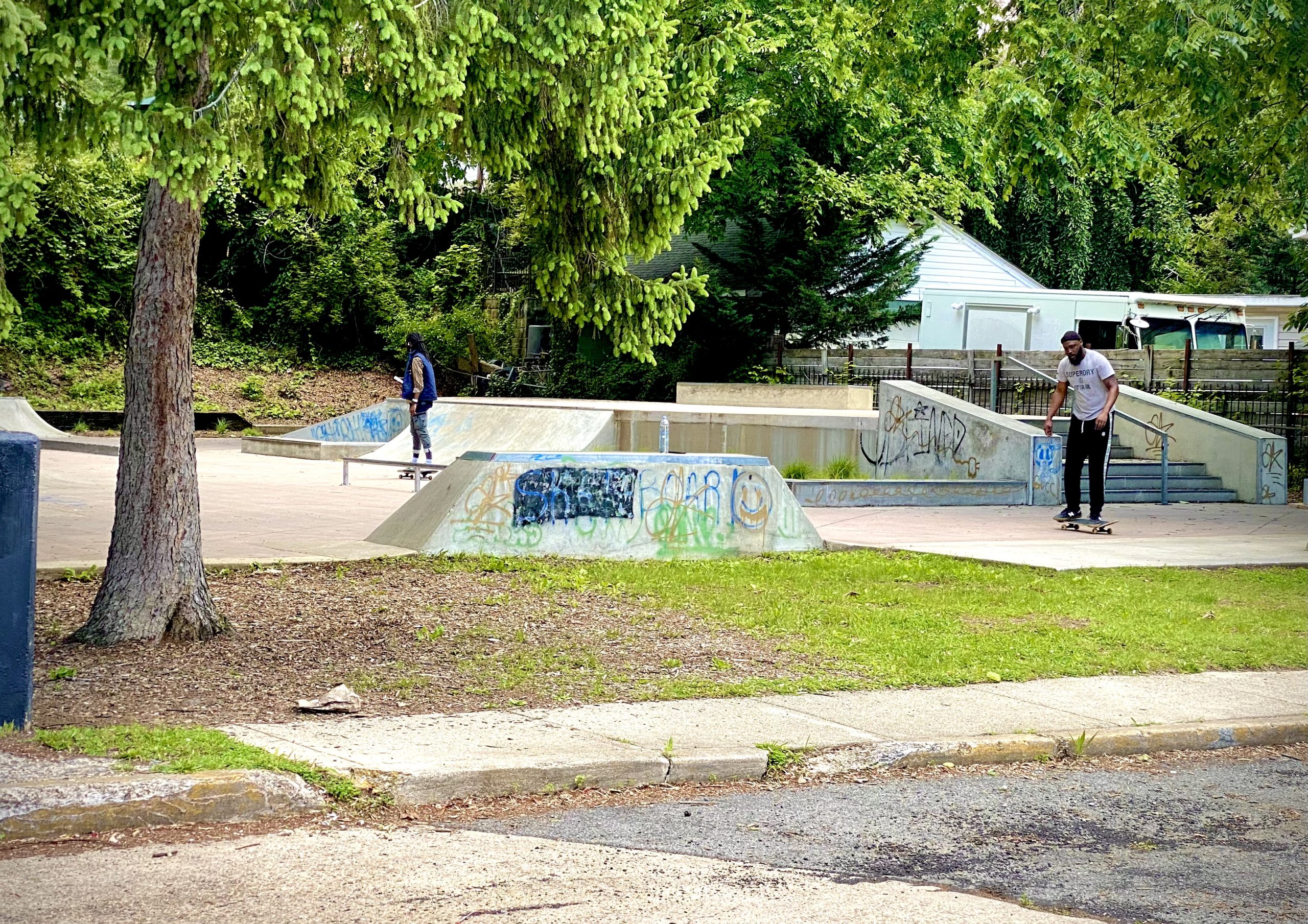
PG Dept of Parks and Rec wants the community to help ideate the look of the Mt Rainier Skatepark. Photo by Michael Janis.
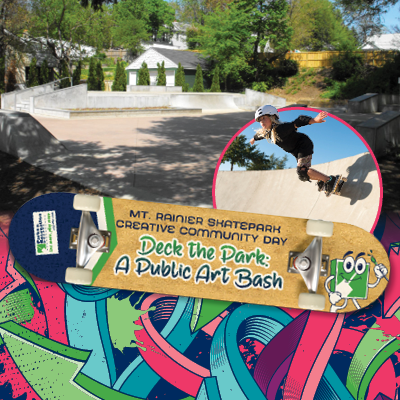
The Prince George’s County Department of Parks and Recreation is working with the Mt Rainier Arts Commission and together they will host Deck the Skate Park: A Public Art Bash on Saturday, June 28, 2025, from 12:00 p.m. to 2:00 p.m. at the Mount Rainier Skate Park (down the street from the Glass School and across from Otis Street Arts Project). This Creative Community Day marks the first step in a beautification project for the newly renovated 6,000-square-foot plaza-style skate park, situated at the corner of Wells Avenue and Otis Street.
Mount Rainier residents are invited to contribute ideas for the park’s artistic redesign, with options including murals, sculptures, or a combination of both. Attendees will have the opportunity to vote on the design’s aesthetic, shaping the park’s future as a community landmark. The skate park, equipped with ramps, rails, steps, picnic tables, and benches, serves as a popular gathering spot for skaters and families.
The event features several activities, including:
Free skating lessons for all skill levels
Community art projects facilitated by Arts on a Roll
Complimentary ice cream
Door prizes
Activities suitable for all ages
So, on Saturday, June 28th, Noon – 2pm, grab your skateboard, and roll on over to make the Mt Rainier Skate Park a vibrant masterpiece!
For more information, contact the Prince George’s County Department of Parks and Recreation (301)446-3232.
Now for something completely different! Need any more tranquility, abundance, wisdom, strength, comfort, creativity, patience, or intuition in your life? Who doesn’t??
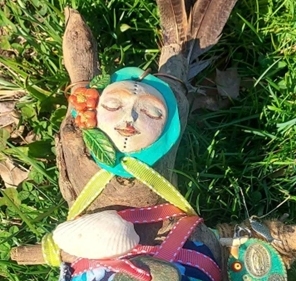
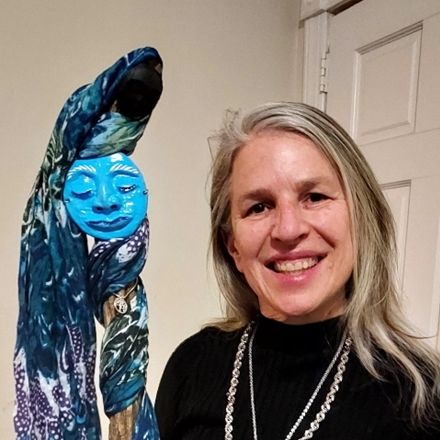
Healing dolls, also known as spirit or intention dolls, are here to help. Charming folk-art dolls carry ancient cultural or spiritual meaning, and each doll is as unique as the vision of its creator.
You will create your own cherished doll from simple materials and your personal intention. We use polymer clay to create the face, either from a mold or hand-built.
Michael Janis “The Pale Dawn” photo credit Pete Duvall.
Co-Director Michael Janis’ glass sgraffito panel “The Pale Dawn” will be part of the Bergstrom-Mahler Museum of Glass’s Live Auction “Catching Fire” on June 11 – an artful virtual auction featuring over 100 glass artworks and experiences with proceeds supporting the participating artists and the BMM Glass educational programs. Bid on silent auction items June 4–14, with a live virtual auction June 11th at 6:45pm CST.
The work “Pale Dawn” is a portrait that leans into quiet tension—between realism and abstraction, softness and structure. The figure is set against blocks of muted olive and turquoise, with black powdered frit forming the clothing and gradually dissolving into the white background. There’s a sense of stillness in her gaze, but also a bit of mystery in how the form starts to fade at the bottom.
Michael Janis studies for “The Pale Dawn” showing how color and pattern were investigated.
We’ve included some of the early studies for color and detail to show how the piece came together—those small experiments helped evolve and shape the final direction.
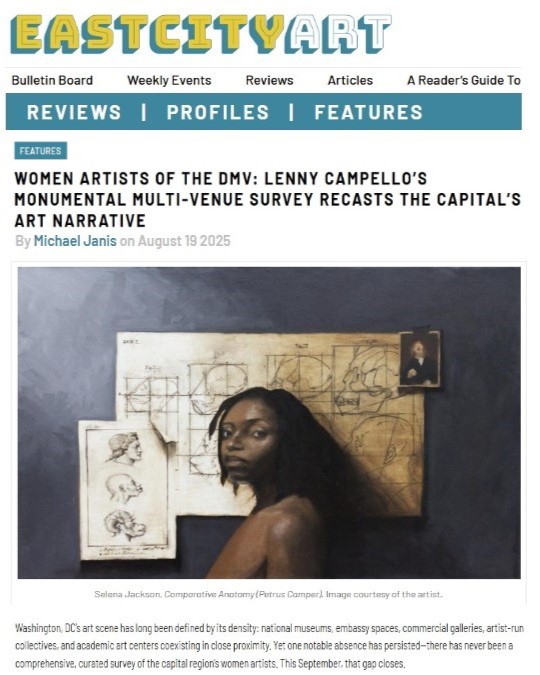
 Read more via East City Art: https://www.eastcityart.com/features/dmvwomen2025/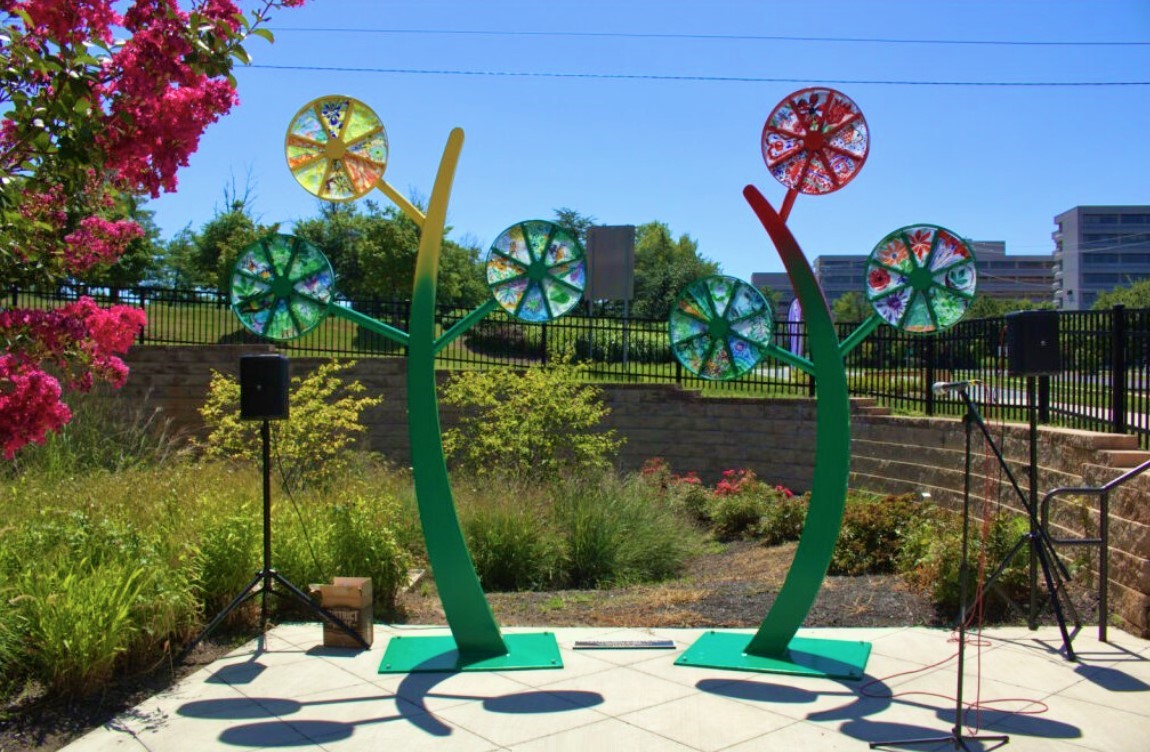

 Friday, July 11, 2025 at 1PM Eastern time