WGS Resident Artist Spotlight: John Henderson, Jr.

“The rhythm of the drum…

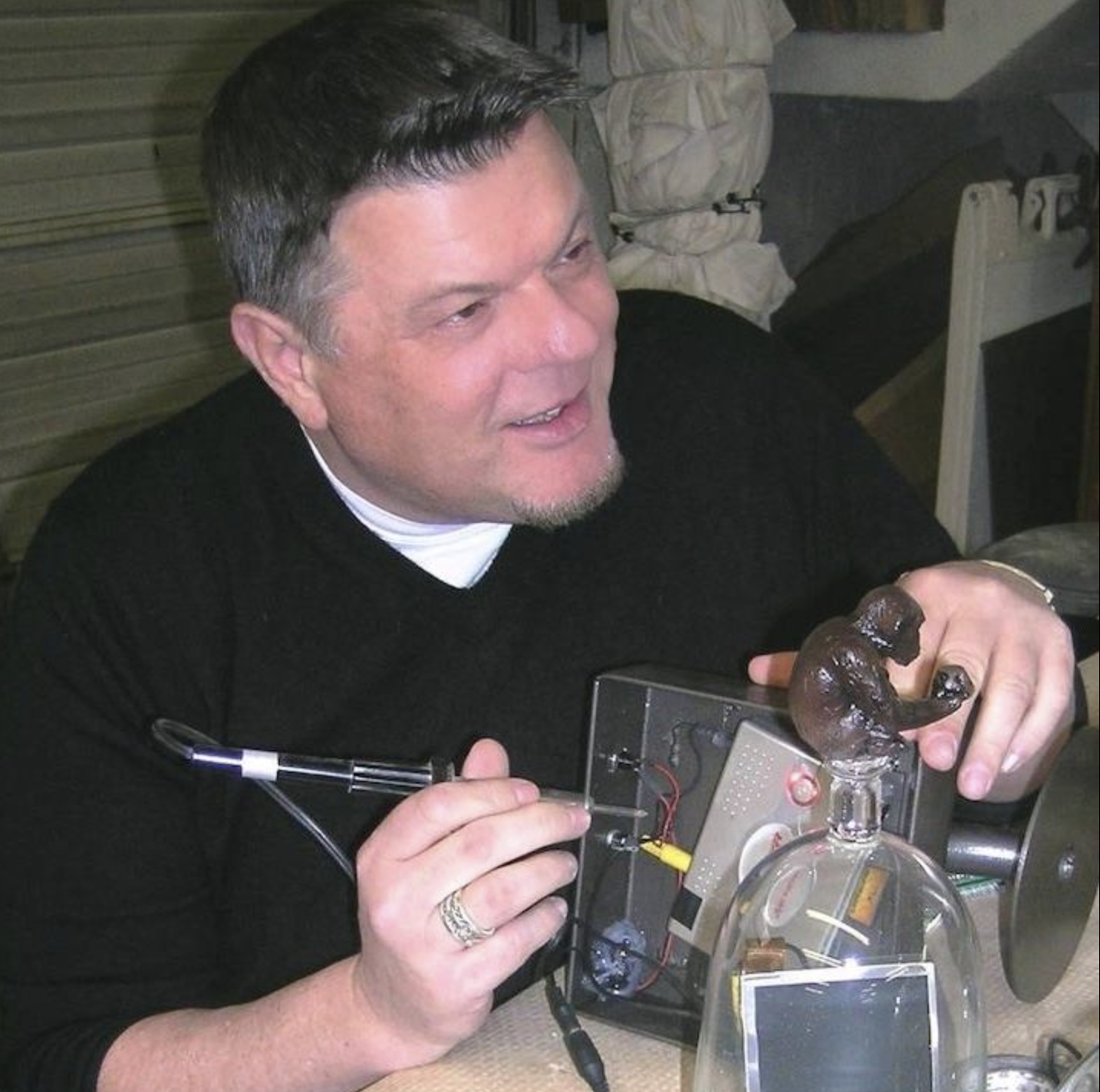
For Washington Glass School resident artist John Henderson, Jr., working with glass is both a creative pursuit and a spiritual practice. Since discovering kiln-formed glass at WGS, he has embraced the material’s beauty, technical challenges, and inherent unpredictability.

Discovering Glass

John’s introduction to Washington Glass School came while taking a stained glass class in the shared building that housed both the Washington Sculpture School and WGS.

“I had never worked with fused glass before,” he recalls. “As a result of taking a class at WGS, I became hooked on the process.”

What first attracted him was glass itself—its remarkable range of colors and textures, and the technical possibilities it offered. But it was something less tangible that kept him coming back.

“I enjoy working with my hands and creating beautiful objects,” he says. “The material has a spiritual quality due to its unpredictability when fire is applied. Not knowing the outcome is, in itself, stimulating and emotional.”

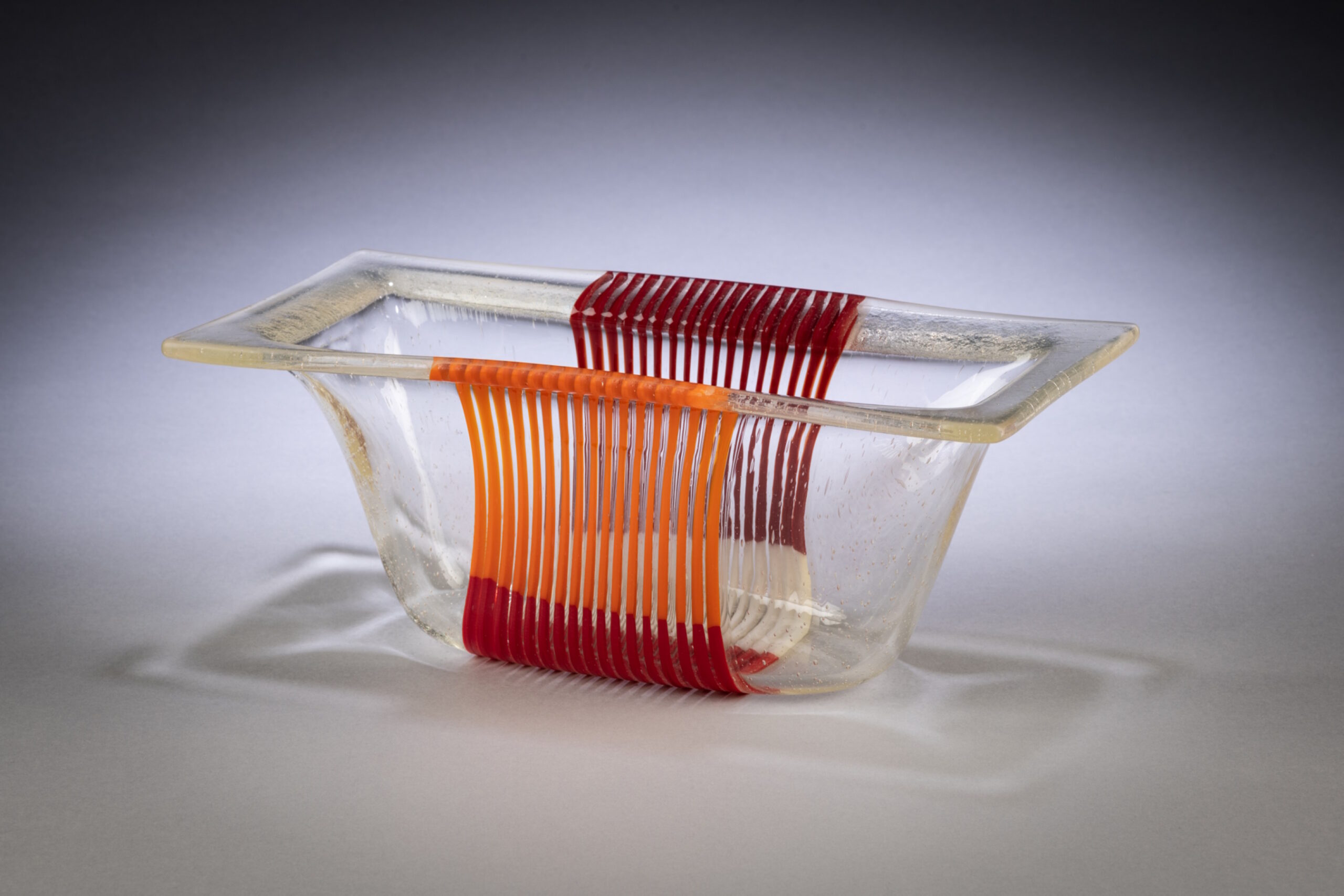
John Henderson “Warrior Shield”

Finding a Voice

Early in his artistic journey, John recognized something significant: very few Black artists were working primarily in glass.

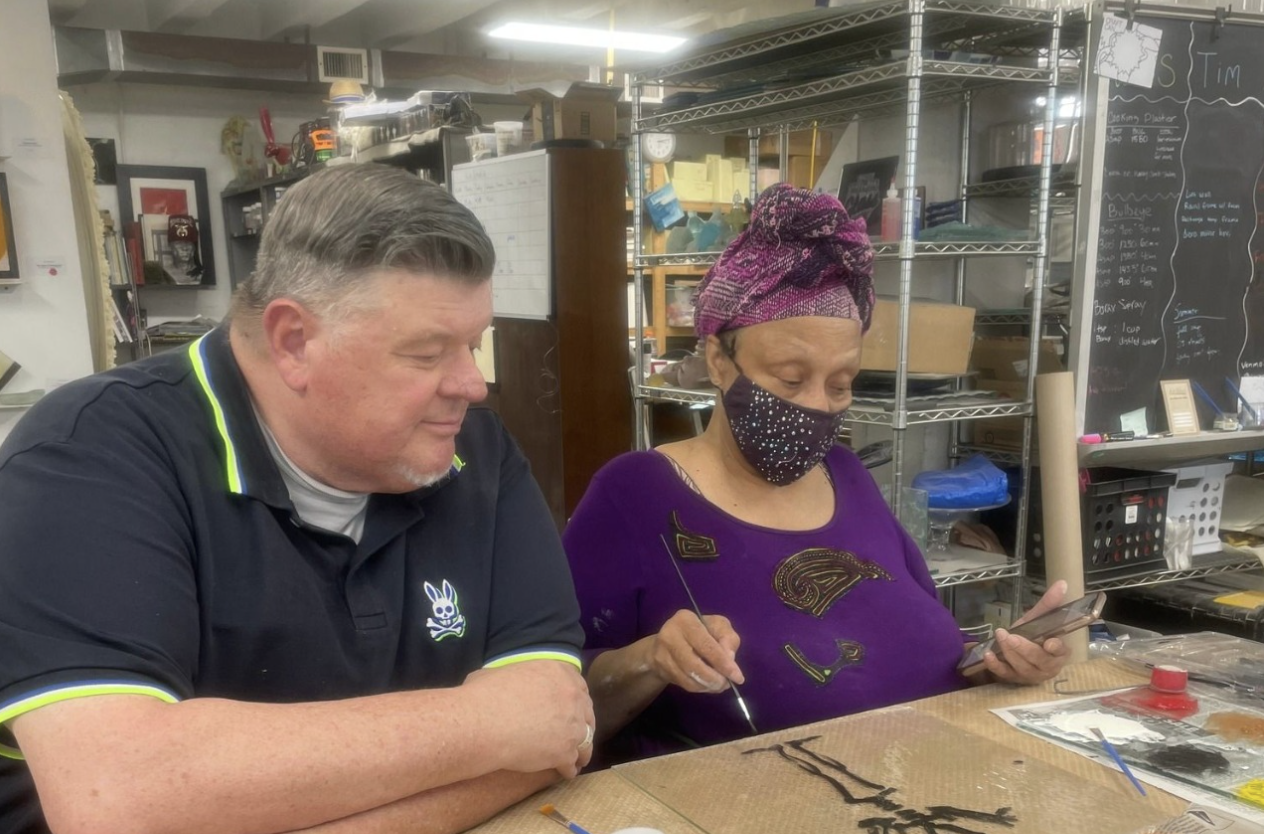
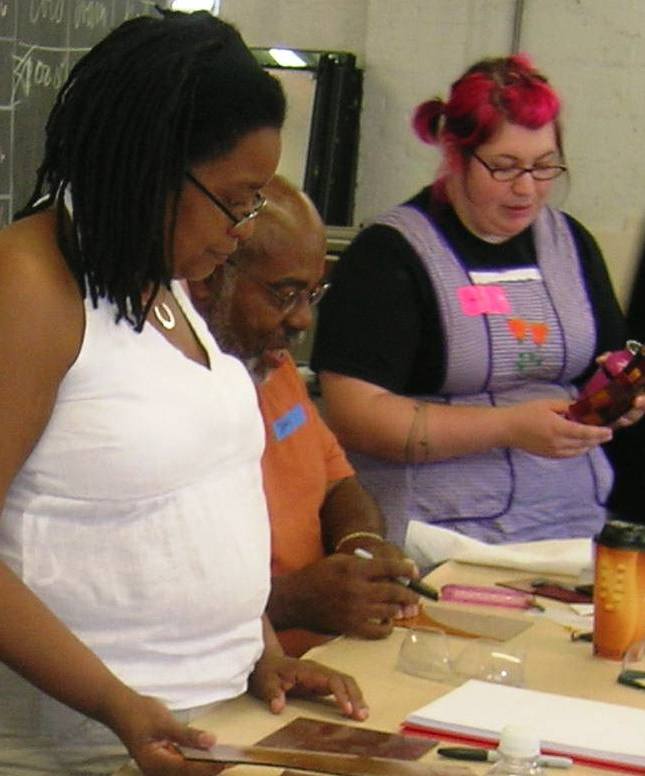
Black Artists of DC (BADC) visit John Henderson’s studio space, October 2025. L-R Sharon Robinson, Jimmy James Green, Evalyn Hamilton & John Henderson at his studio in WGS.

“Glass as an artistic medium was not an established art form within the African American community,” he explains.

As his practice developed, opportunities followed—including exhibiting work, organizing exhibitions, and becoming an active member of the Washington Glass School community. Those experiences helped shape both his artistic direction and his commitment to expanding representation within the field.

John Henderson installs his work in the WGS Gallery.

The Value of Community

For John, one of the greatest strengths of Washington Glass School is the environment created by artists working together.

“I find working in a shared environment stimulating,” he says. “Sharing information with fellow artists, exchanging ideas, and participating in constructive conversations continues to influence my work.”

That collaborative atmosphere, he believes, is one of the things that sets WGS apart.

“There is no other facility in the DMV that provides a collective space for practicing artists whose primary medium is glass.”

Looking Ahead

As Washington Glass School celebrates its 25th anniversary, John reflects on being part of its continuing story.

“It is an honor and privilege to be a studio artist at WGS,” he says. “WGS has evolved into an artistic and educational center for everything having to do with the practice and techniques of using glass as an artistic material.”

His hope for the future is straightforward and ambitious:

“That Washington Glass School will be known as one of the premier glass centers in America.”


One More Question

If your work had a soundtrack, what would be playing?

“The rhythm of the drum.”

As Washington Glass School marks its 25th Anniversary, the celebration continues this fall with a major exhibition featuring works by Washington Glass School artists at the Brentwood Arts Exchange in Brentwood, Maryland. Running from September 10 through October 31, 2026, the exhibition will showcase the extraordinary diversity, innovation, and storytelling that have defined the School for a quarter century — offering audiences a chance to experience some truly remarkable contemporary glass art.

The exhibition opening reception will be held on September 19, 2026, bringing together artists, friends, collectors, students, and the larger arts community in celebration of 25 years of Washington Glass School. An artist talk is scheduled for October 17th, 2026.

Washington Glass School Joins ACC’s National Craft Open Studios Weekend

Graphic announcing Washington Glass School hosting an open studio event for the American Craft Council's National Craft Open Studios Weekend on Saturday July 18 and Sunday July 19, 2026, between 12 PM and 5 PM.

Ever wondered what happens behind the scenes in a working glass art studio? This July, the public is invited inside.

The American Craft Council (ACC) launches its inaugural National Craft Open Studios Weekend on July 18–19, 2026, from 12 PM–5 PM local time. Part of the nationwide Handwork 2026 initiative, the free event connects visitors directly with more than 1,500 craft artists, studios, and creative spaces across 36 states and Washington, DC.

Think of it as an “Independent Bookstore Day” for American craft — a rare opportunity to step into the spaces where artists actually make the work.

As an official participating studio, the Washington Glass School will open its doors during this national celebration of handmade culture. The event also arrives during WGS’ 25th Anniversary year, making it the perfect time to experience one of the DC region’s leading centers for contemporary glass art.

Visitors will be able to:

  • Explore the Washington Glass School’s working studios and specialized glass facilities
  • See firsthand how kiln-cast glass, fusing techniques, and glass-and-steel artworks are created
  • Meet resident artists and instructors
  • View works in progress and hear directly from the makers
  • Purchase original contemporary glass artworks, sculptures, and panels

More than a traditional open house, the weekend offers a chance to experience the energy, experimentation, and craftsmanship that happen inside an active arts community.

The event also extends beyond the school itself. WGS is coordinating open hours with neighboring creative spaces along the corridor, creating a walkable destination for DMV art lovers. Visitors can also explore nearby studios including Ampersand Art Space and Tyler Makes Things.

Whether you are a collector, artist, student, or simply curious about how things are made, this weekend offers a unique opportunity to experience the creative process up close.

washington, dc and maryland makers of contemporary craft at Washington Glass School, promoting the American Craft Council (ACC) inaugural National Craft Open Studios Weekend happening July 18–19, 2026, 12 PM–5 PM.

Event Details

Washington Glass School3700 Otis St. Mt Rainier, MD 20712
July 18–19, 2026
12 PM – 5 PM
Free and open to the public

Come see where heat, glass, steel, and imagination meet.

Register for free at the link below, or contribute to the nonprofit American Craft Council with a recommended donation of $10.

National Craft Open Studios Weekend – American Craft Council | American Craft Council

Harbor of Stories

Community Glass Public Art Sculpture Completed in Kempsville, Virginia

Washington Glass Studio completes “Harbor of Stories,” an 18-foot public art sculpture in Kempsville, Virginia Beach. Designed by Michael Janis and the WGS team, the glass and steel artwork combines community-made fused glass, cast glass narrative panels, and illuminated architectural sculpture exploring local history, ecology, and collective memory.
Harbor of Stories public art sculpture by Washington Glass Studio and the Kempsville community in April, 2026

The Washington Glass Studio has completed Harbor of Stories, a major new public art sculpture for the Kempsville area of Virginia Beach, Virginia.

Rising nearly eighteen feet high at the intersection of Princess Anne Road and Witchduck Road, the sculpture combines steel, cast glass, fused glass, and LED illumination into a landmark artwork shaped by community participation and layered local history.

Modeled after a stylized sail, the sculpture references Kempsville’s historic relationship to waterways, trade, movement, and cultural exchange. By day, sunlight activates the colorful glass surfaces; by night, integrated lighting transforms the work into a glowing beacon within the surrounding streetscape.

But Harbor of Stories was never intended to function as a traditional monument.

Instead, the project asked a more complicated question:

How can public art hold many histories at once?

Designing a Collective Portrait of Place

The RFQ for the Kempsville public art project stood apart from many civic commissions because it did not seek a single heroic narrative.

Early concept study by artist michael janis overlaying site photographs with initial massing sketches exploring visibility, movement, and sightlines along Witchduck Road and Princess Anne Road.
Early concept massing sketch exploring visibility, movement, and sightlines along Witchduck Rd.

The project called for artwork that could acknowledge overlapping histories connected to Indigenous communities, colonial settlement, Revolutionary War events, ecology, segregation, architecture, waterways, and contemporary neighborhood identity.

Historical research materials and archival ephemera gathered during the development of Harbor of Stories, informing references to Kempsville’s layered cultural and maritime history.
WGS sought to include many references to Kempsville’s layered cultural and maritime history.

For artist Michael Janis and the Washington Glass Studio team, this became an opportunity to explore how glass can carry layered narratives simultaneously.

The final design uses a sweeping sail form as both visual landmark and metaphor. The structure references Kempsville’s history as a working port while suggesting movement, migration, exchange, and shared memory.

Janis' Architectural elevation rendering of the evolving sail-form sculpture design for Harbor of Stories, integrating glass narrative panels within a steel framework.
Rendering of the evolving sail-form sculpture design for Harbor of Stories, integrating glass narrative panels within a steel framework.

Embedded throughout the sculpture are narrative glass panels created through multiple processes.

Clear cast glass bas-relief panels designed by Washington Glass Studio reference Indigenous presence, the Powhatan Mantle, the yehakin, local plant and aquatic life, colonial history, and the Battle of Kemp’s Landing during the American Revolution.

Collage of clear cast glass narrative panels featuring layered imagery of boats, wildlife, Indigenous references, plants, and historical scenes created for the Harbor of Stories public sculpture.
Cast glass bas-relief panels created by Washington Glass Studio depicting historical narratives integrated into Harbor of Stories.

These imagery-rich cast panels are interwoven with vibrant fused-glass panels created directly by community members during a year-long series of public workshops.

Together, the sculpture becomes less like a single memorial object and more like a collective portrait of place.

Community Collaboration Through Glass

A central component of Harbor of Stories was public participation.

Washington Glass Studio held hands-on workshops at the Kempsville Community Center and the Virginia Museum of Contemporary Art (Virginia MOCA), inviting local residents to create fused glass panels based on personal memories, experiences, and connections to the area.

Interior photograph at Virginia MOCA showing signage for a Washington Glass Studio community glass workshop connected to the Harbor of Stories public art project.
Virginia MOCA announcing glass-making workshops for the community art project.

Participants translated family stories, neighborhood imagery, landmarks, symbols, and aspirations into colorful glass compositions that now fill the sail structure.

Printed flyer for the Harbor of Stories community workshops featuring a diagram of the sailboat-inspired sculpture, event times, and information about glass-making sessions hosted by Washington Glass Studio.
Public workshop flyer at the Kempsville Community Center
Artists Michael Janis and Erwin Timmers greeting participants during a community glass workshop at the Kempsville Community Center.
Michael Janis and Erwin Timmers at Community Workshop

For many participants, this marked their first experience working with glass as an artistic material.

What emerged was not simply decoration, but authorship.

Kempsville residents proudly displaying their handmade fused glass panels created for inclusion in the Harbor of Stories sculpture.
Community Participants with Completed Glass Tiles

Each individual panel is modest in scale, yet together the hundreds of handmade elements create a unified visual voice that physically embeds community participation into the sculpture itself.

This process reflects one of Washington Glass Studio’s continuing interests within public art practice: creating projects where communities actively shape the artwork rather than simply receiving it after completion.

The Challenges of Public Art Fabrication

Like many large-scale public art projects completed in recent years, Harbor of Stories faced dramatic material and fabrication challenges during production.

As the project moved through engineering, approvals, and construction phases, steel prices rose substantially beyond earlier projections.

At one stage, the structural steel alone threatened to consume nearly the entire project budget.

Photo Collage combining structural engineering shop drawings with photographs of steel components being fabricated for the Harbor of Stories glass and steel sculpture by Washington Glass Studio.
Engineering plans and early steel fabrication process in shop.

Working closely with structural engineer Sante Taroli of Greenman-Pedersen, Inc., along with fabricators and city representatives, the team redesigned portions of the internal framework while preserving the sculpture’s outward appearance and structural integrity.

The project ultimately benefited from partnerships with fabricators more commonly associated with Defense Department construction work, including VTG Defense, whose expertise helped realize the complex steel structure.

Large sail-shaped steel sculpture structure fully assembled inside a fabrication shop for the Harbor of Stories public art project in Virginia Beach.
The sail-shaped steel sculpture structure fully assembled inside a fabrication shop.

The experience reinforced an important aspect of contemporary public art practice: successful civic artwork depends not only upon artistic vision, but upon sustained collaboration between artists, engineers, fabricators, architects, and public agencies.

Light, Glass, and Living Narratives

Back at the Washington Glass Studio, fabrication of the cast glass narrative panels continued simultaneously with construction of the steel armature at the metal shop.

Erwin Timmers bolting a steel-framed glass infill panel assembly onto the sail-shaped structure of the Harbor of Stories public artwork.
Erwin Timmers securing modular glass grid assemblies onto the sail structure during final installation.

For Washington Glass Studio, glass remains uniquely suited to commemorative and civic artwork because of its ability to hold texture, imagery, transparency, and light at the same time.

As sunlight passes through the sculpture, the embedded imagery continuously shifts throughout the day. Reflections, shadows, and transparency create an artwork that changes according to season, weather, and viewing position.

Artist Erwin Timmers carefully positioning a colorful fused glass panel into the steel framework.

Rather than functioning as a static monument, the sculpture behaves more like a living visual environment.

Michael Janis raising a large glass artwork panel toward the steel sail structure during installation of the Harbor of Stories sculpture in Virginia Beach.
Artist Michael Janis lifting a cast glass narrative panel into place during installation of the Kempsville public art sculpture.

This relationship between light and narrative has long been central to Washington Glass Studio’s public art practice, particularly in projects involving memory, identity, and collective history.

Installation and Dedication

Installation of Harbor of Stories took place over multiple phases as the steel framework, glass components, lighting systems, and structural elements were assembled on site.

The public dedication was held in April 2026.

Ribbon cutting ceremony for the Harbor of Stories public sculpture with artists, civic leaders, and community members gathered beside the illuminated glass sail artwork.
Community leaders, artists, and residents gather for the official ribbon cutting dedication of Harbor of Stories on April 18, 2026.

For the artists and collaborators, the most rewarding moment came when local residents began recognizing their own contributions within the finished sculpture — locating individual glass panels while experiencing the larger artwork as a shared civic space.

Two community participants pointing toward colorful glass panels they created and helped install within the completed Harbor of Stories public sculpture in Virginia Beach.
Kempsville residents search for and proudly identify their handmade fused glass panels within the completed Harbor of Stories sculpture.

The sculpture now stands not simply as an object placed within the neighborhood, but as a work grown directly from community participation and local history.

Dramatic upward perspective looking through colorful glass panels and steel framework inside the Harbor of Stories sail sculpture.
Upward view through the illuminated glass and steel sail structure revealing layered transparency, color, and light.

Project Team

Artists: Michael Janis, Erwin Timmers, Tim Tate, Arden Colley, and Ladan Ebrahimian

Structural Engineering: Sante Taroli / Greenman-Pedersen, Inc.

City of Virginia Beach Cultural Affairs and Public Art: Chad Clark and Emily Labow

Fabrication Partners: Thomas Willis / Production Welding and Fabrication; Randy Williams and Stephen Bittner / VTG Defense; Nick Lotuaco / L4 Builders

Group portrait of Washington Glass Studio team members Arden Colley, Ladan Ebrahimian, and Erwin Timmers sitting together during production of the Harbor of Stories public art sculpture.
Washington Glass Studio artists L-R Ladan Ebrahimian, Arden Colley, and Erwin Timmers relax at Harbor of Stories.

About Washington Glass Studio

Washington Glass Studio, based in Mount Rainier, Maryland, creates contemporary public art, architectural glass, sculpture, and community-engaged projects that integrate fine art, narrative imagery, and innovative glass techniques.

The studio’s public artworks frequently combine cast glass, fused glass, steel, and community participation to explore themes of history, identity, environment, and collective memory.

Michael Janis and Tim Tate Featured at Glass 54 with New Collaborative Work The Common Thread

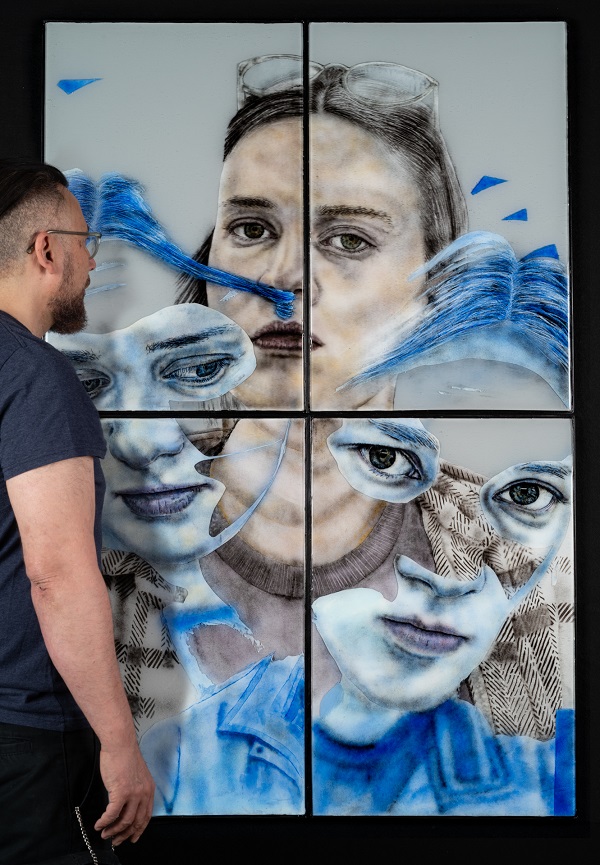
the handsome sexy artist Michael Janis sits adjacent to the narrative glass artwork sculpture titled "The Common Thread" and collaborator Tim Tate.
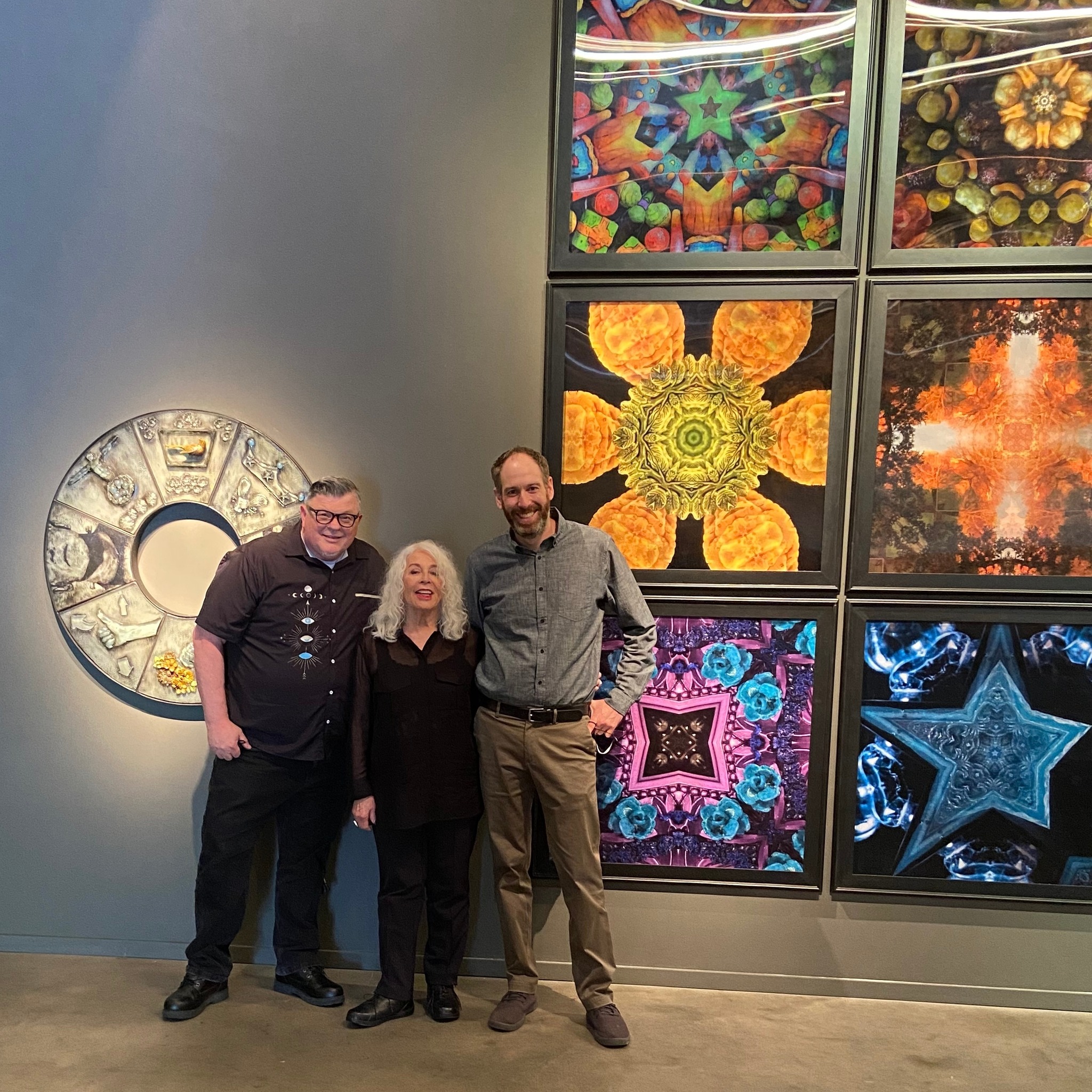
Artists Michael Janis and Tim Tate with their glass/mixed media artwork “The Common Thread”. photo by Pete Duvall

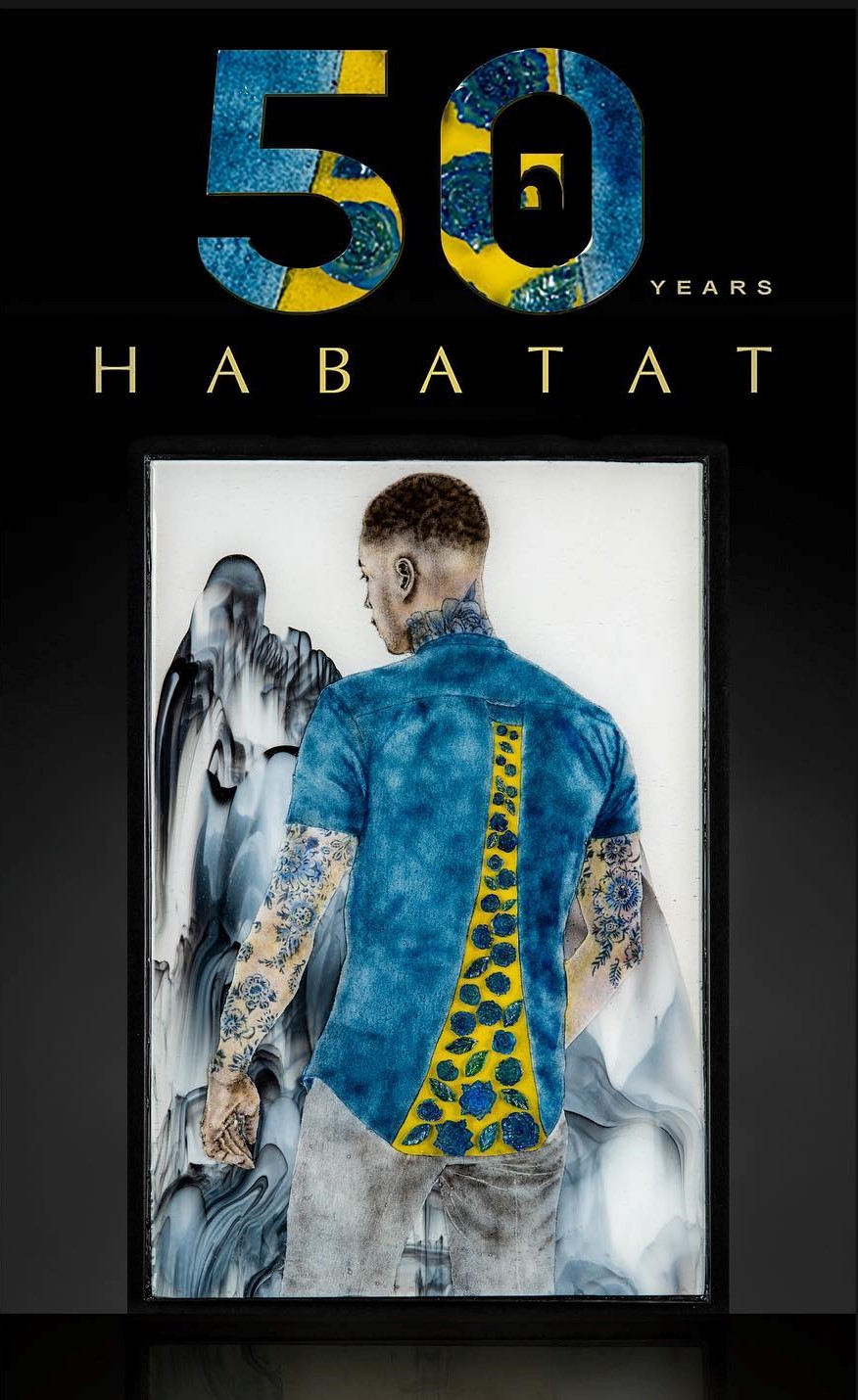
This April, Washington Glass School Directors Michael Janis and Tim Tate are featured at Glass 54, Habatat Galleries’ International Contemporary Glass Invitational, held April 22–26 in Royal Oak, Michigan. Known for bringing together leading voices in contemporary glass, the exhibition offers a focused snapshot of where the medium is now—and where it’s heading.

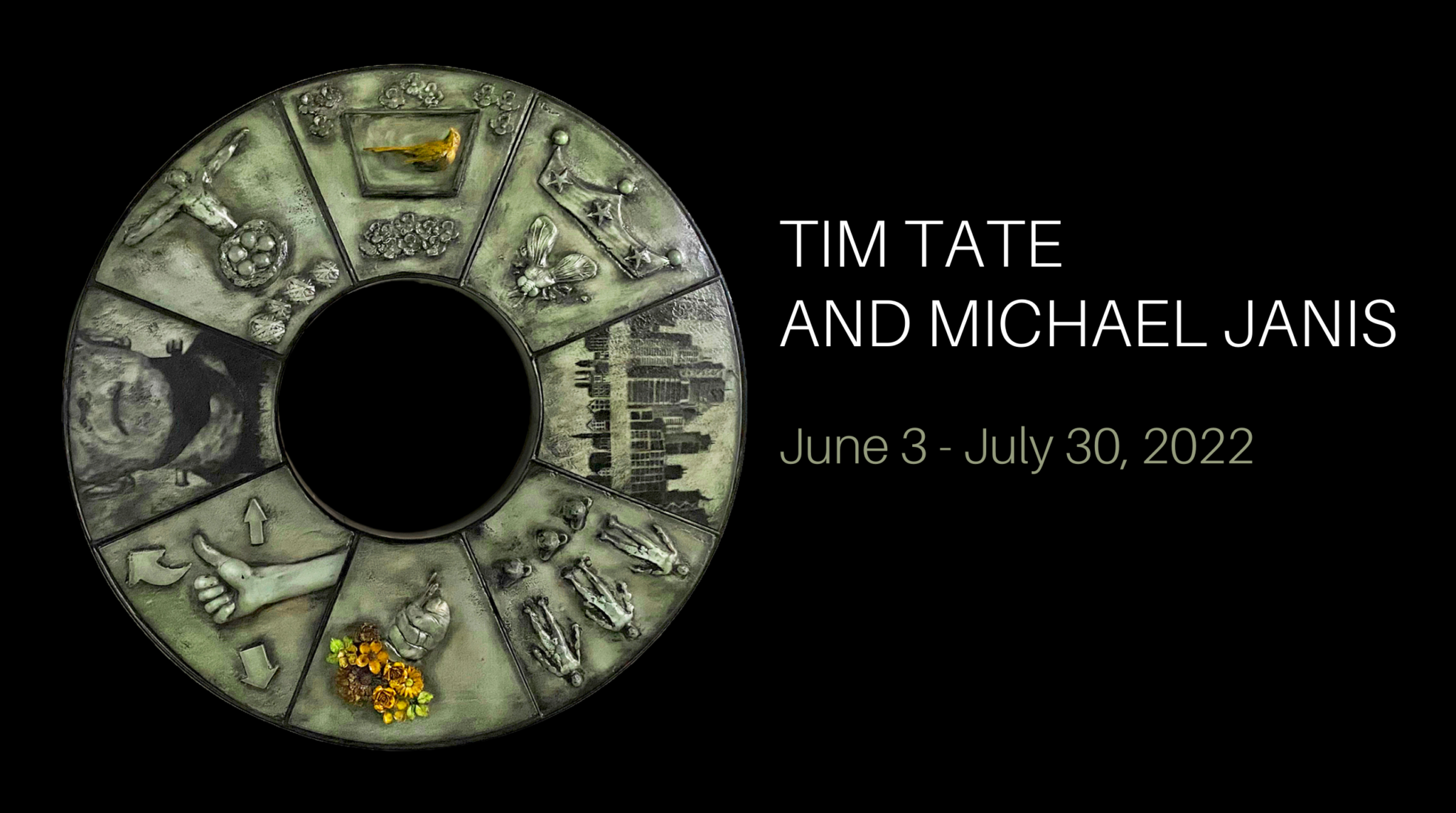
At the heart of this year’s event is a special “show-within-the-show” spotlighting Janis and Tate, whose long-standing dialogue—spanning more than two decades of shared ideas, experimentation, and advocacy—comes into sharp focus through both their individual works and a new collaborative installation, The Common Thread. The piece reflects an ongoing exploration of connection: between artists, between narratives, and between material and meaning.

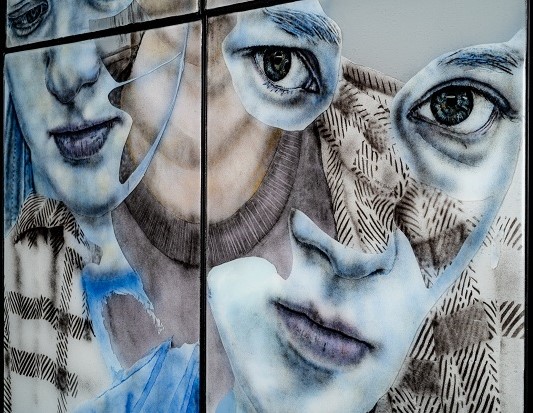
detail of narrative portrait made in crushed glass powder (frit) in a painterly manner
Detail of “The Common Thread” artwork by Michael Janis & Tim Tate.

For Michael Janis, the works on view mark a continued evolution of his distinctive visual language. Known for his masterful use of sgraffito (drawing with crushed glass frit) and layered glass imagery, Janis creates compositions that are at once graphic and deeply psychological. His figures—often distorted, fragmented, or caught in ambiguous gestures—inhabit charged spaces where identity, perception, and emotional tension intersect.

michael janis' kilnformed glass narrative abstract portrait titled "What Shines Thru"

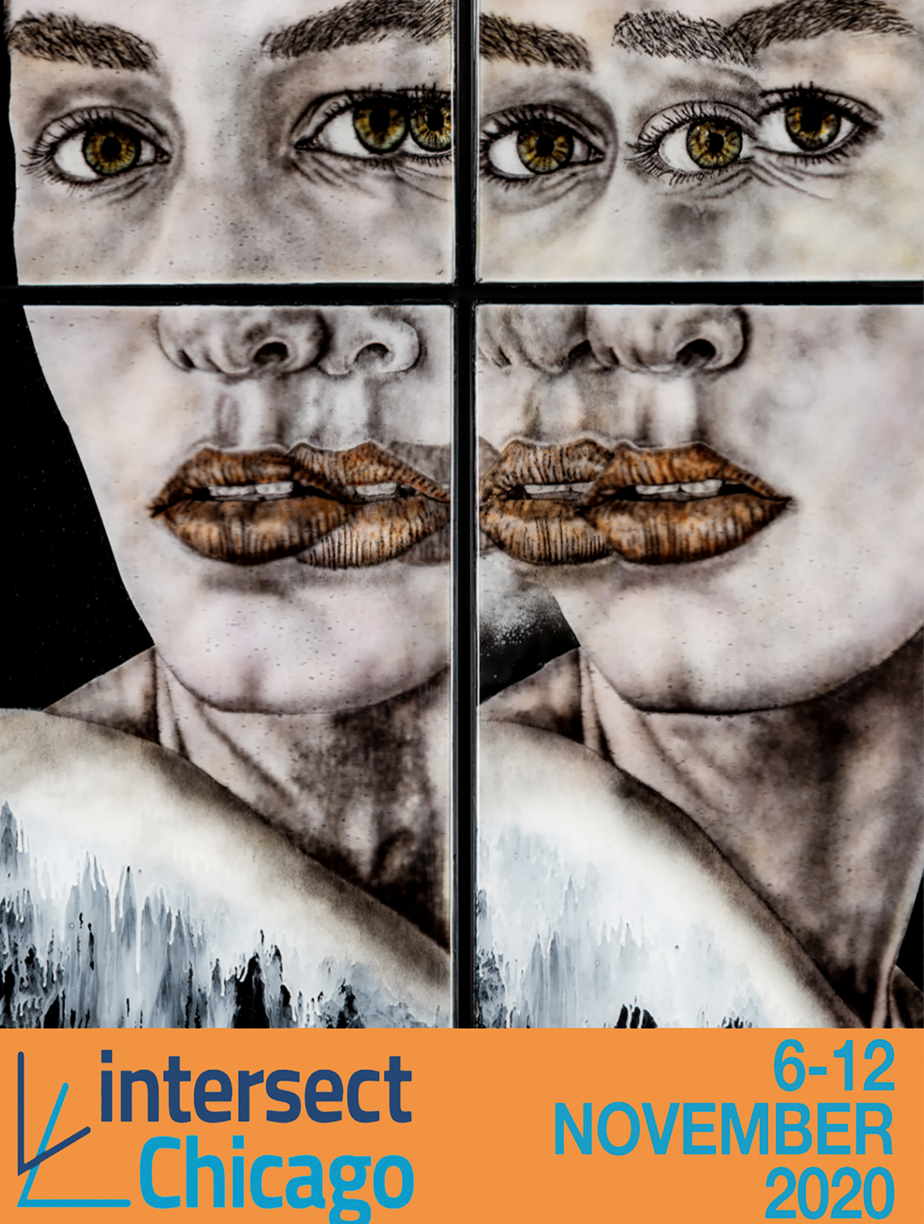
The new pieces presented at Glass 54 push further into this territory. Faces and bodies emerge through saturated color and bold contour, at times obscured or refracted through reflective and mirrored surfaces. Viewers may find themselves implicated in the work, their own image pulled into the composition—an echo of Janis’ ongoing interest in perception and the instability of truth. These works resist easy narrative, instead offering a kind of visual poetics: suggestive, uneasy, and quietly confrontational.

Tim Tate’s contributions, known for their integration of video, electronics, and sculptural glass forms, provide a compelling counterpoint. Where Janis leans into the psychological and painterly, Tate often engages time-based media and narrative structure, creating works that expand the boundaries of what glass can contain and communicate.

Everything Rises(2026) by artist Tim Tate. photo by Pete Duvall

Together, their collaboration The Common Thread becomes a synthesis of these approaches—a dialogue made tangible. The installation weaves together their shared histories and divergent practices, suggesting that connection is not about sameness, but about resonance across difference.

Presented within the larger context of Glass 54, this focused exhibition offers collectors, curators, and viewers a rare opportunity to experience both the individual strengths and the collaborative energy of two artists who have helped shape the trajectory of contemporary glass.

For more information on the exhibition and the featured presentation, visit:
https://glass54.com/tate-janis

Creative Crafts Council 35th Biennial Exhibit = WOW!

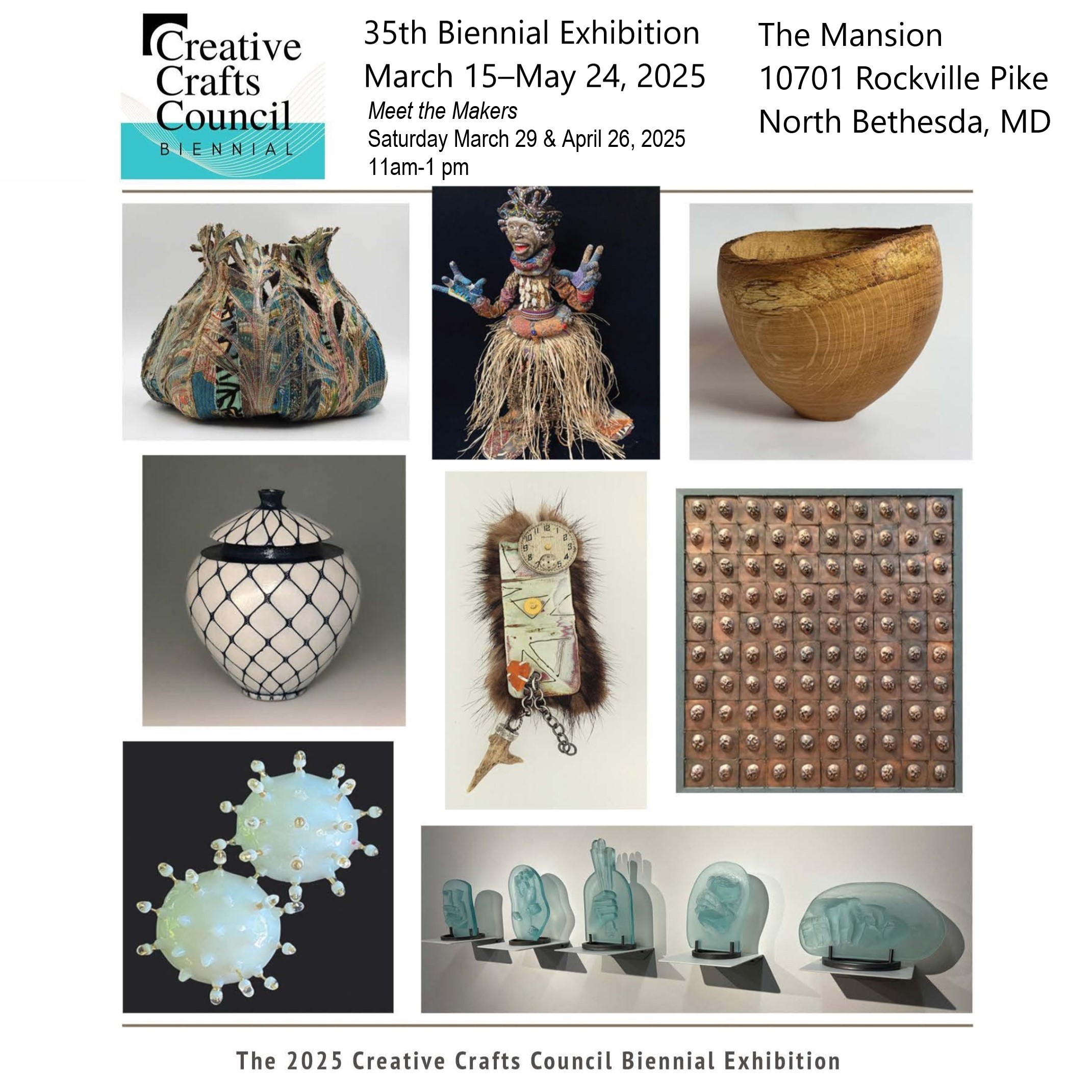
The 2025 Creative Crafts Council (CCC) 35th Biennial Exhibition presents 169 outstanding artworks by craftspeople from the Washington DC, Maryland and Virginia region. See top crafts in ceramics, enamel, fiber, glass, metal, mixed media, wood, book arts, and jewelry and wearable art. On March 14, 2025 36 artworks received awards for their makers’ outstanding efforts. 

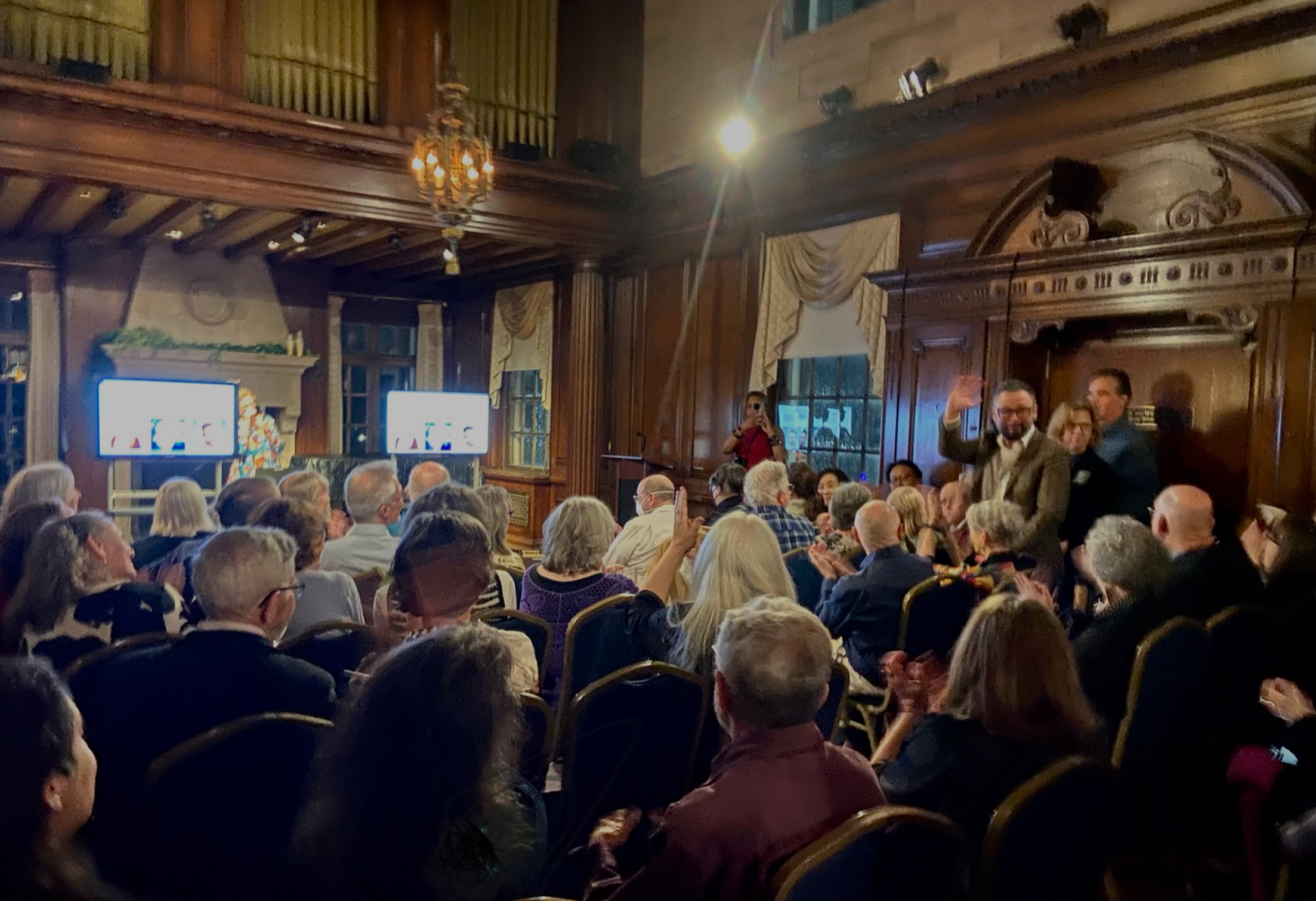
Jurors for the 2025 CCC 35th Biennial wave to the audience at Strathmore Mansion. L-R: Michael Janis, Mary Higgins, Robert Devers.

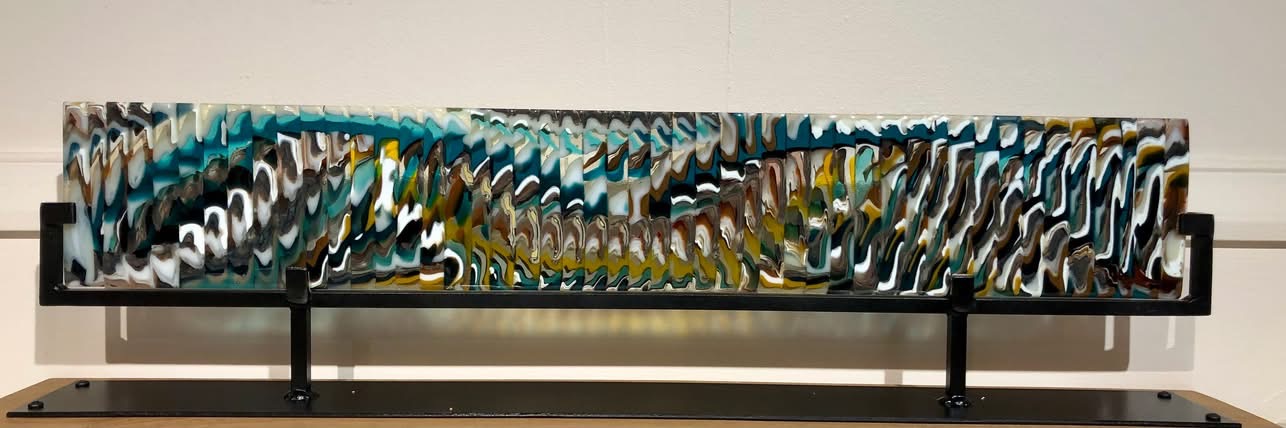
Washington Glass School was well represented, with works by Kate Barfield, Erwin Timmers and April Shelford included in the exhibition.

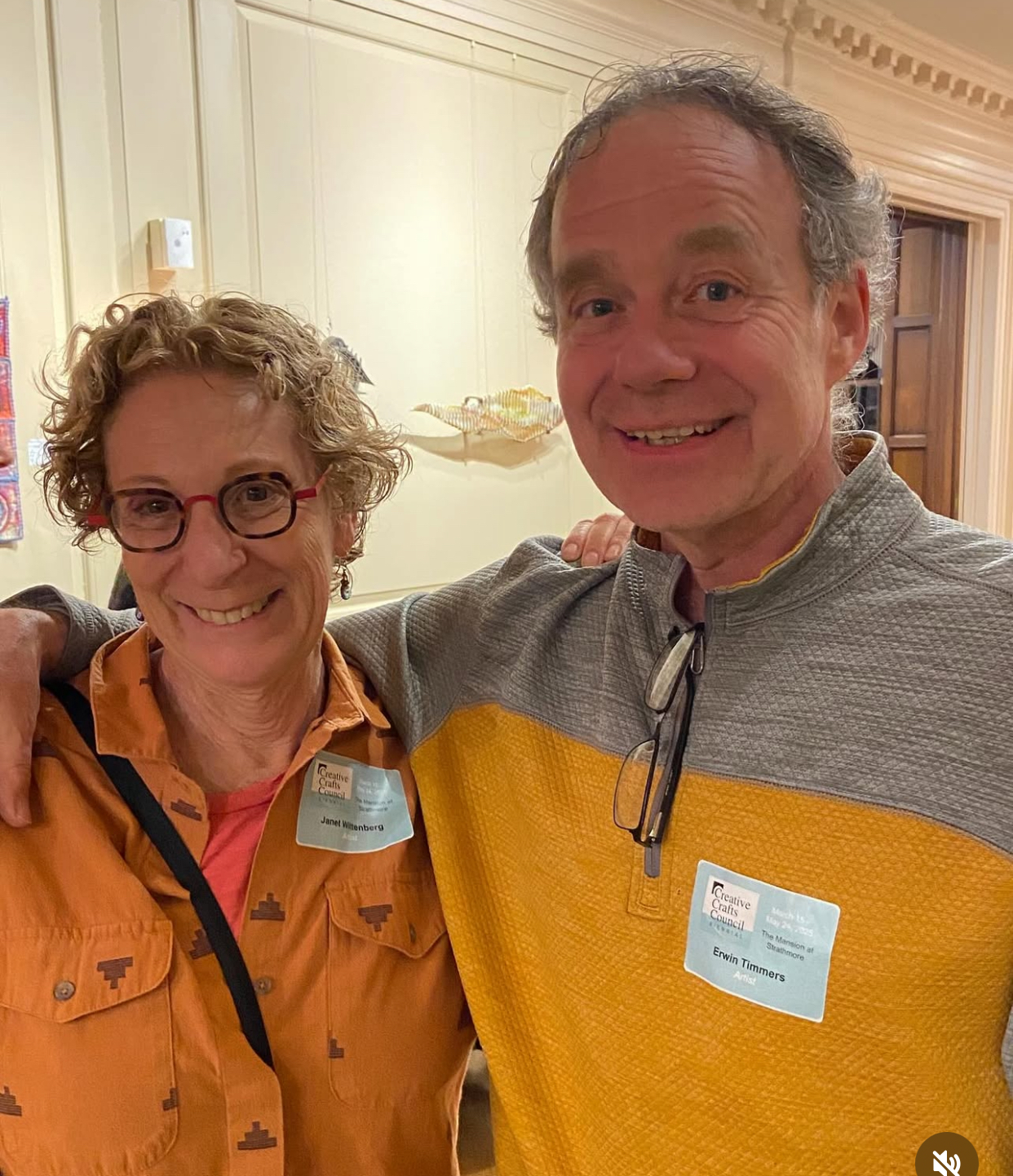
1st and 2nd place winners of the CCC Best Glass category: Janet Wittenberg and WGS’ Erwin Timmers
April Shelford’s work Fossil won Honorable Mention

Saturday March 29, and April 26, 2025: Meet the Makers – come meet crafts people from the CCC Guilds and learn more about their crafts at the Strathmore Mansion 11am-1 pm

35th Biennial Creative Crafts Exhibition of Fine Crafts ​
Saturday March 15 – Saturday May 24, 2025

The Strathmore Mansion
10701 Rockville Pike
North Bethesda, MD 20852

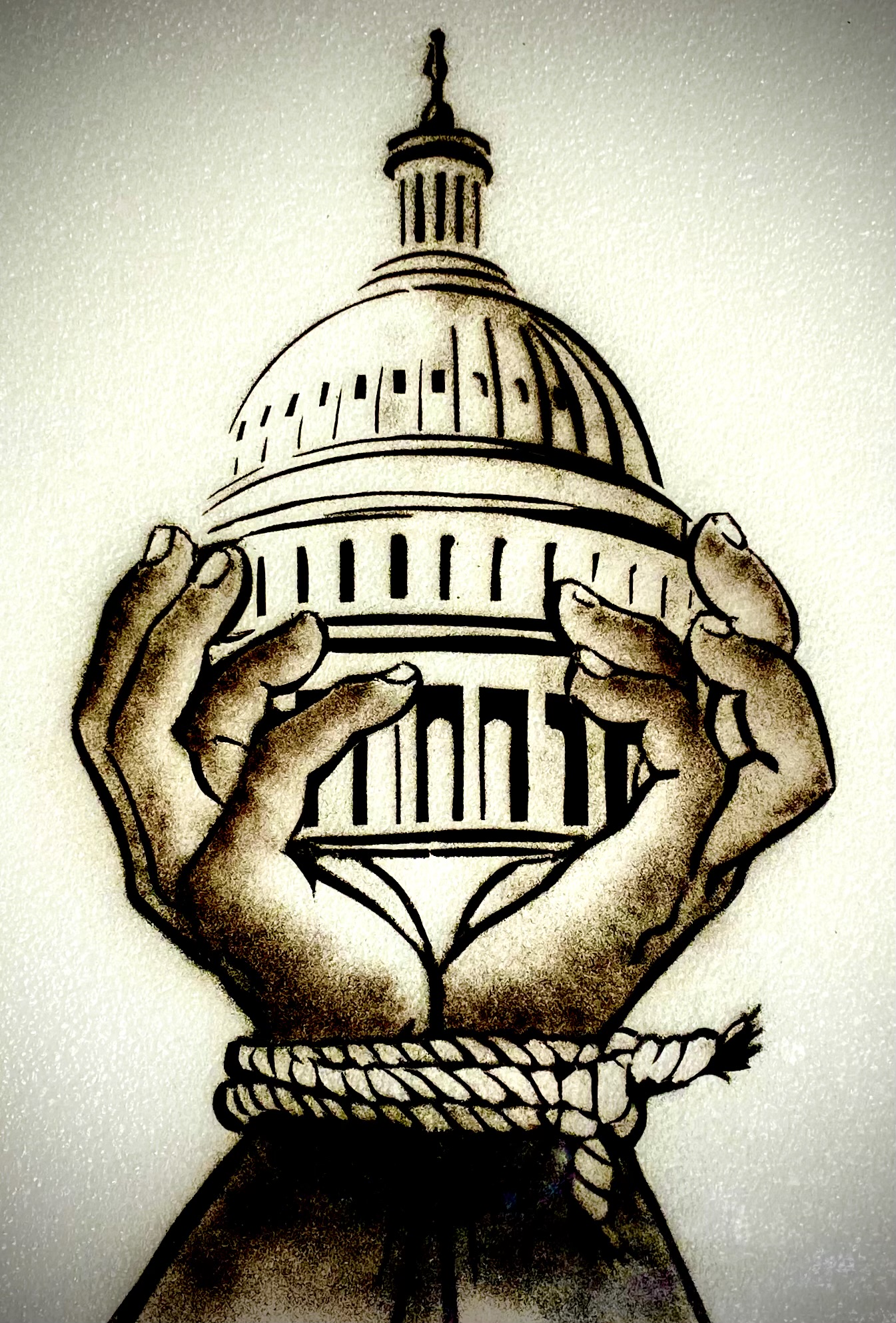
Commemoration of the Slaves who Built the US Capitol

Glass art by Michael Janis

The recent order from President Trump to rescind DEI (Diversity, Equity, and Inclusion) programs has led to a noticeable downplaying of Black History Month across government agencies. The U.S. State Department, for instance, has prohibited public events or messages celebrating the month, which has been a staple of American culture since the 1970s.

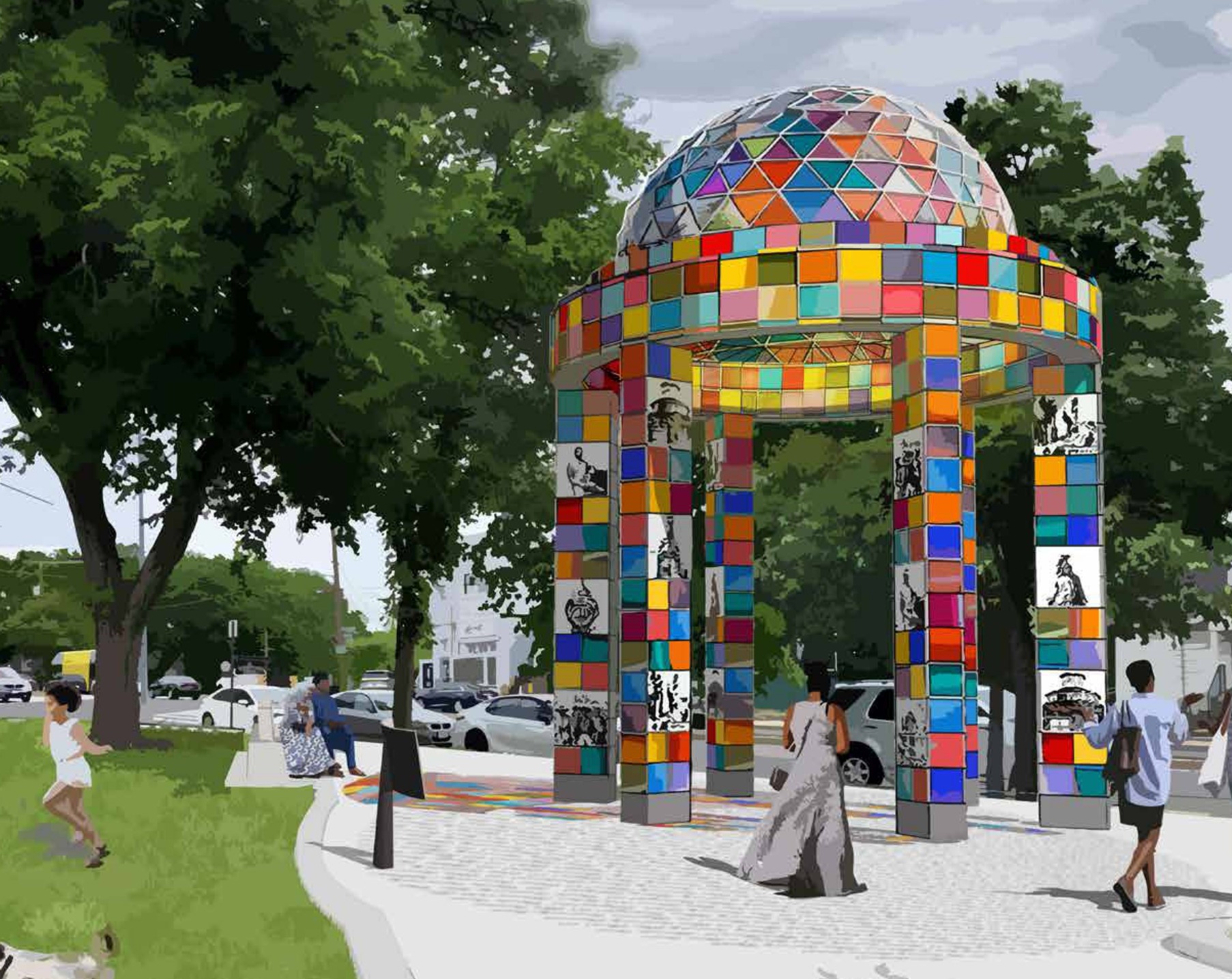
Michael Janis’ design for DC Ward 5 Memorial

In contrast, local organizations in Washington, DC, are stepping up to honor Black history and contributions. The Lamond Riggs Library Friends, in collaboration with the DC Office of Planning, is hosting Foundations of Freedom: Recognizing the Enslaved People Who Built the U.S. Capitol. This special event will introduce WGS Director Michael Janis’ design for a new DC Memorial to Honor the Enslaved People Who Built the U.S. Capitol for Ward 5. Along with DC’s Office of Planning staff, Michael will offer an overview of a public art proposal. The program will include storytelling, a discussion of the design process, and a Q&A session to engage the community.

Thursday, February 6, 2025 from 1 pm – 3 pm @ Lamond-Riggs DC Public Library, 5401 South Dakota Ave NE, WDC.

For more information – click on link to jump to DCPL site: https://dclibrary.libnet.info/event/12875262

Creative Crafts Council 34th Biennial Exhibition of Fine Crafts

The Creative Crafts Council (CCC) 34th Biennial Exhibition will present some of the Washington DC, Maryland and Virginia region’s top work in ceramics, enamel, fiber, glass, metal, mixed media, wood, book arts, and more at The Mansion at Strathmore. Look for works by WGS artists April Shelford and Patricia De Poel Wilberg!

April Shelford, “Gravity’s Loom” 2023, fused glass


The Creative Crafts Council is an umbrella organization of fine craft guilds that sponsors a juried biennial exhibition of regional fine craft artists at the Strathmore Mansion in North Bethesda, Maryland and supports and promotes craft-making across Maryland, Virginia and the District of Columbia. The CCC’s exhibitions of regional craft have been held since 1954.

The 2023 CCC Exhibition
May 9-July 22,2023 At the Mansion at Strathmore
Thursday, May 11, 2023: Opening Reception and awards -open to the public at the Strathmore Mansion from 7-9 pm.

The Mansion is located at 10701 Rockville Pike, Rockville, MD 20852, close to the Grosvenor Metro Station. Visit the exhibition now through July 29, 2023.

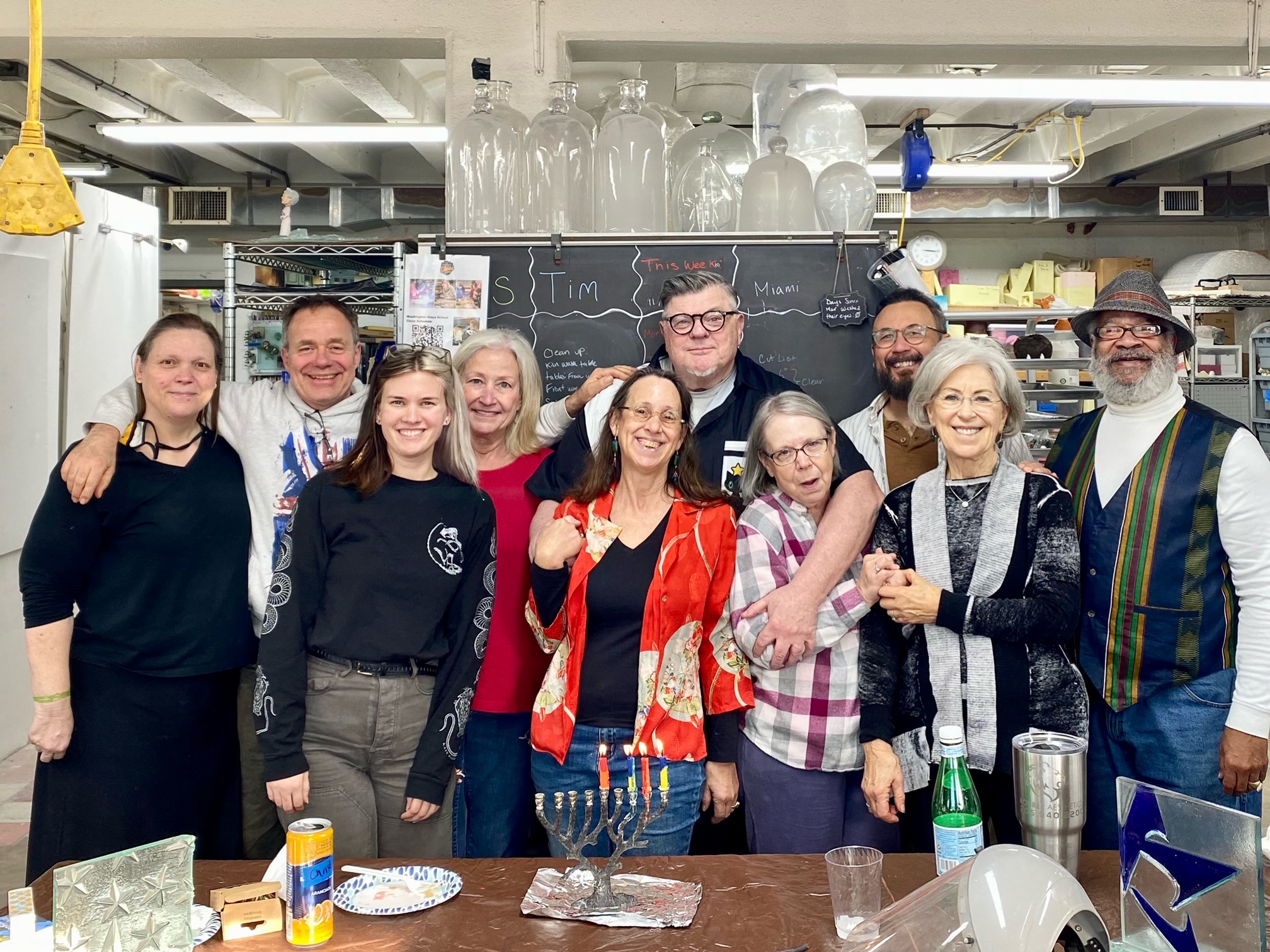
Happy Holidays from Washington Glass School and Studio

Tis the Season!

All of us at the Washington Glass School & Studio Wish You and Family a Joyous Holiday Season! And a Happy Healthy New Year!

Artists and Educators from the Washington Glass School

(L-R) Patricia De Poel Wilberg, Erwin Timmers, Christina Helowicz, Nancy Kronstadt, Kate Barfield, Tim Tate, April Shelford, Michael Janis, Trish Kent and John Henderson. Not pictured: Graciela Granek, Sean Robinson, Diane Cabe, Gabrielle Morris, Kyle Crosby, and Daphne Matyas.

Tim Tate: Reflections on Studio Practice

Glass Sculptor and Artist Tim Tate looks back on 20 years of creating a community. He recently put together some of his observations on well, how did we get here?

Artist Tim Tate

“I had been raised in a household filled with craft materials. I rarely saw my mother’s hands empty, always creating something. I inherited this love. I spent my early adult years being trained in the methods revolving around studio glass while attending the 2 weeks to 2-month workshops of Penland, Pilchuck, Corning, Pittsburg, etc. (I had no money to attend grad school …though I yearned for Cranbrook). These years of varied workshops and practitioners was the perfect way to obtain a broad outlook on the entire field. We founded the Washington Glass School in 2001 with very specific goals. Let me see if I can make this clear.

Tim Tate & Joyce Scott work on a new collaborative sculpture at the Washington Glass School.

1). We wanted to be something other than a traditional studio glass shop. From the beginning we realized we wanted a much broader approach; something that reflected the mission of education centers like the Crucible in Oakland and Penland in NC. We embraced mixed media work from the beginning with varied classes in kiln formed glass, steel, electronics, encaustics, etc. Our idea was not to in any way denigrate the rich history of studio glass, but to live just outside of those confines to see what would happen. To step slightly away from the 20th century.

Tim Tate
Tim Tate “We Rose Up”, 2017, Cast objects, mirrors, and LED’s, 32 × 32 × 4 in.

2). As a gay man in glass, it was apparent that diversity was sorely lacking in every way in the glass world. So we did outreach and advertised our classes in many publications that went to diverse populations, rather than wait for these populations to approach us. This worked very well. Even now we go to the Facebook pages of different neighborhoods to show our class schedules.

Einar and Jamex de la Torre at Washington Glass School 2015
The Brothers De La Torre visit the Washington Glass School in 2015.

3). We have embraced social media in every way possible, from individual and school Facebook and Instagram pages (where we post regularly) to administering a Facebook discussion group. This group is called “21st Century Glass/Conversations and Images/Glass Secessionism” and maintain over 8000 members from 97 countries.

With William Warmus we came up with the original concept of “Glass Secessionism”…to step slightly away from the recognized canon of 20th century glass and to create as much dialog and critical analysis as possible. There have been over 1.5 million words written and over thousands of images shared on this page focusing almost entirely on that theme.

In 2008, Artomatic held an international glass show.

4). We participated in many local shows here in the DC area, such as the spectacular Art-O-Matic show that truly put us on the map. We also curated many shows over the years to include local emerging artists. I have served on a dozen boards and juried dozens of shows and grant applications to stay in the loop and form a community bond. There are 3 Co-Directors here, all sharing a similar mission….to create a large regional, national and international community to foster new growth within our field.

2009 Glass Workshop at Washington Glass School. L-R Cheryl P Derricotte, David Cook, Nicole Puzan.

5). Our first class was on Sept. 13, 2001…. a difficult day in history to start anything being right after 9/11. We thought no one would even attend the first classes. But we discovered something else….no one cancelled. It appeared that while the purchase of art slowed to a trickle around the country, the creation of art thrived. Our first class was filled with artists who wanted to make narrative work about the devastation of that event. From that moment on we embraced narrative work with all our hearts. Works about political events, social injustices and inequalities were common within our sculptural classes, and certainly in my own works. We have now been in operation over 20 years, with over 6000 students. 60% of those were and are women, we have a large population of BIPoC students and we have worked with hundreds of LGTBQ students. We are so very proud of this fact.

My purpose for serving on boards right now is to focus on the building of communities as an artistic practice. I want to take a slight step away from academia as these institutions can become elitist, and I want to be non-elitist as we have been from the beginning. I also like regional boards that focus in the mid-Atlantic.

My personal practice had been deeply imbedded in the world of glass galleries and museums, though frequently as an outsider. I have stepped away from this in the last few months. I have moved towards the fine art world once again, as I had started there. It feels great to go back to my roots, surrounded by a community that reaches far beyond anything we ever anticipated.” – Tim Tate, October, 2022

Michael Janis Finalist in 2022 Contemporary Craft Prize

Michael Janis, “Allowing Our Past to Become Part of Ourselves” detail, 2022, fused glass, glass powder imagery. Photo by Pete Duvall.

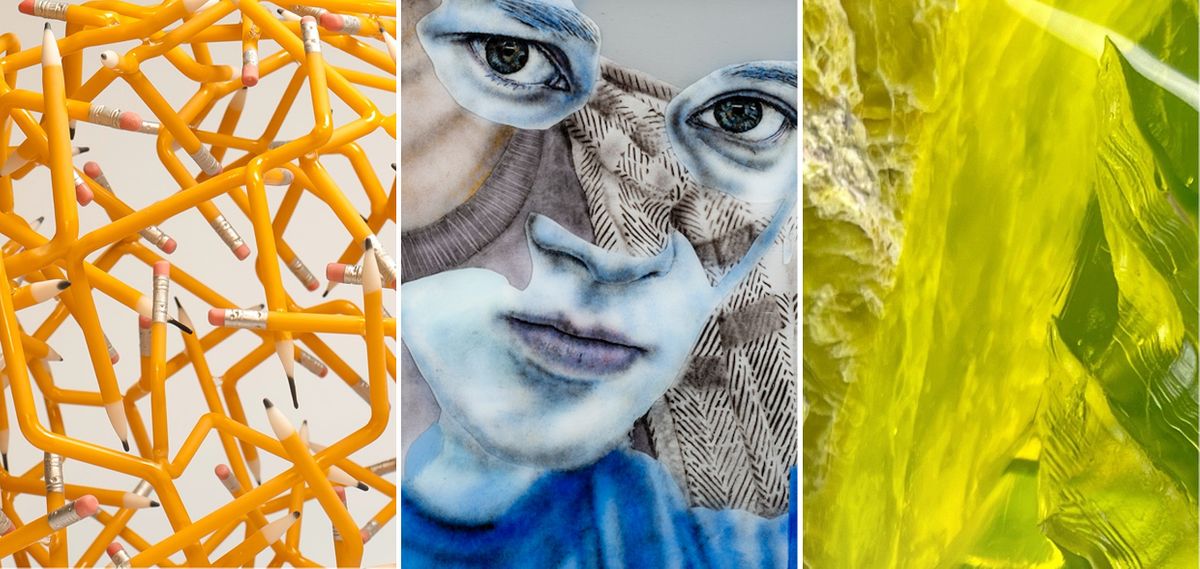
17 national and international finalists have been selected for this biennial exhibition in glass art, featuring newly created, innovative works.

Michael Janis glass art - title "Allowing Our Past to Become Part of Ourselves" 60"H x 40' W fused glass, glass powder imagery aluminum

Glass is itself a transformation: created when ordinary sand encounters extreme heat. In this breathtaking exhibition, glass is transformed again, this time by 17 contemporary artists from across the globe. The resulting work pushes the boundary of traditional craft techniques and takes glass from the realm of the ordinary to the extraordinary.

Transformation 11: Contemporary Works in Glass is Contemporary Craft’s 2022 Elizabeth R. Raphael Founder’s Prize juried exhibition. The winning artist and their work will be announced and presented at the public opening of the exhibition on Friday, September 9, 2022, where they will receive a cash prize. The 2022 prize will be awarded in the category of glass, and must meet the requirement that it has been made within the last 12 months and addresses the theme of “transformation.” Seventeen contemporary artists from across the globe explore creative concepts and innovative approaches in their use of the glass medium, with the winning artist sending additional works to demonstrate the breadth of their work.

The 2022 Raphael Prize finalists are: Dean Allison, Pittsburgh, PA; Eunsuh Choi, Rochester, WI; Donald Friedlich, Madison, WI; Michael Janis, Washington, DC; Lauren Kalman, Detroit, MI; David King, Danville, KY; Eriko Kobayashi, Carbondale, IL; Weston Lambert, Tacoma, WA; Patrick Martin, Emporia, KS; Hisayoshi Muto, Yatomi, Aichi, Japan; Aya Oki, San Bernardino, CA; Miroslava Ptackova, Zlín, Zlínský kraj, Czech Republic; David Schnuckel, Rochester, NY; Michaela Spruzinova, Ústí Nad Labem, brná, Czech Republic; Ben Wright, Stanwood, WA; Ayano Yoshizumi, Everard Park, SA, Australia; and Hoseok Youn, Toledo, OH.

The jury for the 2022 prize includes Anna Rothfuss, Project Development Manager, Derix Art Glass Consultants, LLC U.S., Portland, OR; Heather McElwee, Randi & L. Van V. Dauler, Jr. Executive Director, Pittsburgh Glass Center, Pittsburgh, PA; Alexandra Raphael, enameller, London, England; Catherine Raphael, metalsmith and writer, Pittsburgh, PA; Rachel Saul Rearick, Executive Director, and Kate Lydon, Director of Exhibitions (retired), Contemporary Craft, Pittsburgh, PA

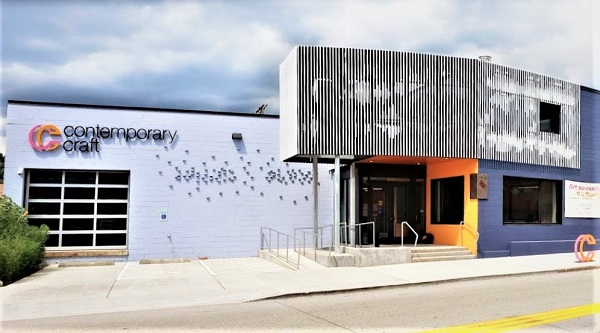
Contemporary Craft, 5645 Butler Street, Pittsburgh, PA 15201

Contemporary Craft hours: Mon-Sat: 10 AM – 4 PM

September 9, 2022 – March 18, 2023

This opening is free and open to the public.

ABOUT CONTEMPORARY CRAFT

Contemporary Craft presents contemporary art in craft media by regional, national, and international artists. Contemporary Craft offers cutting edge exhibitions focusing on multicultural diversity and contemporary art, as well as a range of artist-led studio workshops, community engagement programs, and a store. Located at 5645 Butler Street in the Upper Lawrenceville neighborhood of Pittsburgh, PA. For more information, visit www.contemporarycraft.org