The First 25 Years of Washington Glass School

Michael Janis on glass, public art, and 20 years in the Mt Rainier Gateway Arts District

Michael Janis cutting glass in the Washington Glass School studio in 2025.

Michael Janis is a contemporary glass artist and public art sculptor based in Washington, DC. He is a co-director of the Washington Glass School, an artist-run studio and educational center focused on contemporary glass practices.

In 2026, Washington Glass School marks 25 years since its founding and 20 years since establishing its home in Mount Rainier, Maryland. Janis became co-director of the school in 2005, shortly before the previous studio site in Washington, DC was taken through eminent domain for the development of Nationals Park.

Washington Glass School at 1338 Half Street SE in Washington, DC, before relocation for Nationals Park.
Washington Glass School at 1338 Half Street SE (now Nationals outfield)

Janis is known for narrative glass sculpture, community-engaged public art, and memorial projects addressing identity, memory, and social history. His work appears in permanent museum collections, including the Art Institute of Chicago, the Tacoma Museum of Glass, and the Museum of American Glass, among others. He has completed public art commissions for libraries, medical centers, and civic spaces throughout Washington, DC, the Mid-Atlantic region, and beyond.

Michael Janis riding a horse in front of Washington Glass School in 2012.
Michael Janis riding a horse in front of Washington Glass School, 2012

We spoke with Michael Janis about the history of Washington Glass School, his studio practice, and the role of glass in public art and memorial projects.

Q: Washington Glass School is marking 25 years, with 20 years in Mt Rainier. What does this milestone represent for you?

Michael Janis:
The 25-year mark reflects the value of being anchored while continuing to adapt.

Washington Glass School began in 2000 in Washington, DC. I became co-director in 2005, shortly before the original studio site was taken through eminent domain for the construction of Nationals Park. Losing that space forced a reset. We relocated to Mt Rainier and rebuilt the school from the ground up.

The move to Mt Rainier came as we expanded education programs, developed public art work, and built long-term partnerships with artists and communities. Reaching 20 years in the Gateway Arts District shows the importance of stability for an arts organization after a period of displacement and transition.

Michael Janis teaching a glass class in front of a kiln at Washington Glass School in 2007.
Interior of Washington Glass School, 2007, teaching at kiln

Q: How did becoming co-director in 2005 shape the direction of the school?

Michael Janis:
Becoming co-director in 2005 placed me in a leadership role during a period of disruption.

The loss of the original DC studio meant the school had to redefine the business model, the student base, and the physical layout. We focused on building a tight and adaptable studio space, reworking class offerings, and creating a framework for contemporary glass practices.

Michael Janis teaching an architectural plate glass class in 2005.
Michael Janis teaching an architectural plate glass class at Washington Glass School in 2005.

From the start, we saw the school as both a teaching center and a working studio. That combined role became the basis for how we developed public art projects and community-based programs.

Michael Janis working with community members during a glass workshop at Washington Glass School.
Community workshop for Peppermill Community Center

Q: What is the core mission of Washington Glass School today?

Michael Janis:
The core mission is supporting contemporary glass art through education, studio practice, and public art work.

We teach a wide range of glass techniques, including kilnforming, casting, and architectural glass. We also host artist talks, exhibitions, and workshops.

Another major part of the mission involves community engagement. We recently worked with military veterans through an arts therapy program developed by the Museum of Glass in Tacoma, Washington. We also work with local residents, students, and partner organizations to create glass components for public art projects placed in civic spaces.

Military veterans participating in the Hot Shop Heroes glass workshop at Washington Glass School in 2023.
Hot Shop Heroes military veterans workshop, 2023

Q: What kind of art do you make in your own practice?

Michael Janis:
I make narrative sculptural glass art.

My studio work focuses on figurative glass sculpture and relief panels. The work addresses identity, emotional presence, and social experience.

In public art, I design large-scale glass installations and memorials for civic spaces. Many of these projects include community participation, where local residents help create glass components that become part of the finished artwork.

Wall-mounted glass artwork titled Scattering of Light by Michael Janis, 2024.
Low poly wall artwork “Scattering of Light,” 2024

Q: How does glass function in your public art and memorial projects?

Michael Janis:
Glass interacts with light, reflection, and transparency.

These qualities support narrative work in both studio and public art settings. In figurative sculpture, distortion and reflection suggest emotional states. In memorial projects, glass holds collective memory through light and color.

Glass also works well in civic architecture. It allows light to pass into buildings while carrying imagery and text.

Detail of the glass sculpture Telling Our Stories at Peppermill Community Center.
Detail of Peppermill Community Center sculpture “Telling Our Stories…”

Q: What are some examples of public art projects developed through Washington Glass School?

Michael Janis:
Washington Glass School has served as the studio base for a range of public art commissions.

Recent and ongoing projects include:

  • A DC Ward 5 community-based glass memorial honoring the enslaved people who built the U.S. Capitol
  • Glass and bronze sculpted artwork for the Library of Congress Adams Building Monumental Doors
  • A large-scale glass installation for Laurel Library in Maryland
  • A public art commission for Cedar Hill Regional Medical Center in Washington, DC
  • A community-engaged glass project in Historic Kempsville, Virginia

Each project involved collaboration with architects, government agencies, and community members.

Michael Janis in front of his public art installation at Cedar Hill Medical Center in Washington, DC.
Michael Janis at Cedar Hill Medical Center artwork (screen grab from East of the River)

Q: Why is community participation central to your public art process?

Michael Janis:
Community participation changes the role of public art.

Local residents take part in creating glass tiles, panels, and imagery. These components become part of the finished artwork installed in shared spaces.

This process builds connection between people and the artwork. In memorial projects, participation also helps address historical and social topics through shared making rather than top-down design.

Q: Where can people see your work in public or in museum collections?

Michael Janis:
My work appears in permanent collections such as:

  • The Art Institute of Chicago
  • The Tacoma Museum of Glass
  • The Fort Wayne Museum of Art
  • The Fuller Craft Museum, Massachusetts
  • The Museum of American Glass, New Jersey

Public installations appear at:

  • The Library of Congress Adams Building
  • Laurel Library, Maryland
  • Cedar Hill Regional Medical Center, Washington, DC
  • Community sites throughout Washington, DC

Q: What themes run through your work as a contemporary glass artist?

Michael Janis:
The main themes involve identity, memory, and emotional presence.

In the studio, I focus on figurative glass sculpture addressing psychological states and social relationships.

In public art, I focus on collective memory and historical narrative.

Across both areas, light and reflection create a relationship between the artwork and the viewer.

Q: How do you see the future role of Washington Glass School?

Michael Janis:
Washington Glass School will continue to support contemporary glass practices.

We will expand education programs, public art partnerships, and community-based projects. Many of the studio’s resident artists become instructors and contribute new workshop ideas.

The school will also remain a working studio for public art production and artist collaboration.

Q: What advice would you give to artists interested in glass and public art?

Michael Janis:
Develop a strong studio practice. Learn how to work with architects, engineers, and fabricators.

Understand public art as a long-term commitment to shared spaces and community needs.

For More About Michael Janis

Links:

[Michael Janis: Washington Glass Artist and Sgraffito Glass Art]
[Faculty & Staff | Washington Glass Studio]
[Michael Janis – Wikipedia]
[Public Art/ Monuments | Washington Glass Studio]

Michael Janis Finalist in 2022 Contemporary Craft Prize

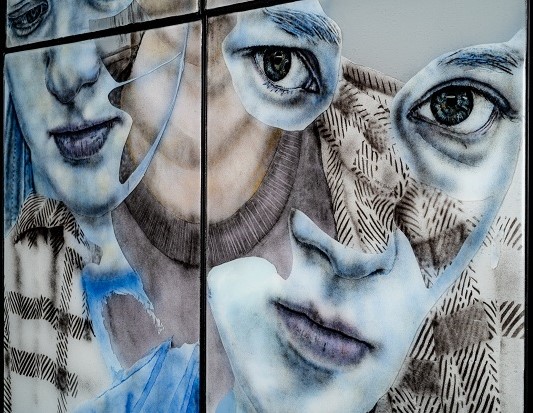
Michael Janis, “Allowing Our Past to Become Part of Ourselves” detail, 2022, fused glass, glass powder imagery. Photo by Pete Duvall.

17 national and international finalists have been selected for this biennial exhibition in glass art, featuring newly created, innovative works.
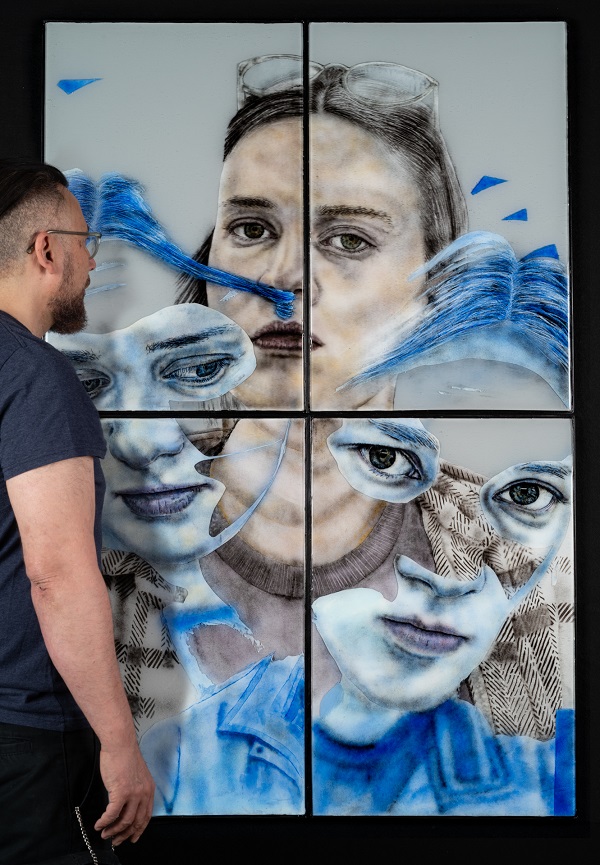
Michael Janis glass art - title "Allowing Our Past to Become Part of Ourselves" 60"H x 40' W fused glass, glass powder imagery aluminum

Glass is itself a transformation: created when ordinary sand encounters extreme heat. In this breathtaking exhibition, glass is transformed again, this time by 17 contemporary artists from across the globe. The resulting work pushes the boundary of traditional craft techniques and takes glass from the realm of the ordinary to the extraordinary.

Transformation 11: Contemporary Works in Glass is Contemporary Craft’s 2022 Elizabeth R. Raphael Founder’s Prize juried exhibition. The winning artist and their work will be announced and presented at the public opening of the exhibition on Friday, September 9, 2022, where they will receive a cash prize. The 2022 prize will be awarded in the category of glass, and must meet the requirement that it has been made within the last 12 months and addresses the theme of “transformation.” Seventeen contemporary artists from across the globe explore creative concepts and innovative approaches in their use of the glass medium, with the winning artist sending additional works to demonstrate the breadth of their work.
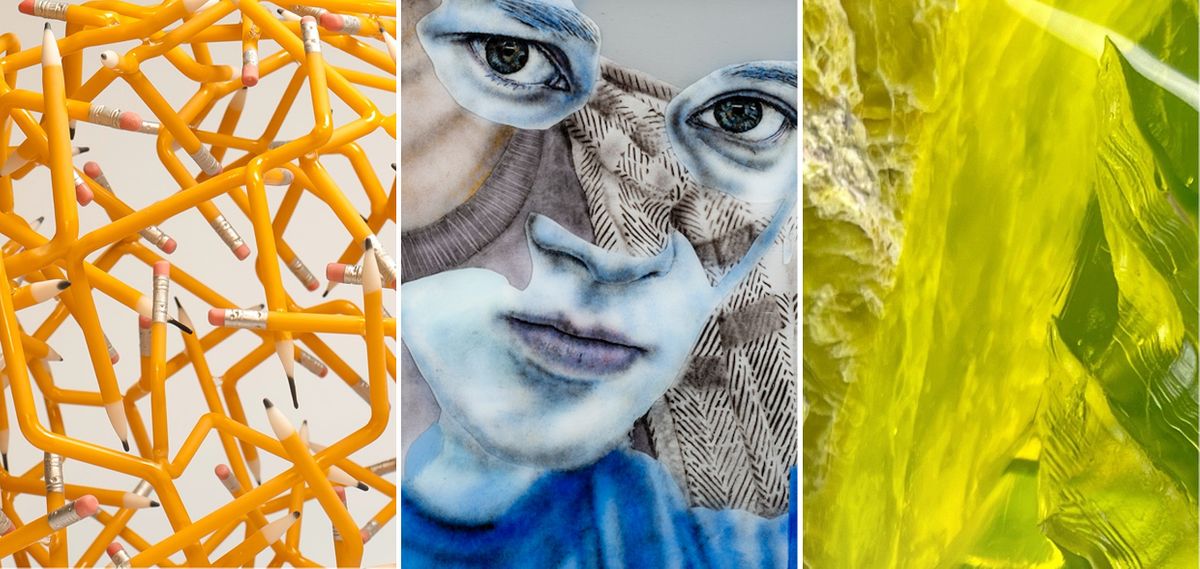
The 2022 Raphael Prize finalists are: Dean Allison, Pittsburgh, PA; Eunsuh Choi, Rochester, WI; Donald Friedlich, Madison, WI; Michael Janis, Washington, DC; Lauren Kalman, Detroit, MI; David King, Danville, KY; Eriko Kobayashi, Carbondale, IL; Weston Lambert, Tacoma, WA; Patrick Martin, Emporia, KS; Hisayoshi Muto, Yatomi, Aichi, Japan; Aya Oki, San Bernardino, CA; Miroslava Ptackova, Zlín, Zlínský kraj, Czech Republic; David Schnuckel, Rochester, NY; Michaela Spruzinova, Ústí Nad Labem, brná, Czech Republic; Ben Wright, Stanwood, WA; Ayano Yoshizumi, Everard Park, SA, Australia; and Hoseok Youn, Toledo, OH.

The jury for the 2022 prize includes Anna Rothfuss, Project Development Manager, Derix Art Glass Consultants, LLC U.S., Portland, OR; Heather McElwee, Randi & L. Van V. Dauler, Jr. Executive Director, Pittsburgh Glass Center, Pittsburgh, PA; Alexandra Raphael, enameller, London, England; Catherine Raphael, metalsmith and writer, Pittsburgh, PA; Rachel Saul Rearick, Executive Director, and Kate Lydon, Director of Exhibitions (retired), Contemporary Craft, Pittsburgh, PA
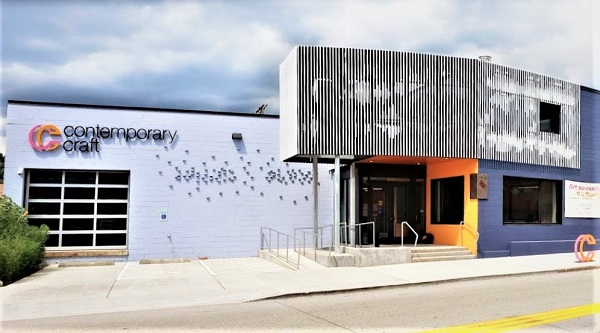
Contemporary Craft, 5645 Butler Street, Pittsburgh, PA 15201

Contemporary Craft hours: Mon-Sat: 10 AM – 4 PM

September 9, 2022 – March 18, 2023

This opening is free and open to the public.

ABOUT CONTEMPORARY CRAFT

Contemporary Craft presents contemporary art in craft media by regional, national, and international artists. Contemporary Craft offers cutting edge exhibitions focusing on multicultural diversity and contemporary art, as well as a range of artist-led studio workshops, community engagement programs, and a store. Located at 5645 Butler Street in the Upper Lawrenceville neighborhood of Pittsburgh, PA. For more information, visit www.contemporarycraft.org
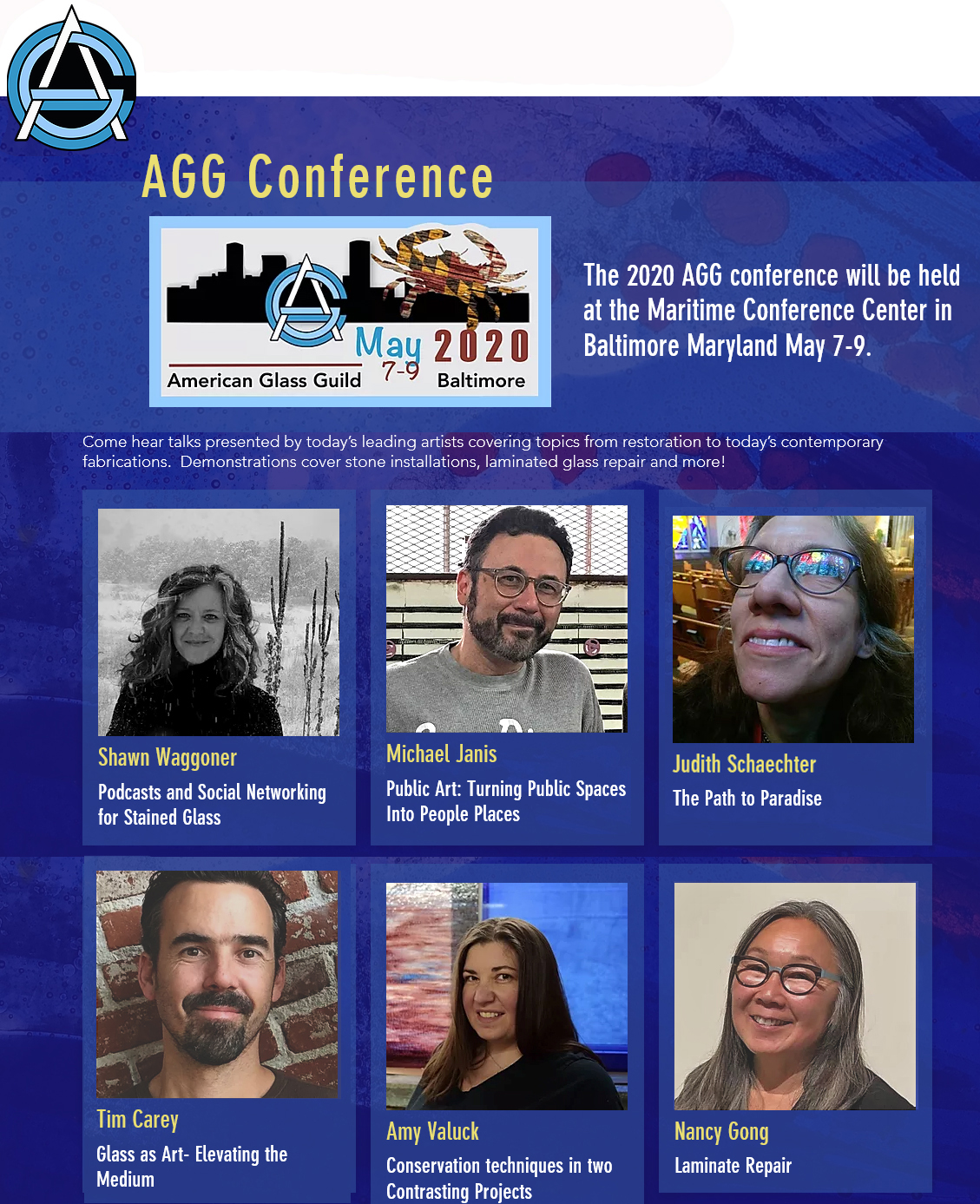
American Glass Guild 2020 Conference in Baltimore, Hon!

The American Glass Guild 2020 Conference in Baltimore. MD.

The American Glass Guild 2020 Conference in Baltimore. MD.

The American Glass Guild (AGG) will be holding their 20th Anniversary Conference at the Maritime Conference Center in Baltimore, Maryland May 7-9.

The Baltimore conference is a great place to meet people in the glass arts, to share ideas, techniques and experiences, with the planned glass art auction, artwork exhibition and more. Demos and workshops by international artists including Narcissus Quagliata and Judith Schaechter!– Talks featuring Shawn Waggoner, Tim Carey, Judith Schaecter, Ken Leap and Nancy Gong! WGS Co-Director, Michael Janis, will be a keynote speaker!

The Annual Live AGG Auction raises funds for the James Whitney Memorial Scholarship. Since 2007 the Whitney Memorial Scholarship has handed out over 125 scholarships for glass education. Recipients receive full or partial scholarships for various glass educational opportunities, such as conferences and workshops, or ongoing educational efforts.

The American Glass Guild (AGG) is a non-profit organization whose core mission is to work toward building an environment within the craft that both cultivates novices and facilitates experienced craftspeople and artisans to attain a higher level of expertise. The AGG’s intention is to support and provide speakers for public lectures and seminars, encourage spirited debates, and initiate fact-based research.

Click HERE for more online information.

Reminder: Panel Discussion about Fulbright Program @ Pepco Edison Place Gallery

Today, Saturday, March 9

The Fulbright Program, now in its 65th year, has amassed an alumni body of almost 300,000 participants, representing nearly every nation of the world. The Program awards approximately 8,000 grants annually. Roughly 1,700 U.S. students, 4,000 foreign students, 1,200 U.S. scholars, and 900 visiting scholars receive awards, in addition to several hundred teachers and professionals. Approximately 318,000 “Fulbrighters” have participated in the Program since its inception in 1946.

Michael Janis Fulbright Scholar
WGS Fulbrighter Michael Janis
WGS Fulbrighter Tim Tate

Join us today, Saturday, March 9th as we discuss the “Fulbright Experience ” with a roundtable of Fulbright Scholars from area universities.

Details: Saturday, March 9th

Reception 12:00 – 1:00 pm

Panel Discussion 1:00 – 2:30 pm


The Fulbright roundtable discussion is part of the events that make up the International Glass and Clay 2013 exhibit held at the Pepco Edison Gallery at 702 Eighth Street, NW, Washington, DC. The show is organized by Artomatic and the DCCAH.

Congrats on Creative Cohesion Relaunch

>

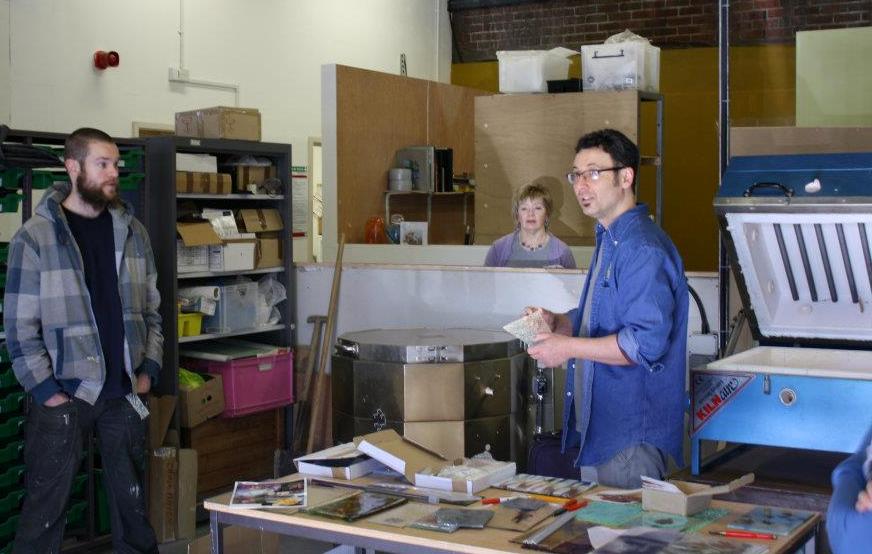
Artists Phil Vickery and Roger Tye work in Creative Cohesion’s hotshop.

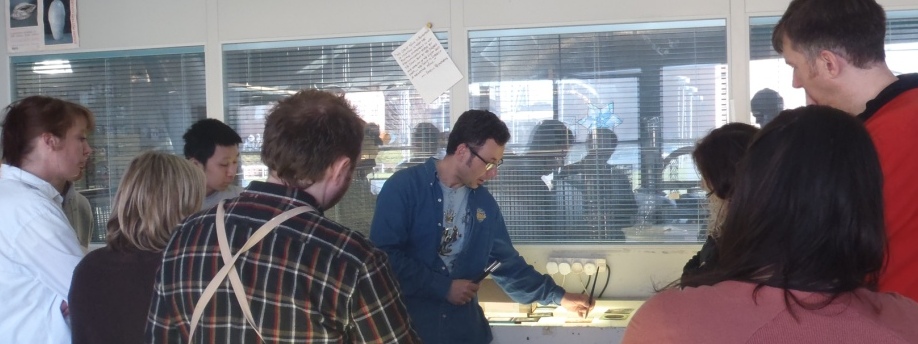
Last spring, Washington Glass School Co-Directors Michael Janis and Tim Tate were in the UK on their Fulbright assignment to the University of Sunderland and the National Glass Centre. The guys also held workshops at the City of Sunderland’s professional artist center “Creative Cohesion”.

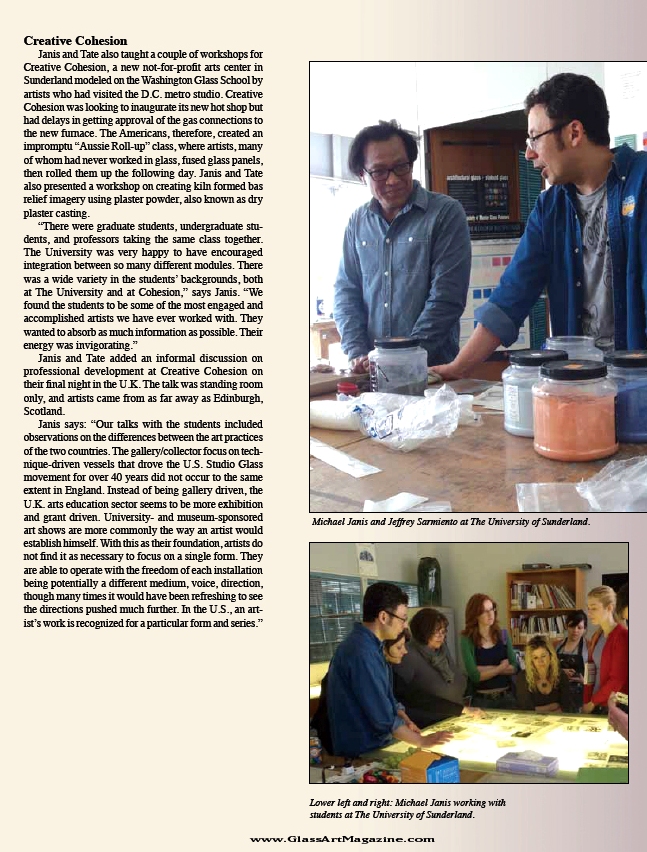
Fulbright Scholar Michael Janis introduces the Bullseye Roll-up technique to artists at Creative Cohesion.
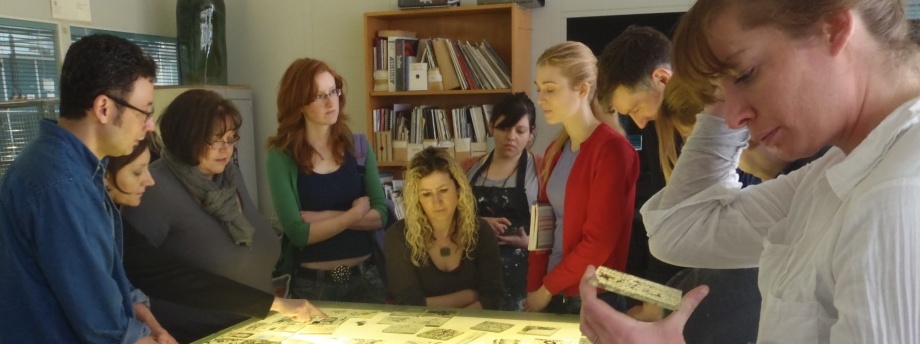
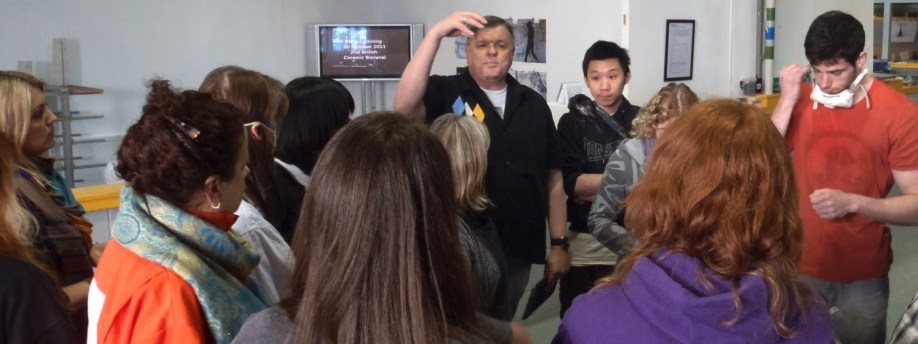
UK artists gather for a talk with Fulbright Scholar Tim Tate at the Cohesion Center in March.

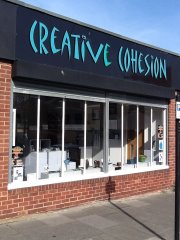
 Creative Cohesion is a center for creativity in Sunniside, Sunderland, providing not only studios for artists, but provision for community, arts and business activities, as well as a retail outlet for art. Creative Cohesion runs monthly workshops for professional creative practitioners and is home to graduates from the University of Sunderland who are recipients of the ‘Sunniside Graduate Scheme’.

The Creative Cohesion building was damaged by high winds that caused the adjacent building to collapse onto the center’s roof  in April . 

Last Spring, high winds caused their neighboring building to collapse onto the center’s roof, resulting in a lot of damage. After months of disruption for the non-profit center and its tenants as the repair work was implemented, they are happy to be finally back in full working order, and are holding a Relaunch of the Center on Oct 18!

Artist Frank Styles was commissioned to create the visual graphics on the center’s exterior shutters.

Their celebrations continue in welcoming new tenants, a new logo for the center, the launch of their new website and completion of the center’s shutter artwork by graffiti artist Frank Styles.

There will be happy faces all round on the opening launch day with the building’s face lift, the opening of a new exhibition titled ‘Reconnection’ and entertainment with local glass blowers having a play day in the glass hotshop.

Congratulations to Creative Cohesion on making Sunderland a hotbed of creativity again!

Click HERE to jump Creative Cohesion’s website.

Glass Art Magazine features Fulbright Scholars Michael Janis & Tim Tate’s UK Assignment

>

The recent issue of Glass Art Magazine features all of the Washington Glass School’s co- directors in the latest issue and online. 

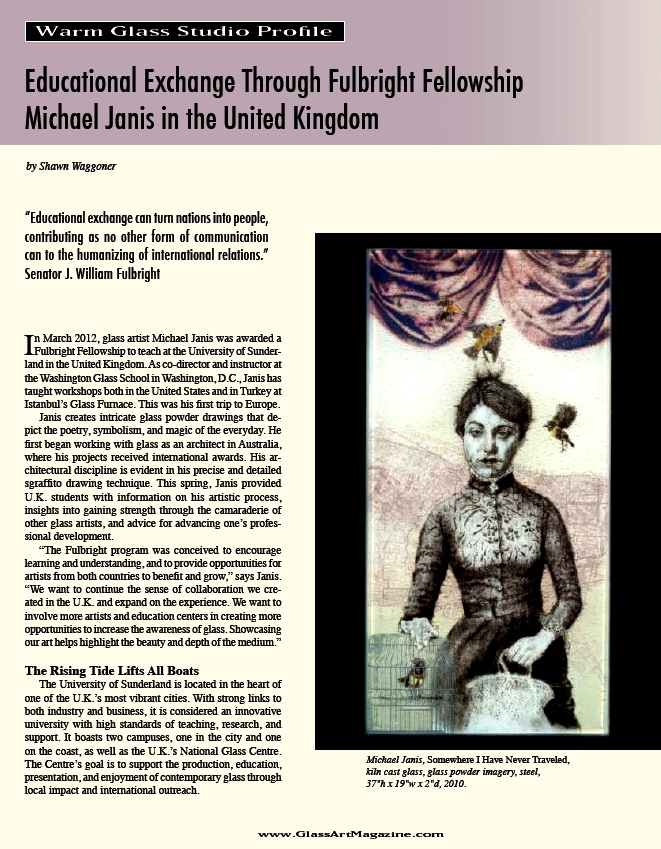
Michael Janis’ work on the cover and his profile as the centerfold story, and the same issue also features Erwin Timmers work across a five page story on his work in ecologically sustainable artwork. The magazine’s online website now features a new story on Michael and Tim Tate’s work as Fulbright Scholars in England, while at the University of Sunderland, the National Glass Centre, the London AAF, and Creative Cohesion studios. 

The article has a great synopsis of the differences between the US & UK approach to the artistic medium of glass and also has some photos of Jeffrey Sarmiento joining Michael’s sgraffito class. Click HERE to jump to Glass Art Magazine’s downloadable pdf of the article.

The Fulbright program has announced its new awards – have a read!

The Fulbright Commission US Scholar Awards for 2013-14 are now open. The US Scholar Awards offer US academics and professionals the chance to undertake research and/or teaching at any accredited UK higher education institution. Opportunities are available for college and university faculty as well as for professionals, artists, journalists, scientists, lawyers, independent scholars and many others. As well as an All-disciplines award they also have specific partner awards. 

If you in going to a UK university through the Fulbright programme to contribute to research and/or teaching then please take a look at the awards on offer – or if you know of any US scholars or professionals that would be interested then pass this information on to them.

Fulbright Awards offer generous financial support for academic projects in the UK. Additionally, Fulbright scholars in the UK are invited to participate in a wide range of events, and benefit from a variety of additional opportunities and support provided by the Fulbright Commission. Fulbright scholars also benefit from an extensive range of alumni and global networking opportunities after their exchange.

The application deadline is Wednesday, August 1, 2012. For eligibility requirements and detailed award descriptions please consult our webpages: http://www.fulbright.org.uk/fulbright-awards/exchanges-to-the-uk/scholars-and-professionals/all-disciplines-scholar-awards

WGS Scores a Double in Glass Art Magazine: Michael Janis and Erwin Timmers Featured Artists

>

Michael Janis’ narrative imagery made from crushed frit powder is the cover story in the May/June issue of Glass Art Magazine.

The May / June issue of Glass Art Magazine features a WGS two-fer, with a feature on the ecologically sustainable designs by the “King” of recycling, Erwin Timmers, AND a cover spread on the dreamlike glass panels by Michael Janis.

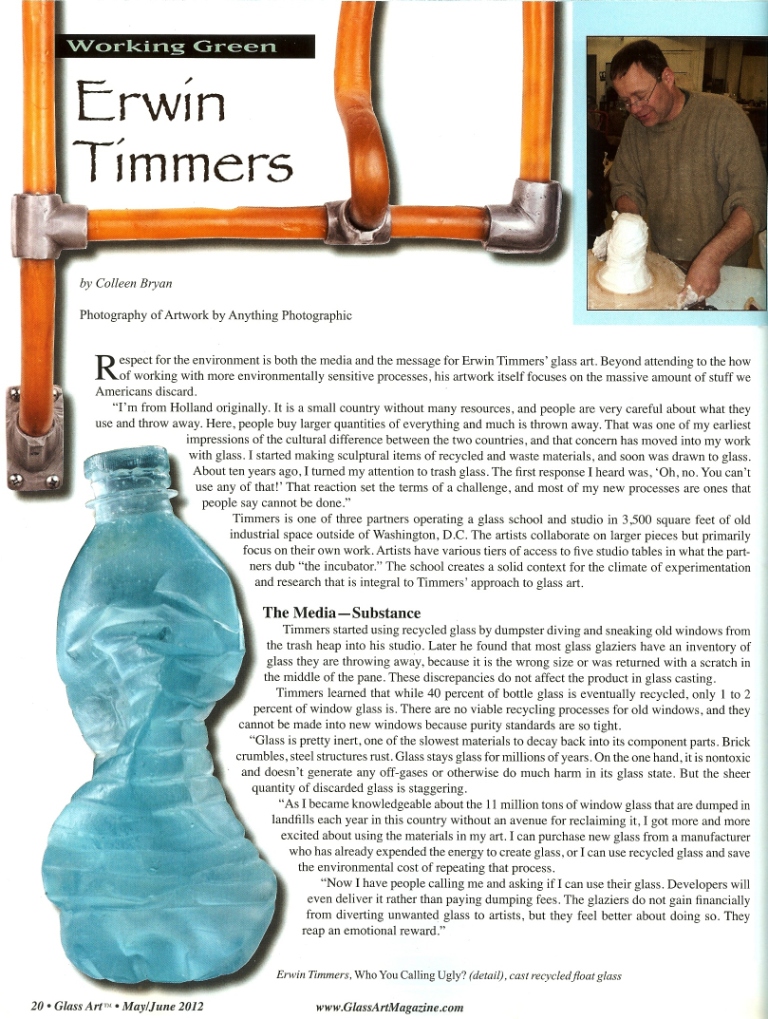
The Erwin Timmers’ review delves in depth into how Erwin makes sculpture from recycled and diverted waste materials .

Working Green“, the article by Colleen Bryan, features the leader of the eco-art movement Erwin Timmers , and reviews his environmental philosophy and how Erwin practices his passion in his approach to his artwork and medium. Some great photos by Pete Duvall of Anything Photographic of Erwin’s beautiful glass sculpture work are showcased among the 5-page spread.  

Glass Art Magazine Editor Shawn Waggoner writes about Michael Janis’ artwork in the latest issue.

In the cover article “Pushing Powder – Michael Janis’ Glass Frit Drawings“, editor Shawn Waggoner writes about how Michael Janis‘ imagery touches on the subconscious, and that his narrative glass artwork seems to ask questions rather than answer them. Her article also discusses how Michael was able to have his work became part of the US Art in Embassies permanent collection (now on exhibit in Europe), comments about his work from Corning Museum’s curator of Modern Glass, and Michael’s recent Fulbright Scholarship at the University of Sunderland, England, where, as a Fulbright Specialist, he was teaching at the UK’s National Glass Centre.


Click HERE to jump to the Glass Art Magazine website.


If you sign up as a subscriber to Glass Art Magazine – there are subscriber benefits – such as links to articles online on how Michael Janis’ and Tim Tate’s Fulbright Scholarship to the UK’s University of Sunderland worked out and more! Click HERE to jump to the online magazine.

Fulbright Scholars Janis & Tate Final Report

>Final Report by Michael Janis and Tim Tate regarding their Fulbright Specialist Program at the University Of Sunderland and the National Glass Center.

The bonds that were forged years ago when The City of Washington & Washington Glass School hosted the UK artists from Cohesion Glass Network art Artomatic’s Glass 3 event in Georgetown have been strengthened. Our connection with Washington, DC’s UK Sister City, Sunderland, the National Glass Center and the University of Sunderland; will continue throughout our careers. While our mission as Fulbright Scholars was to impart information, we leave having learned many lessons.

Our time in England began with presentations of our artwork and discussions of on new directions the glass world was embracing, such as Glass Secessionism, where artists are looking to move from the aesthetic of pure technique, materials and process and are advancing glass as a medium of sculptural expression in the narrative realm. The participants in the audiences came from the student body of the University as well as working artists from Sunderland, Newcastle, even as far away as Edinburgh, Scotland. The audience stayed long after the talk, and topics from the discussion continued to come up during our entire Fulbright program stay (and indeed, afterwards via the internet) showing the strong relevance of the concepts.

We created workshops for both the National Glass Center and Sunderland’s Creative Cohesion studio; the city’s artist incubator (that, in fact, used the Washington Glass School as its educational and business model). The City of Sunderland invited us to speak with students at a local secondary school during our stay, where we talked about careers in art. We also worked with the Leaders of the University’s Glass and Ceramics program and outlined methods we could extend the cooperative agreement that exists between Sunderland and Washington, DC.

The British tertiary arts education system is different from the US university model. Their MA program blends an MFA and BFA into a very concentrated program. The amount of expertise, materials and techniques they make available to students seems staggering. Sunderland’s may be the finest glass program in the world. With the National Glass Center, the physical space alone dwarfs any facility in the US (or even if one combined the arts centers of Pilchuck, Penland, Corning into one place). The University of Sunderland also offer a doctorate in glass, which is similar to an MFA, though the focus is research, as this is one of the primary methods for the University to receive funds. At the end of a student’s time at Sunderland University, they have a much broader base of knowledge regarding glass and its parameters. In many ways the educational system in the UK is ahead of the US, especially in how they treat glass sculpturally.

Our talks with the students included observations on the differences between the art practices of the two countries. The gallery/collector focus on technique driven vessels that drove the US Studio Glass Movement for over 40 years did not occur to the same extent in England. Instead of being gallery driven, the UK arts education sector seems to be more exhibition and grant driven. University and museum -sponsored art shows are more common as the way an artist would establish themselves. With this as their foundation, artists do not find it as necessary to focus on a single form. They are able operate with the freedom of each installation being potentially a different medium, voice, direction (though many times I would have liked to see the directions pushed much further.) In the US, with the galleries / collector based system, there exists the perception that an artist’s work be recognized for a particular form and for the work be within a series format.

The courses we held at the University included a mix of graduate and undergraduate students, and the workshops allowed and encouraged students working in different modules to interact. We found the students of the University to be some of the most engaged and accomplished students we have ever worked with. They wanted to absorb as much information as possible. Their energy was refreshing, and we added another workshop and added one talk more into the schedule.

Our final discussion was on Artist Covenant’s and how artists can create a network using social media as a way to support each other as a group. This informal talk was packed, standing room only. The artists were voracious in seeking advice on how to get their work seen and recognized. We hope we have helped energize them and perhaps rally them to work together towards their common good. The interest and respect we received from the students was over-whelming. Many of the artists have connected to us online.

We would like to thank all those who made this academic interaction possible: The Fulbright Commission, the Council for International Exchange of Scholars (CIES), The University of Sunderland and the National Glass Center, The City of Sunderland and Creative Cohesion. Each in their own way has made our visit into a life changing experience.

Our mission is to now to reflect and contemplate on not only what we have achieved, but to think of ways on how best to extend our hand and continue our symbiotic and synergistic relationship so that it will not only survive but thrive.

Lets all bridge the Atlantic for many more decades.

Tim Tate & Michael Janis , Co-Directors, Washington Glass School