Finding Refuge in Glass: Kate Barfield and the Creative Community of Washington Glass School

As the Washington Glass School celebrates its 25th Anniversary, the stories that emerge are not only about artwork—they are about community, mentorship, experimentation, and finding creative refuge. For resident artist Kate Barfield, the School became exactly that: a place of encouragement, camaraderie, and artistic growth during a moment when the world felt uncertain.

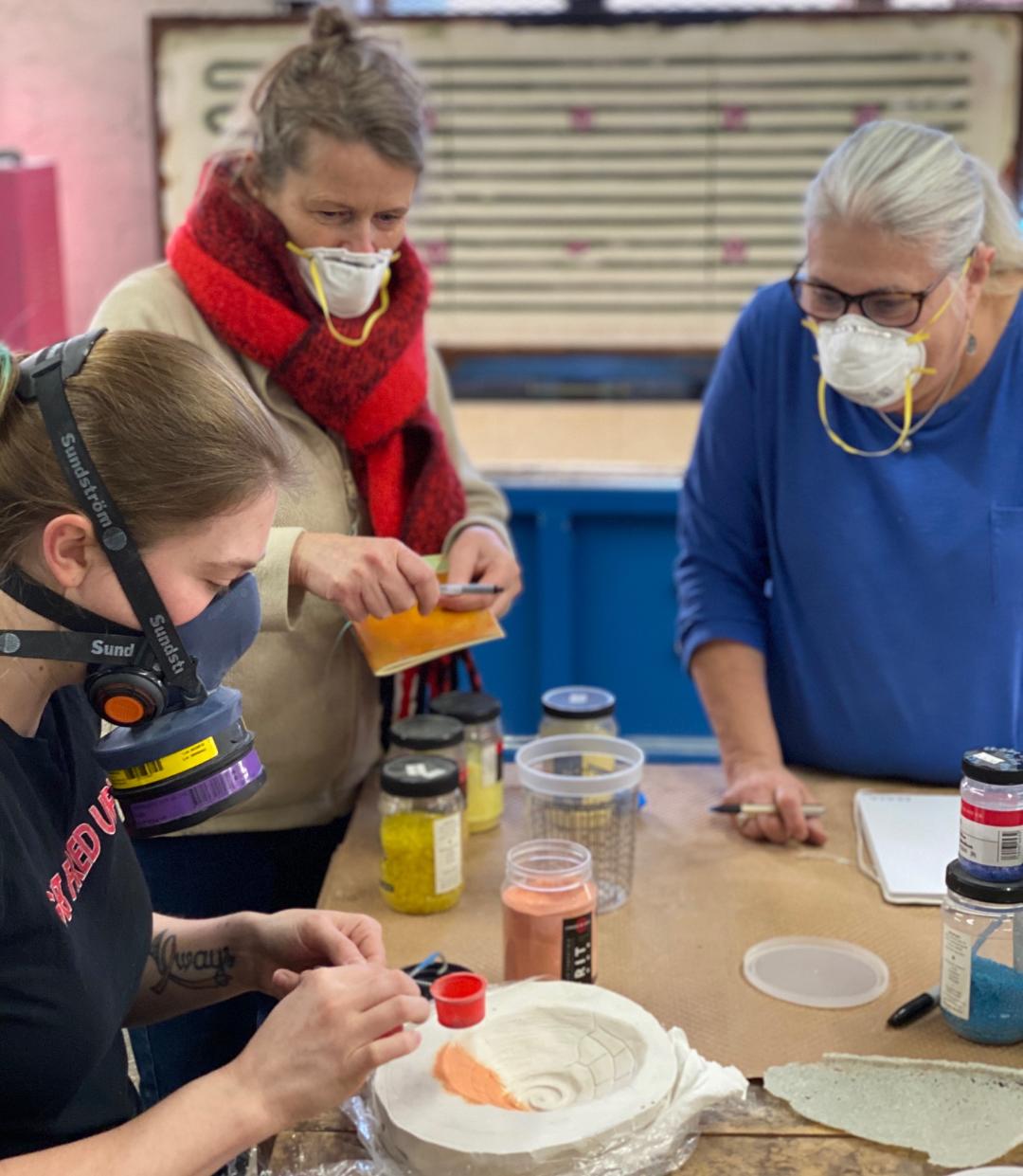
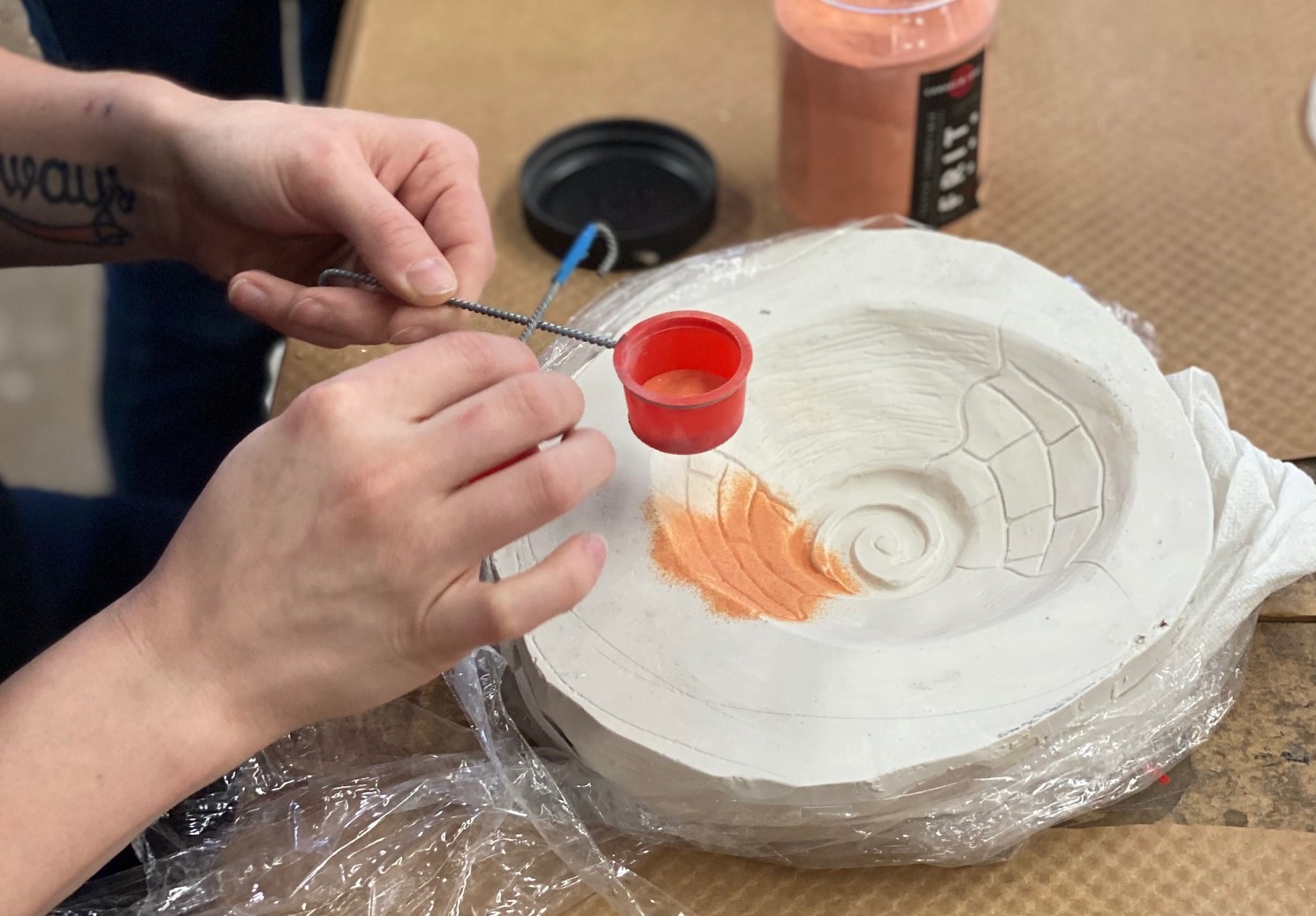
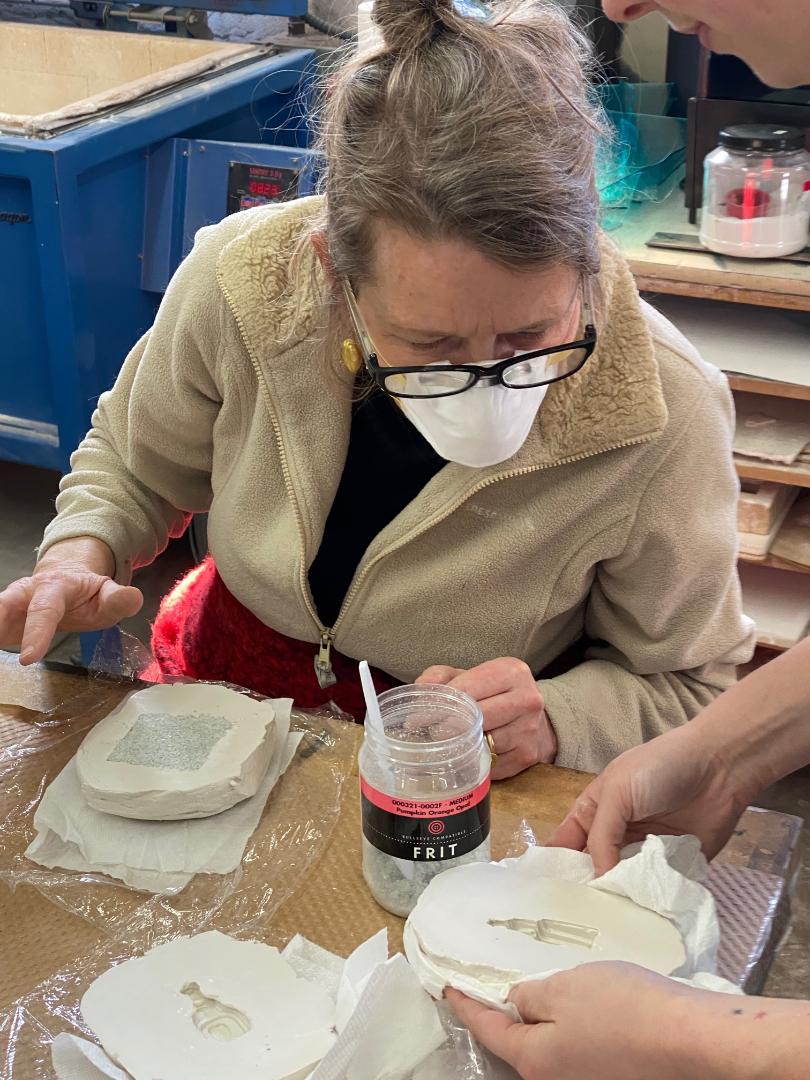
Kate Barfield assembles her meticulous cut glass

A Washington, D.C.-area studio glass artist and former federal attorney for NOAA, Kate Barfield creates kiln-formed, cast, and fused glass works that balance humor, storytelling, environmental awareness, and political commentary. Her vividly colored compositions invite viewers into layered narratives filled with wit, beauty, and surprise.

Because she lived nearby in Mt. Rainier, Kate first encountered the Washington Glass School through occasional classes. But in 2020, during the isolation of the pandemic, the School became something far more meaningful.

Kate Barfield, “Homage to Ms Mailou Jones”, Photo by Pete Duvall

“When Covid hit in 2020, I took refuge at the School, to work on glass and to be with a great, close-knit community of artists,” Kate recalls. “The Glass School was a welcome oasis of camaraderie, creativity and encouragement.”

That connection eventually led her to become a Resident Artist, working more intensively in fused and cast glass techniques. Although she had prior experience in traditional stained glass, Washington Glass School opened the door to entirely new approaches to the medium.

“Glass—like no other medium—is unique in its color, light and depth.”

One of Kate’s earliest moments at the School remains especially memorable. After pulling a whimsical multi-armed cat sculpture from the kiln, she was met with enthusiastic encouragement from Tim Tate.

“Tim Tate yelped with excitement,” she says. “He held the glass in the air and told me to keep up the good work.”

That encouragement became foundational as Kate continued to develop her artistic voice. She credits not only Tim Tate, but also Michael Janis and Erwin Timmers, for helping guide her practice through technical advice, humor, and patience.

“Michael has shown great patience and offered advice from his long experience with glass,” she says. “And more than once, Erwin has been the source of a quick joke as he puzzles with me over glass equipment repairs.”

Kate Barfield, “Anarchist Pug”. Photo by Pete Duvall

Today, Kate’s work spans playful, political, and deeply environmental themes. Her pieces are united by a love of storytelling and fearless color. A rebellious pug gleams against fields of gold and scarlet. A blue heron triumphantly displays a fish while surrounded by crabs, turtles, foxes, and red-winged blackbirds. Another piece presents a monster stirring a pot beneath the dissolving colors of a flag.

Kate Barfield, “Homage to the Eastern Shore”, detail.

“All of these pieces welcome the viewer into a story—with a shot of color to delight the eye.”

Her artistic growth accelerated during preparations for the 2024 Artomatic exhibition, when Tim Tate encouraged artists at the School to create ambitious new work for public presentation. Inspired by an obscure Japanese female artist associated with images of the “Floating World,” Kate designed a sky-blue kimono-shaped triptych addressing climate change and global warming.

Kate Barfield, “Kimono Glass Homage”

The work balanced beauty with unease, drawing viewers close before revealing harsher realities embedded within the imagery, and the response was overwhelming.

“Two major glass artists emailed me to say they hung a photo of this kimono in their workspace—for inspiration,” Kate says. “For a fledgling artist, this is a big WOW!”

Kate Barfield talks about her work at Artomatic art fair, Washington, DC 2024

In the studio, Kate embraces both experimentation and unpredictability. Her favorite tool is surprisingly modest: a tabletop glass saw.

Kate Barfield, “The Influencer”

“I use it to make impossible shapes and fanciful images.”

She also embraces the unpredictable nature of kiln-formed glass, echoing advice often shared by Michael Janis.

“Glass has its own mind,” she says. “You do your best in composing a piece—then wait to see what happens in the kiln.”

Unexpected breaks or accidents are not failures, but opportunities.

“Often the unexpected creates a stronger image than the idea that you labored over.”

That openness to collaboration and feedback is central to her experience at Washington Glass School. Working alongside fellow artists allows for immediate conversation, shared technical knowledge, and collective problem-solving that would be difficult to replicate in solitude.

“If I were working alone, I would lose this valuable resource.”

As Washington Glass School reaches its 25th year, Kate believes the School’s greatest strength lies in its balance between national reach and neighborhood intimacy.

Kate Barfield

“The Glass School is large enough that it attracts talent from around the country, but small enough that it has a neighborhood, hometown feel.”

For her, the spirit of the School is reflected as much in shared celebrations and impromptu gatherings as in the kilns and classrooms.

Washington Glass School celebration of Kate’s B-Day = cake and guac!

“The School’s spirit is captured—in part—with the many parties that we enjoy—celebrating birthdays, milestones, congratulations—reminding us how much we appreciate one another. The tasty margaritas and champagne are also welcome.”

Looking ahead, Kate hopes to continue learning, experimenting, and pushing her work into new territory. She sees glass itself as an endlessly evolving field filled with astonishing diversity and invention.

And what should Washington Glass School be known for 25 years from now?

Kate answers without hesitation:

“The Glass School is a beacon of creativity—both a home and a welcome respite for artists passing through.”

Then she adds a perfect final image:

“Where else but the Glass School can you come in—on an ordinary day—and watch an Italian Glass master craft the tiniest purple elephant in the world? That’s the Glass School!”

As Washington Glass School marks its 25th Anniversary, the celebration continues this fall with a major exhibition featuring works by Washington Glass School artists at the Brentwood Arts Exchange in Brentwood, MD. Running from September 10 through October 31, 2026, the exhibition will showcase the extraordinary diversity, innovation, and storytelling that have defined the School for a quarter century — offering audiences a chance to experience some truly remarkable contemporary glass art.

Fort Wayne Museum of Art’s 54th Annual International Glass Invitational

The Fort Wayne Museum of Art’s annual Summer of Glass exhibition returns this season with the opening of the Habatat International Glass Invitational, now in its 54th year and recognized as the oldest and largest annual contemporary glass exhibition in the United States.

Presented at the Fort Wayne Museum of Art in Indiana, the exhibition gathers leading contemporary glass artists from around the world whose work expands the possibilities of the medium through new forms, techniques, and ideas. Organized by Habatat Galleries, the invitational has long been regarded as one of the major surveys of international studio glass.

Michael Janis figurative glass artwork “A Secret Place I Go” displayed in the Summer of Glass exhibition at the Fort Wayne Museum of Art, featuring contemporary studio glass artists from around the world.

Among the artists selected for this year’s exhibition is Washington Glass School Co-Director Michael Janis, whose cast glass artwork A Secret Place I Go was chosen for inclusion in the juried exhibition.

Janis’ work — known for its layered figurative imagery, narrative complexity, and technically innovative kiln-formed glass processes — continues his exploration of memory, identity, and psychological space through contemporary glass art. The selected piece reflects the artist’s signature approach of combining sculptural depth with painterly imagery embedded within translucent glass.

Cast glass wall artwork by Michael Janis shown in the Habatat International Glass Invitational, highlighting innovative contemporary studio glass techniques and figurative imagery.

The exhibition was juried by Brit Micho, Curator of Exhibitions at the Fort Wayne Museum of Art; James Gerhardt, AACG President and Guggenheim Museum Officer; and Sharon Karmazin, theater producer, arts supporter, and noted glass collector.

Exhibition gallery view of contemporary glass art at the Fort Wayne Museum of Art featuring work by Michael Janis in the 2026 International Glass Invitational.

Artists included in the 2026 exhibition represent an international cross-section of contemporary glass, including Lino Artists included in the 2026 exhibition are Rick Allen, Shelley Allen, Alex Bernstein, Michael Behrens, Geoffrey Bowton, Wendy Saxton Brown, Nancy Callan, Ekin Aytec & Josh Davids, Bandu Dunham, Philip Baldwin & Monica Guggisberg, Willfried Grootens, Michael Janis, Claire Kelley, John Kiley, Laura Kramer, Lucy Lyon, Crista Matteson, Stephen Powell, Toland Sand, Carrie Seid, Lino Tagliapietra, Sarah Vaughn, Littleton Vogel, Brent Kee Young, and Public Choice artist Trina Urrata Weintraub.

Museum installation view featuring contemporary glass artwork by Geoffry Bowton at the Fort Wayne Museum of Art.

Habatat Galleries co-owner and director Aaron Schey described the current moment in contemporary glass as a period of rapid growth and renewed energy:

“I think contemporary glass is experiencing a rebirth. The community is growing, new talent is appearing every day, and artists are sharing ideas and techniques in ways that were never possible before.”

Schey emphasized that increased museum visibility and public engagement remain essential to the future of the medium:

“Glass elevates every space it enters. It interacts with light, architecture, and the viewer in a way few materials can.”

The 54th Annual International Glass Invitational is on view at the Fort Wayne Museum of Art, 311 E Main Street, Fort Wayne, Indiana, from June 20 through August 23, 2026.

Michael Janis’ cast glass work A Secret Place I Go is now on view at the Fort Wayne Museum of Art as part of the 54th Annual International Glass Invitational, organized by Habatat Galleries.

About Michael Janis

Michael Janis is a contemporary glass artist, architect, educator, and Co-Director of the Washington Glass School in Washington, DC. His internationally exhibited artwork combines kiln-cast and pâte de verre glass techniques with figurative imagery influenced by printmaking, street art, and narrative painting. Janis’ work has been exhibited in museums and galleries worldwide and is included in numerous public and private collections.

Happy Holidays from WGS!

As the year draws to a close, we want to pause and say thank you to our extraordinary community — our artists, students, instructors, collectors, collaborators, and friends. Your curiosity, generosity, and creative energy continue to make Washington Glass School a place of discovery, connection, and shared brightness.

This year was filled with melty moments, quiet breakthroughs, bold experiments, and the simple joy of working side by side in the studio. We’re deeply grateful for all of it.

Looking ahead, 2026 marks a major milestone: 25 years of Washington Glass School. What began as a small but determined idea has grown into a vibrant center for glass, craft, and community — and we’re just getting started. Next year will bring special exhibitions, events, and projects that honor our past while looking forward to what’s still possible.

Until then, we wish you a season filled with warmth, inspiration and lots of glass — and a new year full of creative promise.

Happy Holidays,
Washington Glass School

Virginia Athenaeum Sculpture Invitational features WGS Directors

Curated by Alison Sigethy and produced by Veronica Szalus, “Eclipse” is an invitational sculpture show opening Jan 16th at the Athenaeum that examines light and shadow, liminal space, and the passage of time.

An exhibition titled “Eclipse” evokes themes of transformation, obscuration, revelation, and the interplay of light and shadow. The works of Washington Glass School artists Tim Tate, Erwin Timmers, and Michael Janis seems to fit so seamlessly into such a thematic framework, each offering a unique interpretation of these ideas through their distinct techniques and narratives.
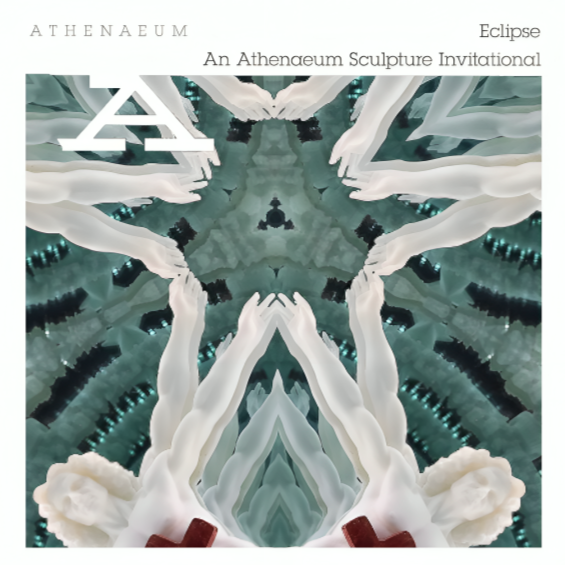
Detail of Tim Tate’s work in the “Eclipse” exhibit

Tim Tate is known for combining traditional glass craft with modern video elements and digital media to create mixed-media sculptures that explore themes of memory, mortality, and the passage of time. His works often embody themes of transformation, obscuration, revelation, and the interplay of light and shadow. In this exhibition, Tate’s work symbolizes the moment of revelation that occurs during an eclipse, where hidden truths or forgotten histories come to light. His lenticular prisms that shift between imageries effectively capture the fleeting moment of an eclipse where light is temporarily blocked yet still visible in other forms.
Said Tate: “In my lenticular series, I aim to capture the nature of memory and perception. By layering multiple images within a single lens, I create a sense of depth and dimensionality that shifts and changes as the viewer moves.”
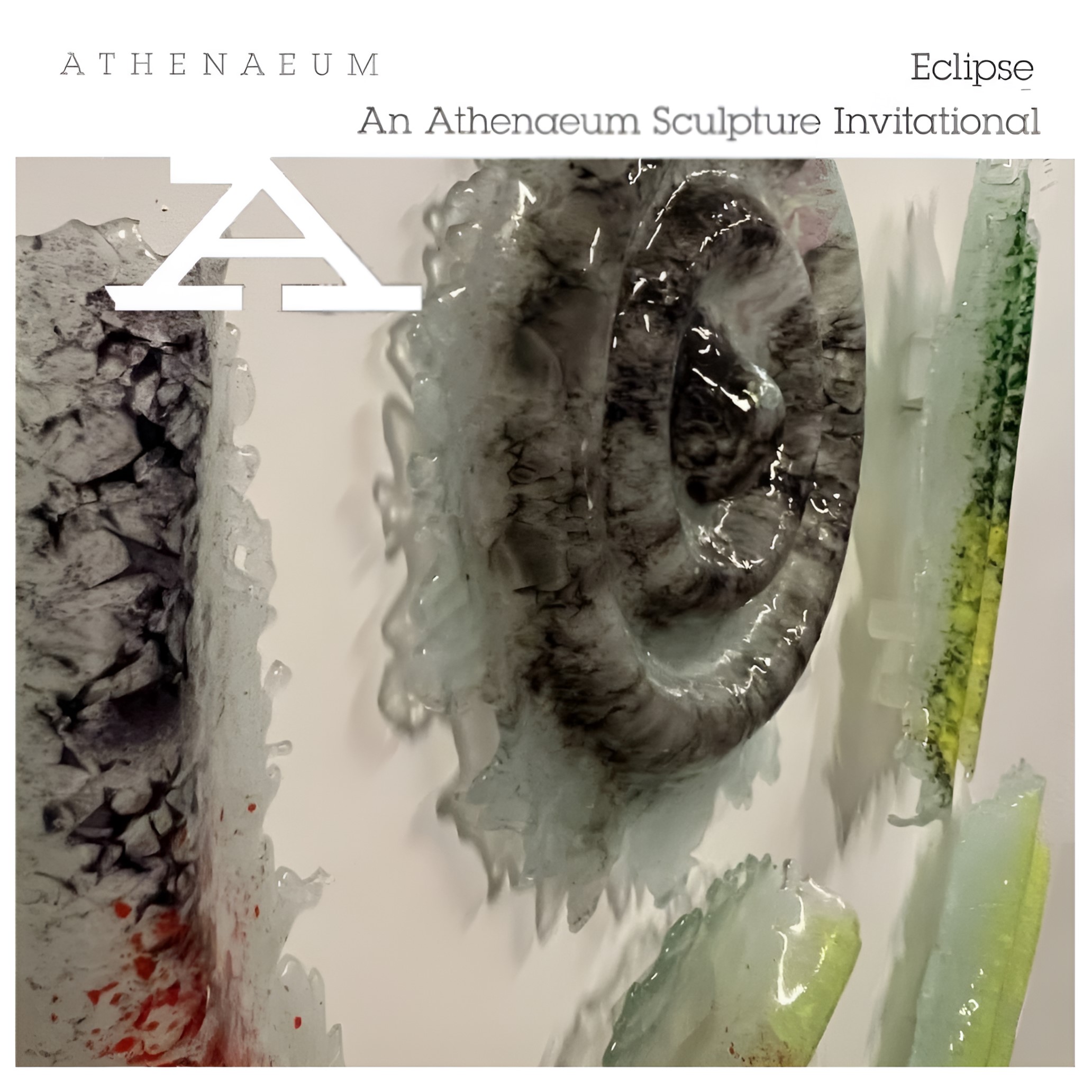
Detail of Erwin Timmer’s cast recycled glass artwork featured in “Eclipse” exhibit.

Erwin Timmers is deeply committed to environmental sustainability, and his works crafted from recycled glass introduce a theme of renewal and regeneration within the “Eclipse” exhibition. Timmers uses discarded materials to create beautiful forms, highlighting the potential for transformation in the most unexpected places—much like an eclipse, which temporarily alters perception and understanding. His work often conveys a narrative of reclaiming what is cast aside, fitting well into the exhibition’s overarching theme of cycles of destruction and rebirth. Once destined for landfills, the recycled materials are reborn as testaments to the power of transformation and the importance of reexamining our relationship with the natural world. Timmers’ recycled glass sculptures also play with light, given the translucent nature of glass, adding a dynamic interplay of illumination and shadow.
Said Timmers about his work in the Eclipse series: “I explore the intersection of environmental waste and beauty. By casting discarded materials into sensuous forms, I aim to reveal the beauty hidden within the discarded and the forgotten. As we stand at the edge of ecological crisis, I believe that art can serve as a catalyst for change, inspiring us to reimagine our place within the delicate balance of the ecosystem.”
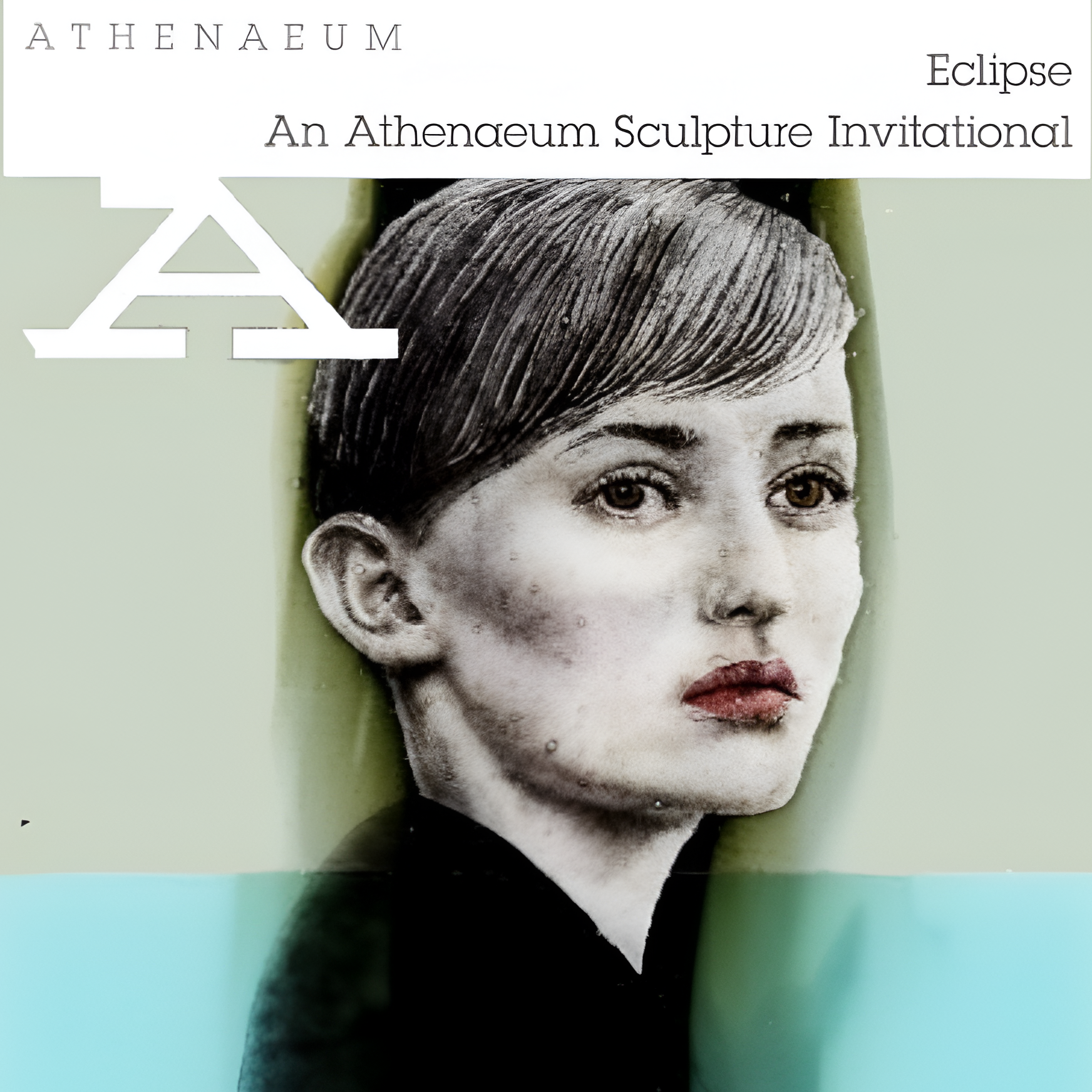
Detail of Michael Janis’ “A New Dawn” glass artwork featured in “Eclipse” exhibit.

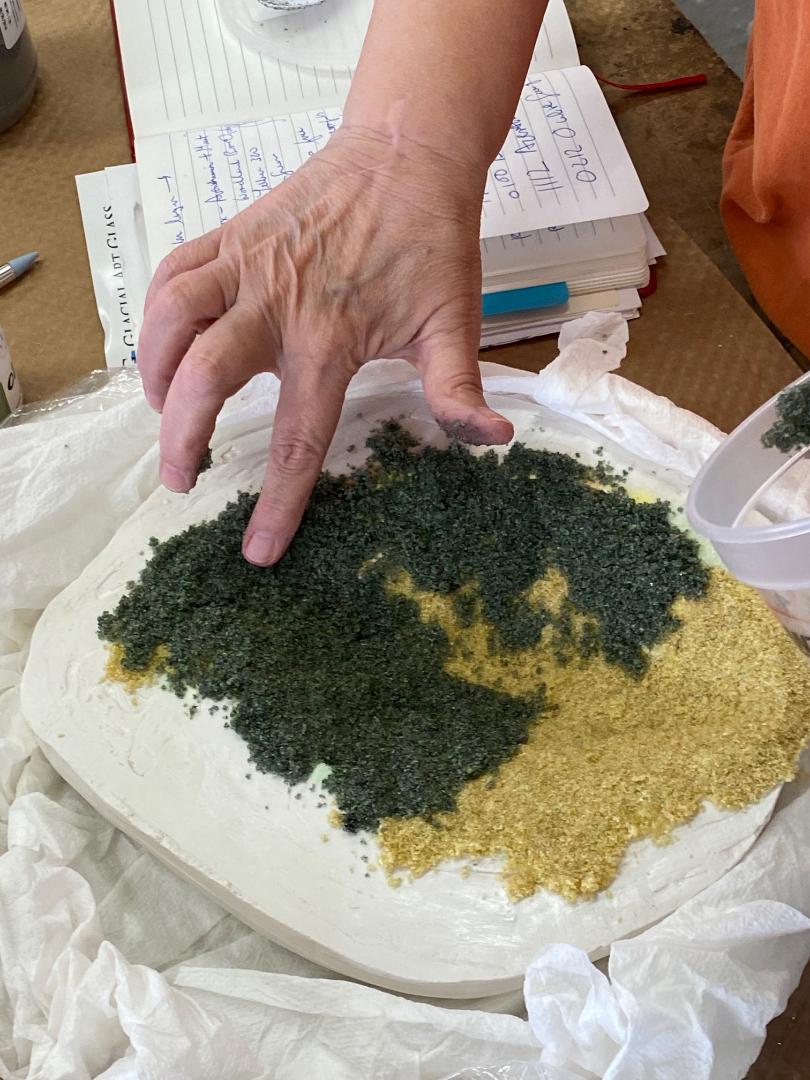
Michael Janis’ sgraffito glass portraits, which often explore identity, human emotion, and societal themes, align with the “Eclipse” theme by focusing on the layers of human experience and the partial obscuration of self. His technique of layering powdered glass to create complex imagery is akin to the way an eclipse gradually reveals or conceals—shadows and light playing across the surface, revealing deeper meanings. His works evoke the internal eclipses we face—moments where parts of ourselves or our histories are hidden or revealed depending on the perspective or light shed on them. Janis’ portraits also symbolize the personal and psychological aspects of an eclipse, dealing with identity, transformation, and the hidden aspects of the self that come to light.

Said Janis of his frit powder portraits: “Each element of my artwork serves as a kind of representation of the chaotic nature of human existence. By abstracting the realistic figures, I highlight the intricate layers that shape our identities, both internal and external. These divisions symbolize the diverse aspects of our personalities, experiences, and cultural influences that converge within a single being.”

Eclipse
An Athenaeum Sculpture Invitational
Curated by Alison Sigethy
January 16, 2025 – February 23, 2025
Artist Reception: Friday, January 17, 6 – 8 pm
Artist Talk: Sunday, February 23, 2 pm
Participating artists:
Michael Janis
Lori Katz
Mike Price
Carol Prusa
Sarah Hood Salomon
Salih Zeki Sayar
Murat Sener
Michael Enn Sirvet
Tim Tate
Erwin Timmers
Maduka Uduh

The Athenaeum is home to the Northern Virginia Fine Arts Association (NVFAA), an organization dedicated to the maintenance and preservation of the building and the celebration of regional arts.
The Athenaeum Gallery
201 Prince Street, Alexandria, VA 22314
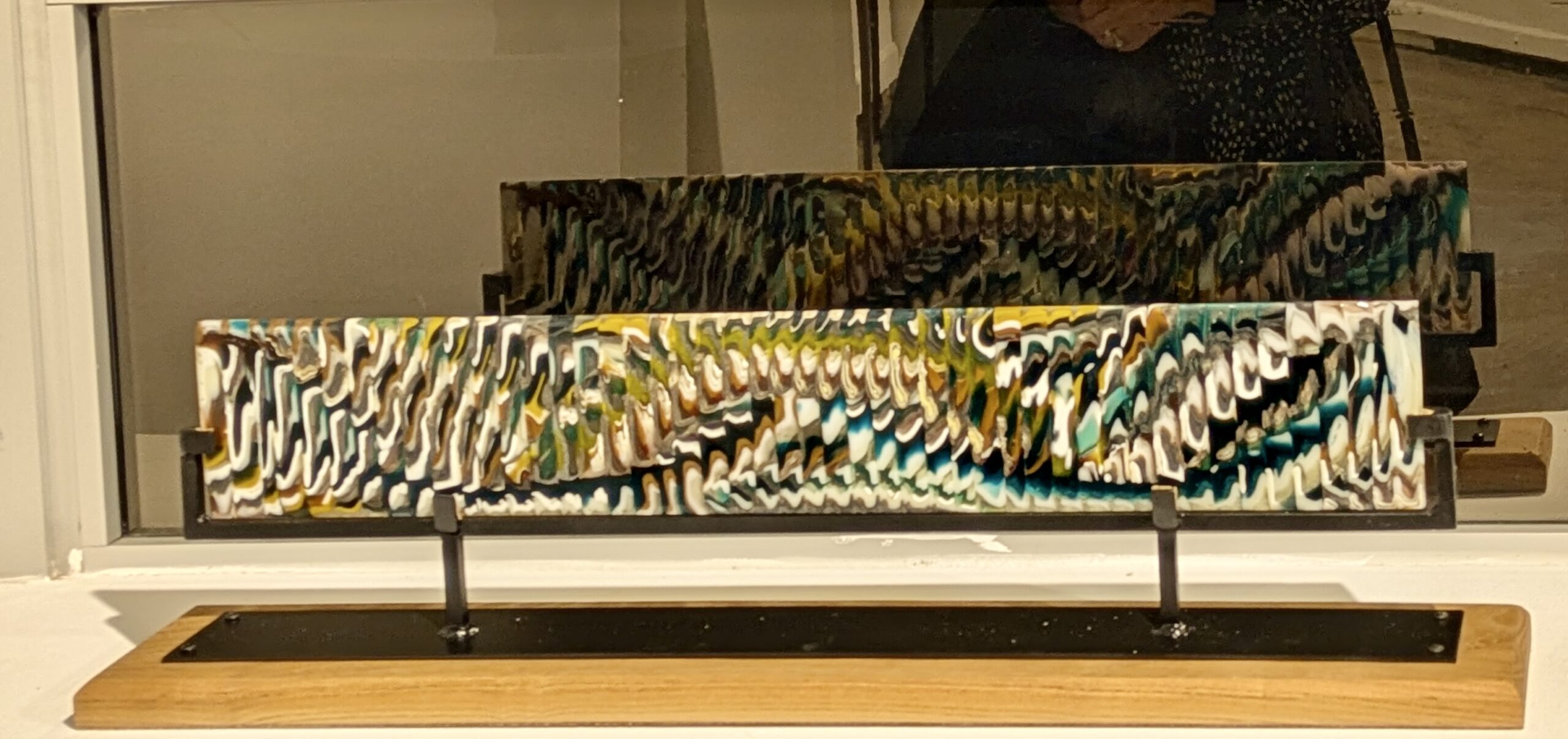
Looking Forward to 2025!

To end 2024 on a positive note – We are looking forward to 2025: DC’s new Cedar Hill hospital commissioned Washington Glass Studio to make a ‘DC themed’ glass mural (8 foot x 5 foot high). All our studio artists were invited to make inset panels in their glass style. Just started process fitting out glass panels into the steel framework- here’s a sneak peek! The artwork will be installed early in 2025!! Happy New Year!

Artists involved include: Nancy Kronstadt, Erwin Timmers, Tim Tate, Arden Colley, John Henderson, Patricia de Poel Wilberg, Graciela Granek, April Shelford, Jaelin Jones, Jun Lee, Trish Kent, Chip Montague and Michael Janis.

10th Annual Glass International Opens!

April Shelford “Catch a Wave”

Virginia’s Lorton Workhouse Arts Center opened their 10th Annual Glass International, an exhibition highlighting the depth and breadth of contemporary functional and sculptural glass art. This year, in celebration of Workhouse Arts’ 10th year exhibiting glass they opened eligibility to include artists working internationally.

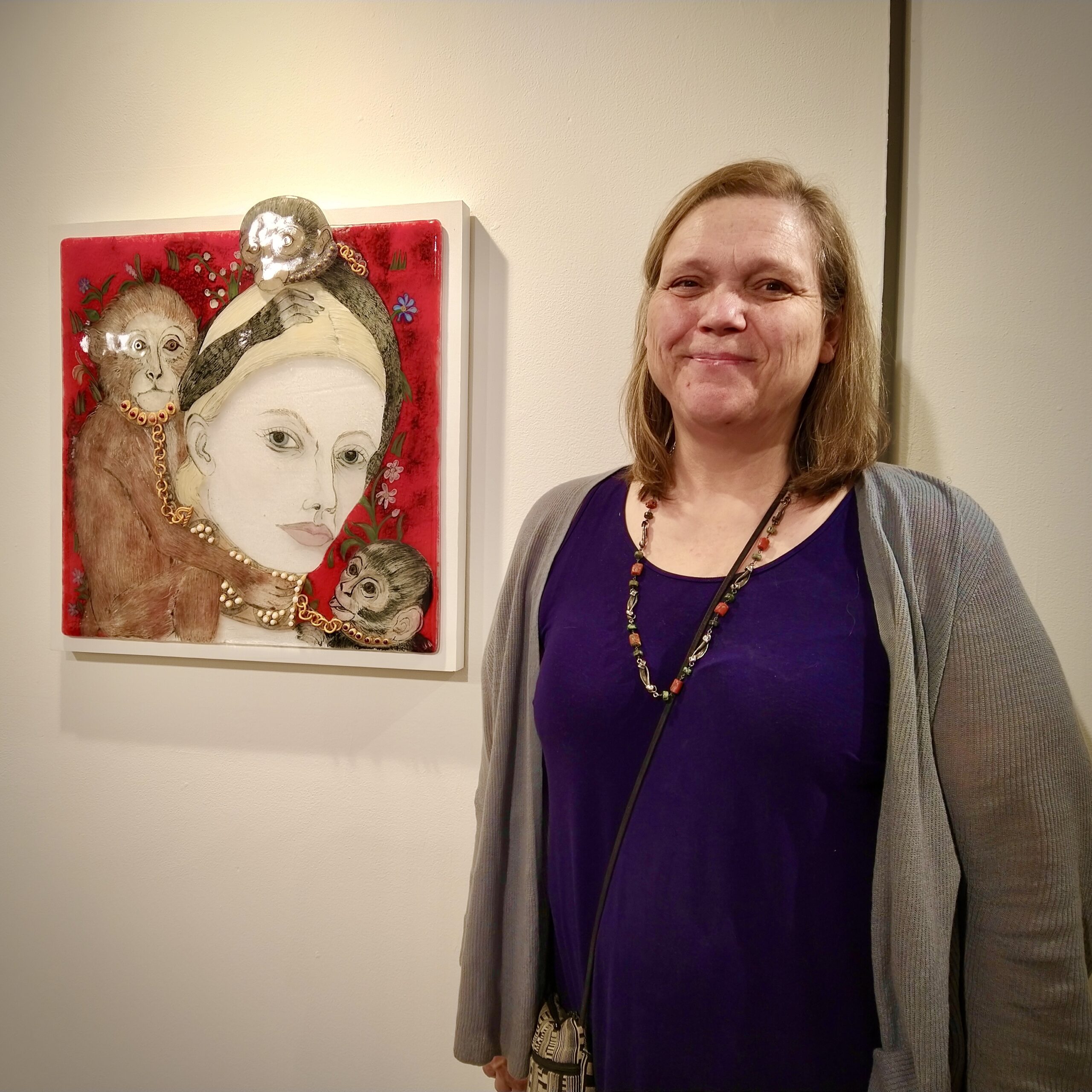
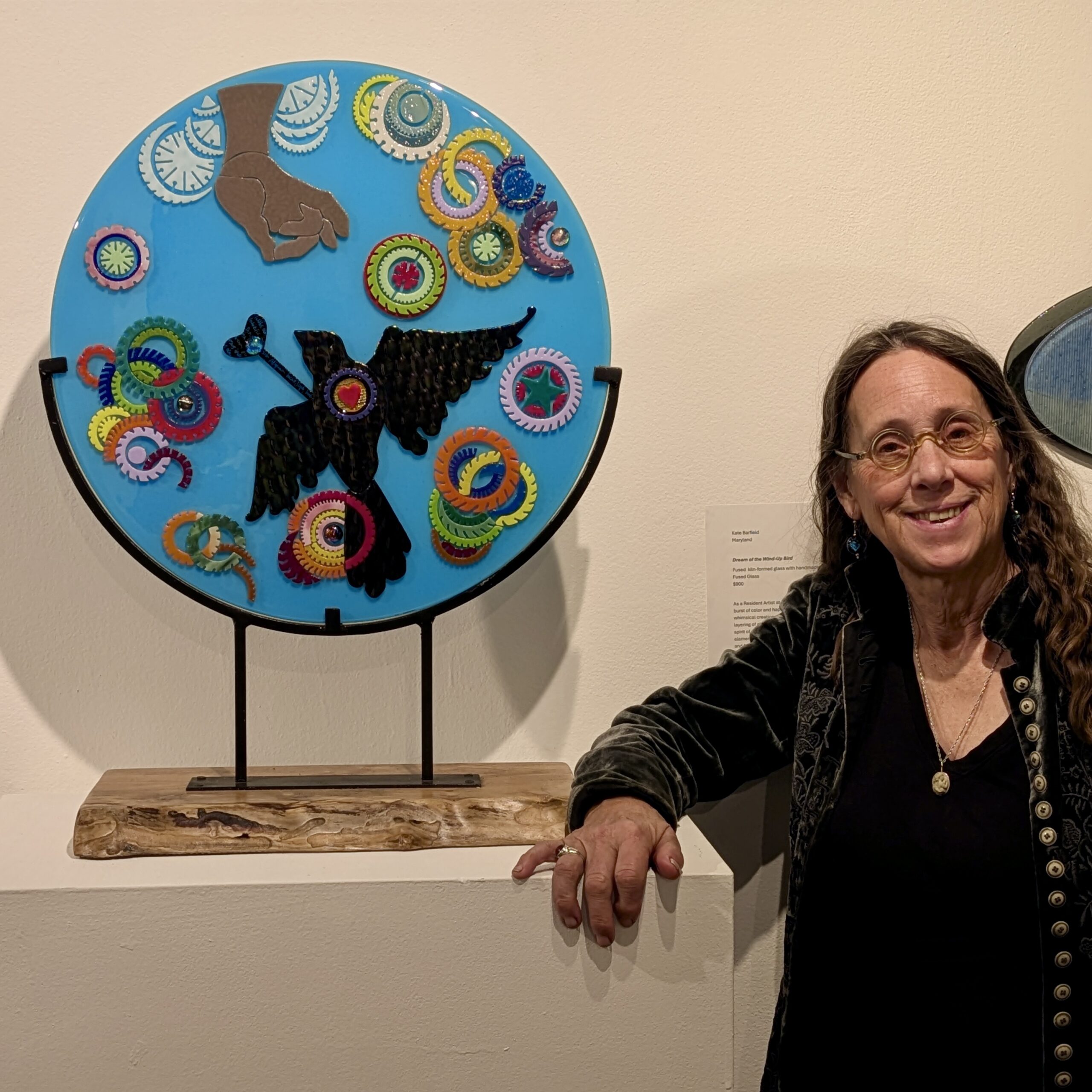
Kate Barfield “Dream of the Wind-Up Bird”
Patricia de Poel Wilberg

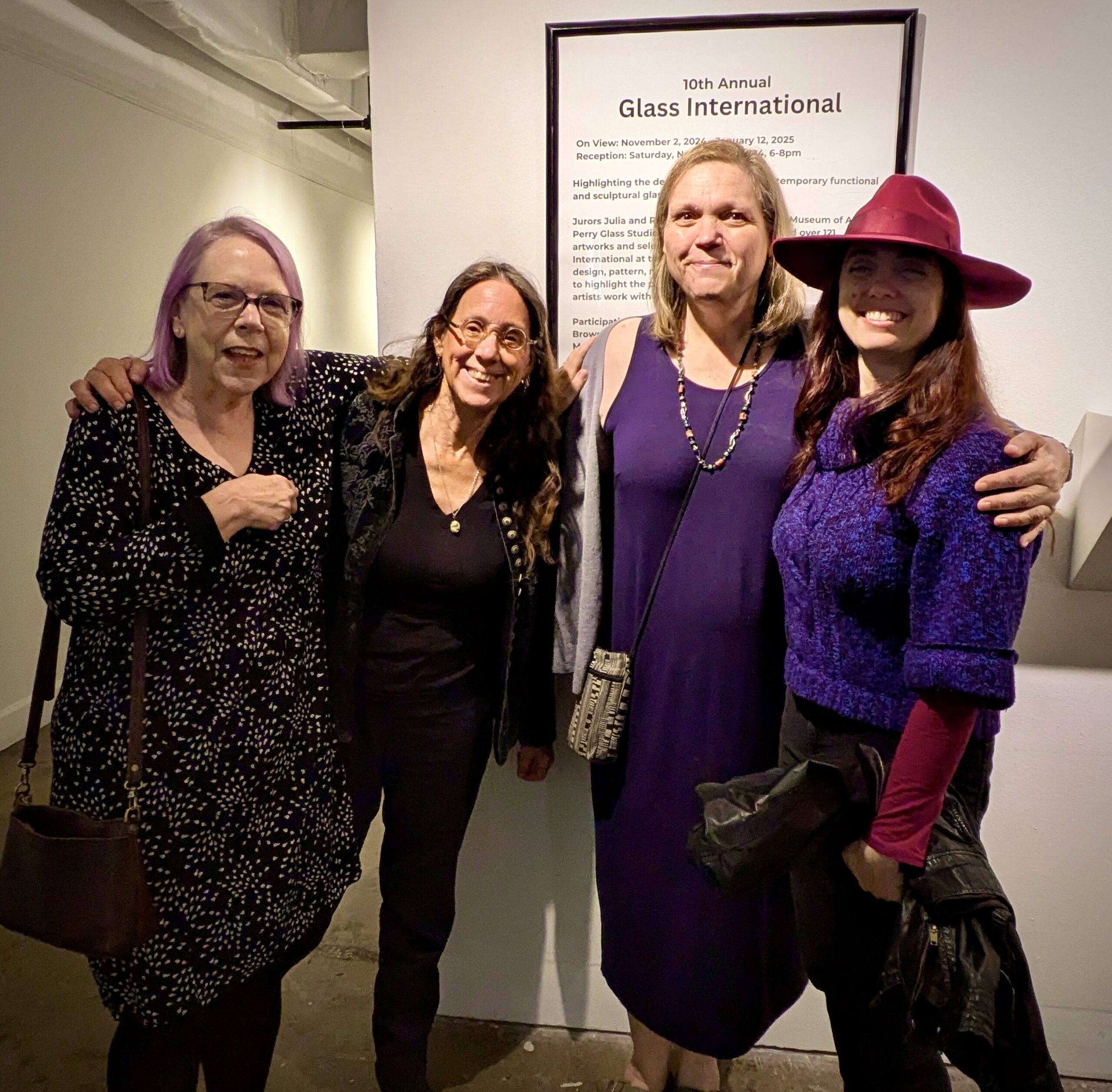
Washington Glass School was well represented by WGS Resident Artists Kate Barfield, Patrica de Poel Wilberg, and April Shelford- congratulations!

glass artists . next gen ladies of glass
Washington Glass School artists (L-R) April Shelford, Kate Barfield, Patrica de Poel Wilberg, Arden Colley.

Exhibiting Glass International Artists:
Karen Abbott, Kate Barfield, Denise Bohart Brown, Beryl Brenner, Lee Campbell, Guillermo Castaneda Jr., Marcy Chevali, Anthony D’Amico, Patricia de Poel Wilberg, Jeanne Marie Ferraro, Olga Gobernik Kon, Ruth Gowell, Jennifer Hand, Mollie Hansen, Jennifer Hecker, Marla Heiner, Sara Hitchcock, Mary Jones, Martin Kremer, Kelly Lacy, Becca Low, Sandi Martina, Kimberly McKinnis, Shawn Messenger, Paul Messink, Jack Schmidt, Michael Scupholm, April Shelford, Madeline Shir, Ori Shir, Aric Snee, Chuchen Song, Tim Spurchise, Heather Sutherland, Tabitha Thierjung, Katherine Thomas, Exer Thurston, Michael Tracy, Snuffy Wright

Workhouse Arts Center is located at: 9518 Workhouse Way Lorton, VA 22079

Vulcan Gallery, W-16 1st Floor
On View: November 2, 2024 – January 12, 2025

Winter Open Studio Is Coming!

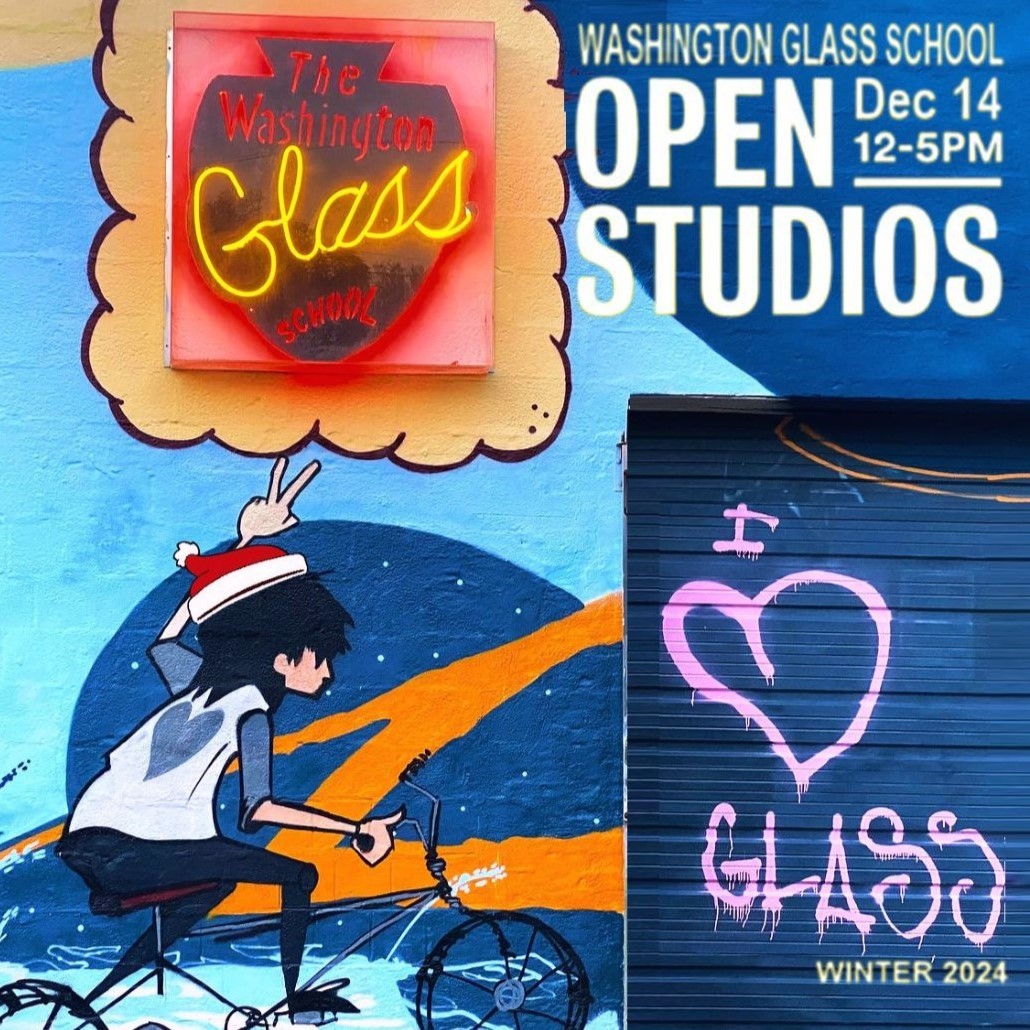
Winter Open Studios Set for Dec 14th! Mark Your Calendars!

Join us in the DC region’s largest one-day visual arts event! On Saturday, Dec. 14th, from Noon til 5PM, Washington Glass School and its Resident Artists, Teachers and Students will participate in the Winter Open Studios! See what we’ve been up to!
Come visit hundreds of working artist studios in the Gateway Arts District, along Route 1 from the DC line/ Mount Rainier up to Hyattsville, MD.

December Holiday Open Studio Gateway Arts District DC Maryland
Washington Glass School 3700 Otis Street, MD Rainier, MD

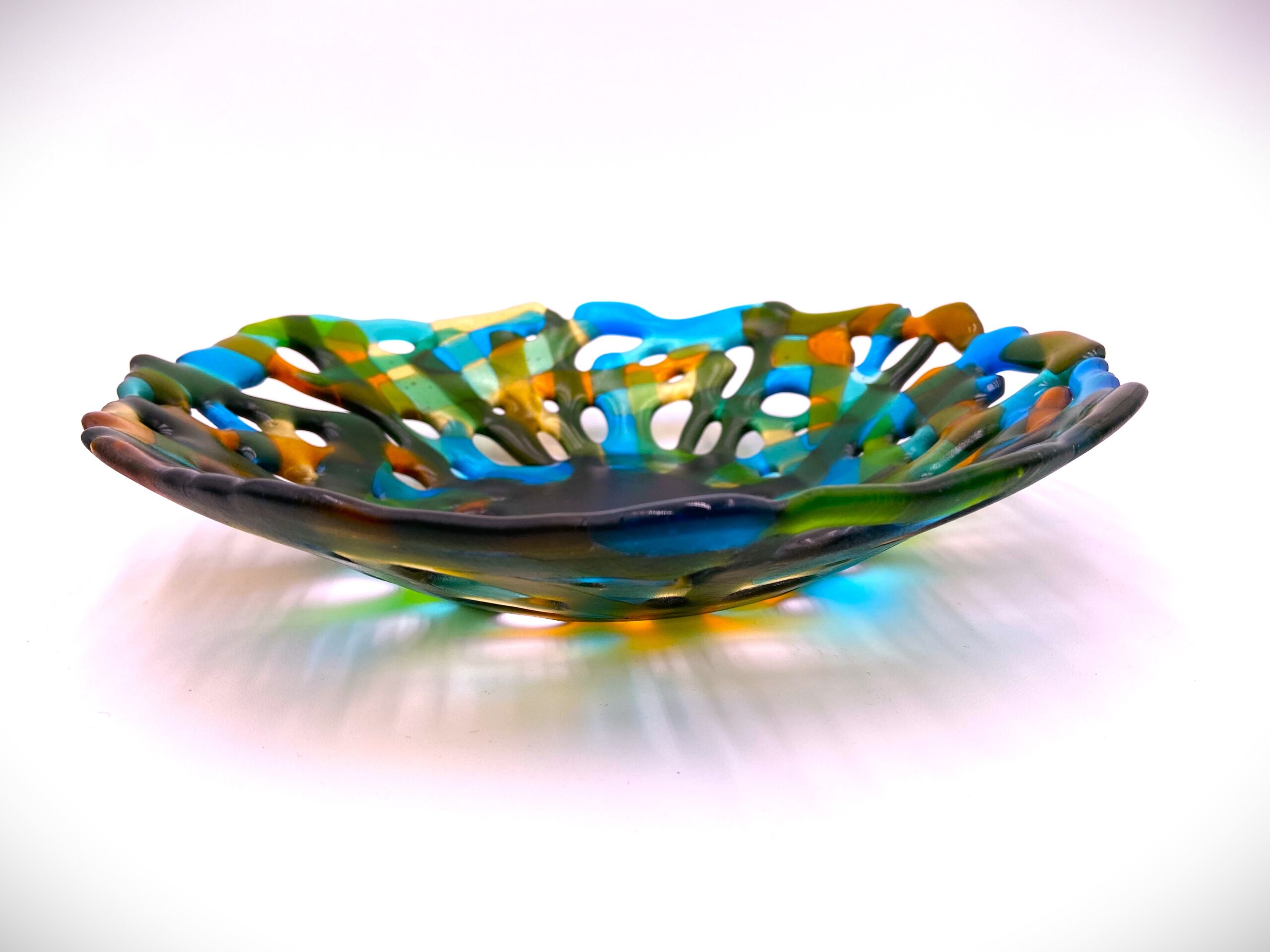
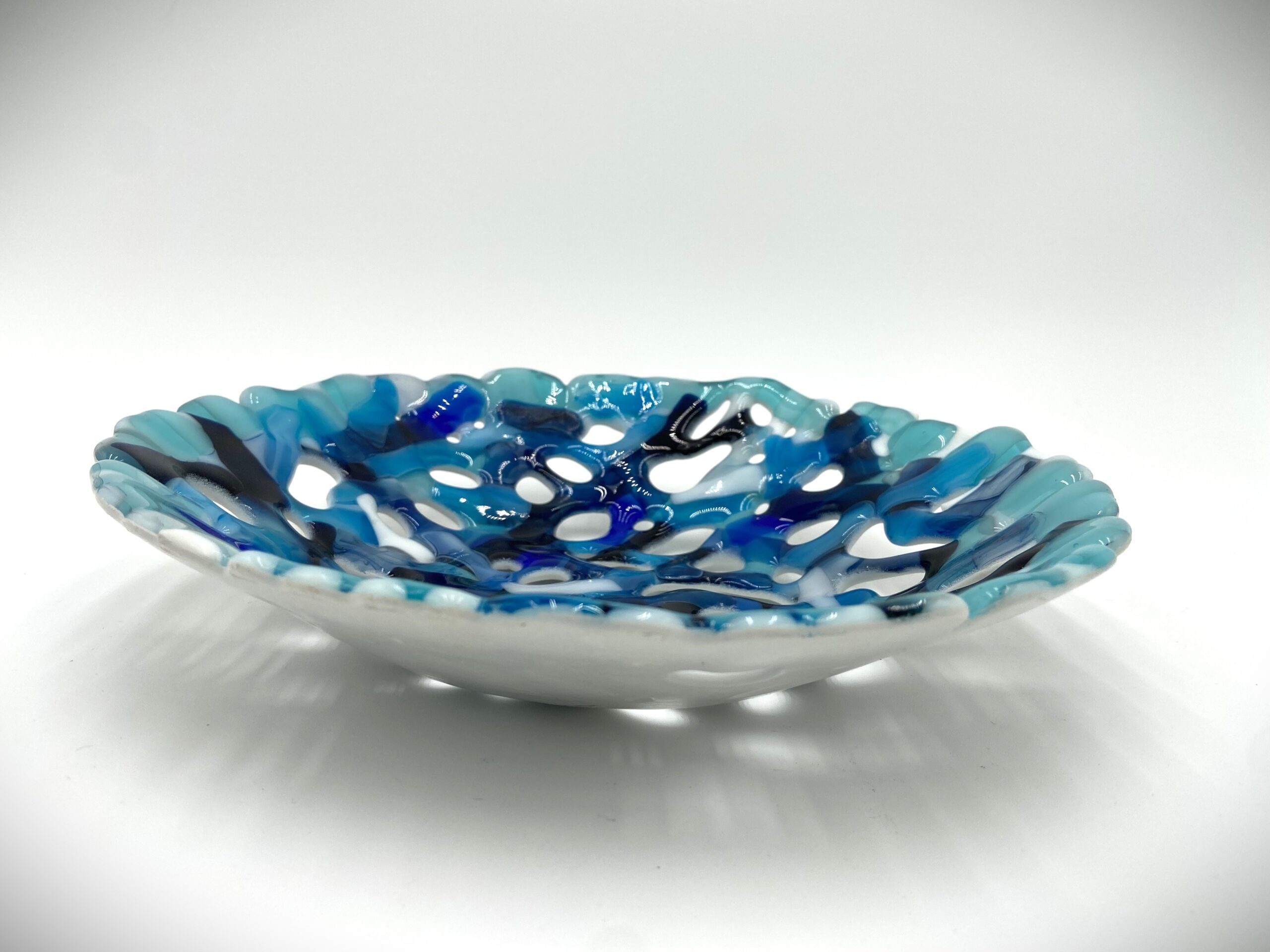
5705A & 5705B – Fused Glass Coral Bowls

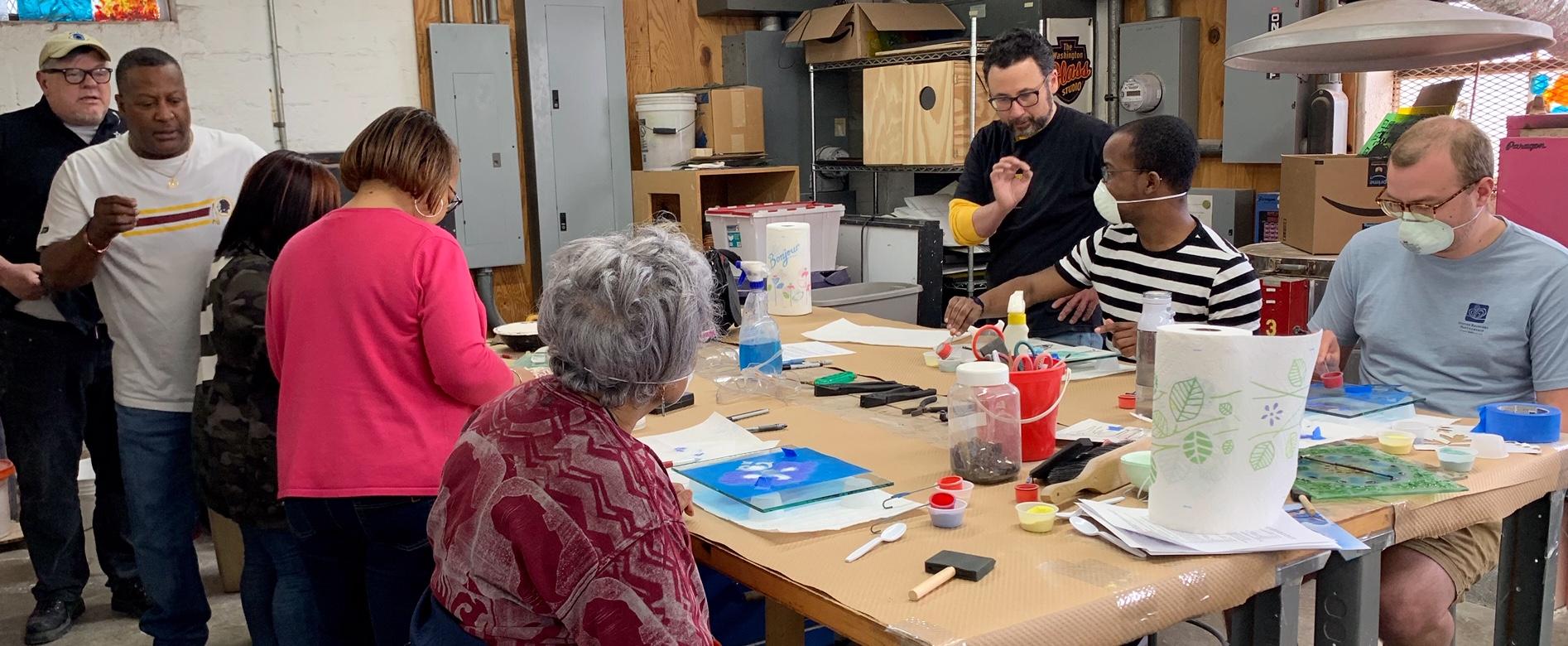
Diverse and beautifully mesmerizing, coral provides shelter and creates an environment to help marine life thrive. Inspired by the labyrinth-like patterns of coral found in our oceans, we invite you to make a fascinating interlocking glass design!
Students are provided with a variety of glass colors to choose from, as well as tools to cut and shape the pieces. As one carefully arranges the glass fragments, they can experiment with different patterns and arrangements to create a stunning coral-like design. Beginner level experience.

Michael Janis Finalist in 2022 Contemporary Craft Prize

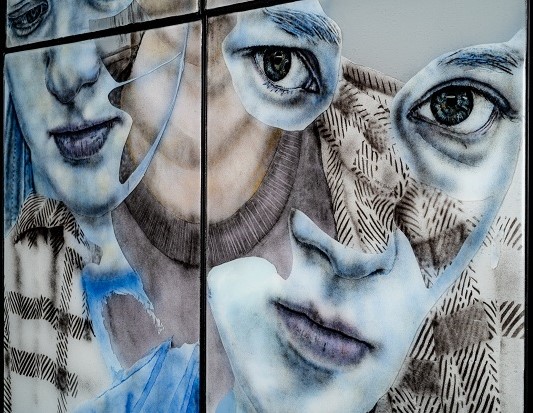
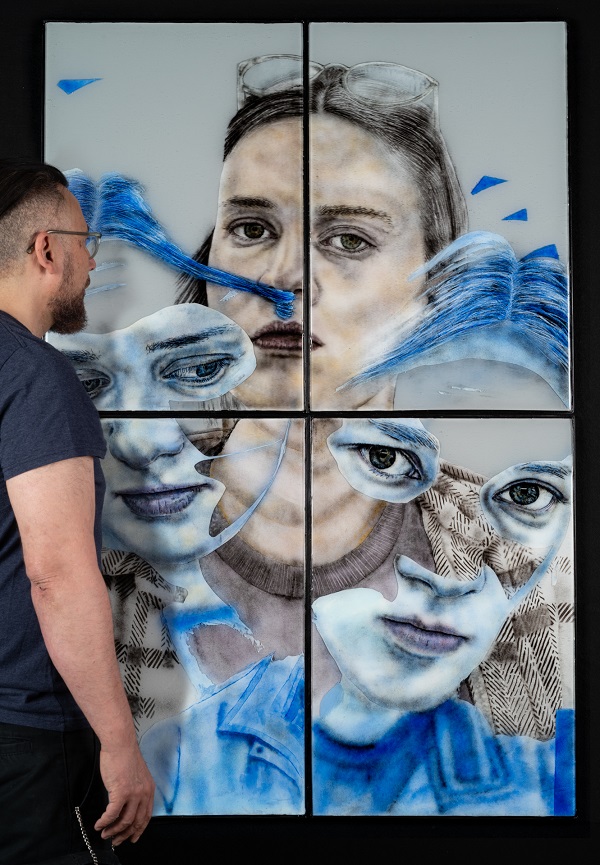
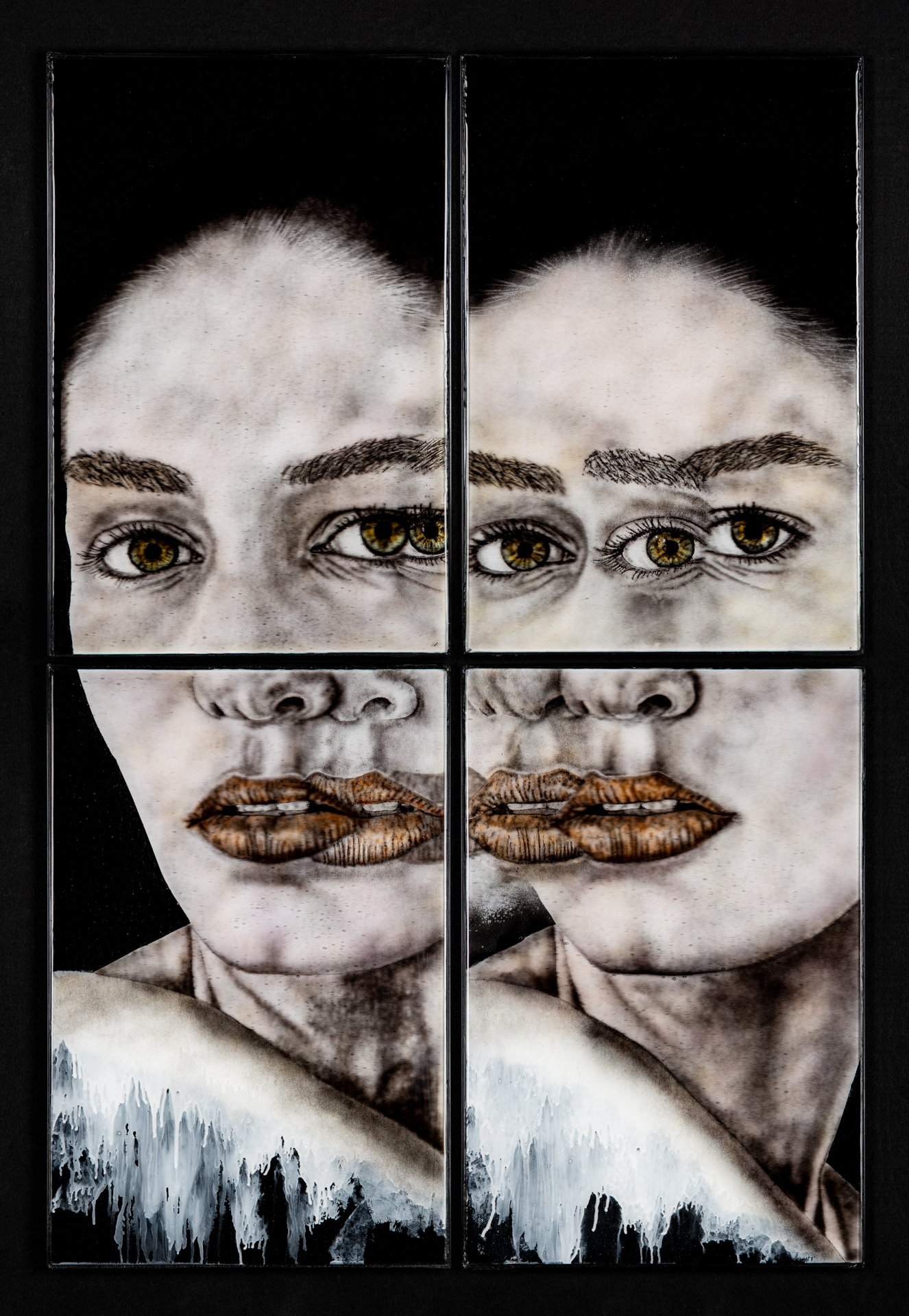
Michael Janis, “Allowing Our Past to Become Part of Ourselves” detail, 2022, fused glass, glass powder imagery. Photo by Pete Duvall.

17 national and international finalists have been selected for this biennial exhibition in glass art, featuring newly created, innovative works.

Michael Janis glass art - title "Allowing Our Past to Become Part of Ourselves" 60"H x 40' W fused glass, glass powder imagery aluminum

Glass is itself a transformation: created when ordinary sand encounters extreme heat. In this breathtaking exhibition, glass is transformed again, this time by 17 contemporary artists from across the globe. The resulting work pushes the boundary of traditional craft techniques and takes glass from the realm of the ordinary to the extraordinary.

Transformation 11: Contemporary Works in Glass is Contemporary Craft’s 2022 Elizabeth R. Raphael Founder’s Prize juried exhibition. The winning artist and their work will be announced and presented at the public opening of the exhibition on Friday, September 9, 2022, where they will receive a cash prize. The 2022 prize will be awarded in the category of glass, and must meet the requirement that it has been made within the last 12 months and addresses the theme of “transformation.” Seventeen contemporary artists from across the globe explore creative concepts and innovative approaches in their use of the glass medium, with the winning artist sending additional works to demonstrate the breadth of their work.

The 2022 Raphael Prize finalists are: Dean Allison, Pittsburgh, PA; Eunsuh Choi, Rochester, WI; Donald Friedlich, Madison, WI; Michael Janis, Washington, DC; Lauren Kalman, Detroit, MI; David King, Danville, KY; Eriko Kobayashi, Carbondale, IL; Weston Lambert, Tacoma, WA; Patrick Martin, Emporia, KS; Hisayoshi Muto, Yatomi, Aichi, Japan; Aya Oki, San Bernardino, CA; Miroslava Ptackova, Zlín, Zlínský kraj, Czech Republic; David Schnuckel, Rochester, NY; Michaela Spruzinova, Ústí Nad Labem, brná, Czech Republic; Ben Wright, Stanwood, WA; Ayano Yoshizumi, Everard Park, SA, Australia; and Hoseok Youn, Toledo, OH.

The jury for the 2022 prize includes Anna Rothfuss, Project Development Manager, Derix Art Glass Consultants, LLC U.S., Portland, OR; Heather McElwee, Randi & L. Van V. Dauler, Jr. Executive Director, Pittsburgh Glass Center, Pittsburgh, PA; Alexandra Raphael, enameller, London, England; Catherine Raphael, metalsmith and writer, Pittsburgh, PA; Rachel Saul Rearick, Executive Director, and Kate Lydon, Director of Exhibitions (retired), Contemporary Craft, Pittsburgh, PA

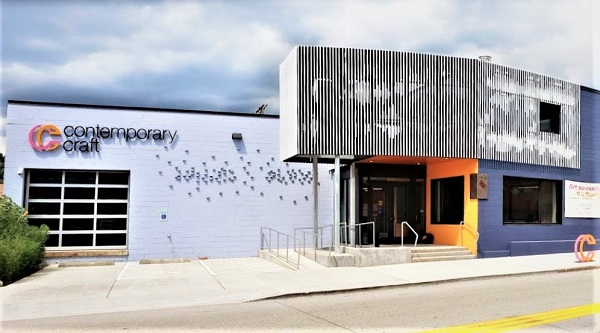
Contemporary Craft, 5645 Butler Street, Pittsburgh, PA 15201

Contemporary Craft hours: Mon-Sat: 10 AM – 4 PM

September 9, 2022 – March 18, 2023

This opening is free and open to the public.

ABOUT CONTEMPORARY CRAFT

Contemporary Craft presents contemporary art in craft media by regional, national, and international artists. Contemporary Craft offers cutting edge exhibitions focusing on multicultural diversity and contemporary art, as well as a range of artist-led studio workshops, community engagement programs, and a store. Located at 5645 Butler Street in the Upper Lawrenceville neighborhood of Pittsburgh, PA. For more information, visit www.contemporarycraft.org

Michael Janis on Art Clinic Online Saturday, June 25th.

On Saturday, June 25th, WGS Co-Director Michael Janis is the guest artist presenting on online talk for the Art Clinic Online @ Glen Echo’s Stone Tower Studio.

sgraffito glass imagery of figure
Michael Janis; “Current State”, 2020. Kilnformed glass, glass powder imagery, 4 panels – each 20” x 30”

The Art Clinic Online (ACO) community aims to create a supportive arts environment in an online setting. The ACO features online presentations where members can ask them questions about their vision and create a forum for the equal exchange of art ideas and art information as well as opportunities.

If you are interested in joining the online presentation, email Mariana for the zoomlink- mkastrin@gmail.com