Join the Art Alliance for Contemporary Glass (AACG) on Friday, July 11, at 1pm Eastern time when they present Face to Face: The Language of Faces & Figurative Work. Aaron Schey of Habatat Galleries will facilitate a discussion about faces in work and figurative work with artists Dean Allison and Michael Janis. The program will include a presentation by each artist, followed by an in-depth question & answer session with the artists discussing their work and how the public responds to faces and figurative work versus abstract art.
Through glass powder portraits and cast glass sculpture, we explore how faces reveal what we hide and reflect who we truly are. Fired. Fractured. Fused. Every face tells a story.
Now for something completely different! Need any more tranquility, abundance, wisdom, strength, comfort, creativity, patience, or intuition in your life? Who doesn’t??
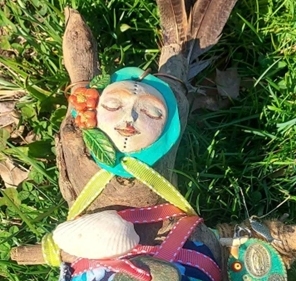
Healing dolls, also known as spirit or intention dolls, are here to help. Charming folk-art dolls carry ancient cultural or spiritual meaning, and each doll is as unique as the vision of its creator.
You will create your own cherished doll from simple materials and your personal intention. We use polymer clay to create the face, either from a mold or hand-built.
Join us in celebrating Graciela Granek with these photos from her farewell lunch at Washington Glass School and her time at the school! 🥂 Since 2020, Graciela has been a cherished resident artist, instructor, and friend. She’s now heading back to Tel Aviv to reunite with family and launch her own studio. Wishing her endless creativity and success!
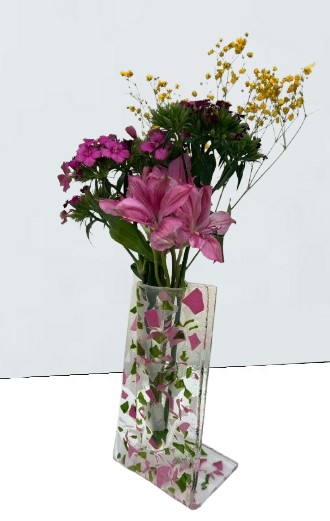
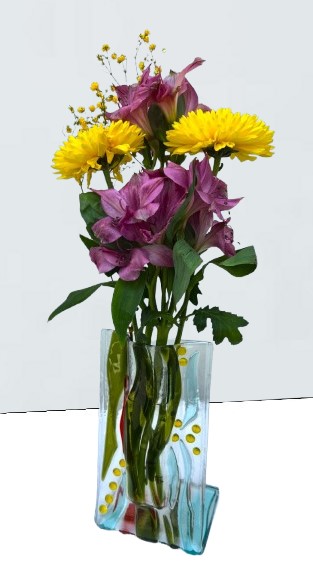
Join us at Washington Glass School with instructor April Shelford on Wednesday, April 23, from 6:30-9:00 pm for a fun, hands-on fused glass adventure! Craft your own 8” x 4” water-tight pocket vase—perfect for brightening up walls, windows, or even fences with vibrant charm.
These cheerful vases are ideal for fresh flower cuttings, dried blooms, herbs, incense sticks, or simply left plain to shine. With Mother’s Day just around the corner, they make a heartfelt, handmade gift (hint, hint)!
In this beginner-friendly class, you’ll: ✨ Learn to use thick fiber paper to shape the “pocket” of your vase ✨ Explore glass cutting techniques and design tips ✨ Create a unique piece with guidance tailored to your skill level
No experience needed—come play with glass and let your creativity bloom! Sign up today at Washington Glass School and make something beautiful. Spaces fill fast — sign up today and bring a friend!
Mark Your Calendars! Save the Date! May 10thNoon til 5PM
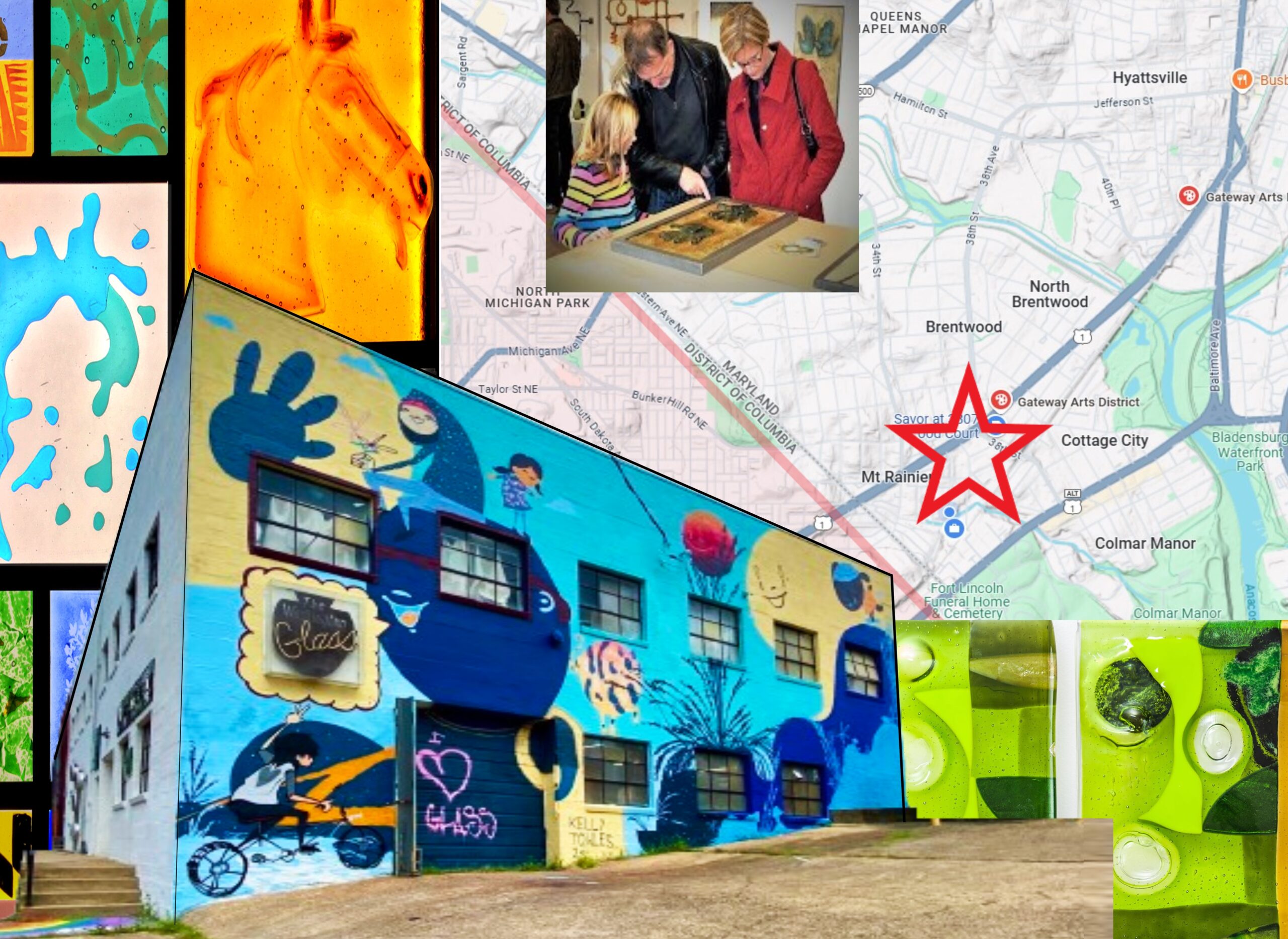
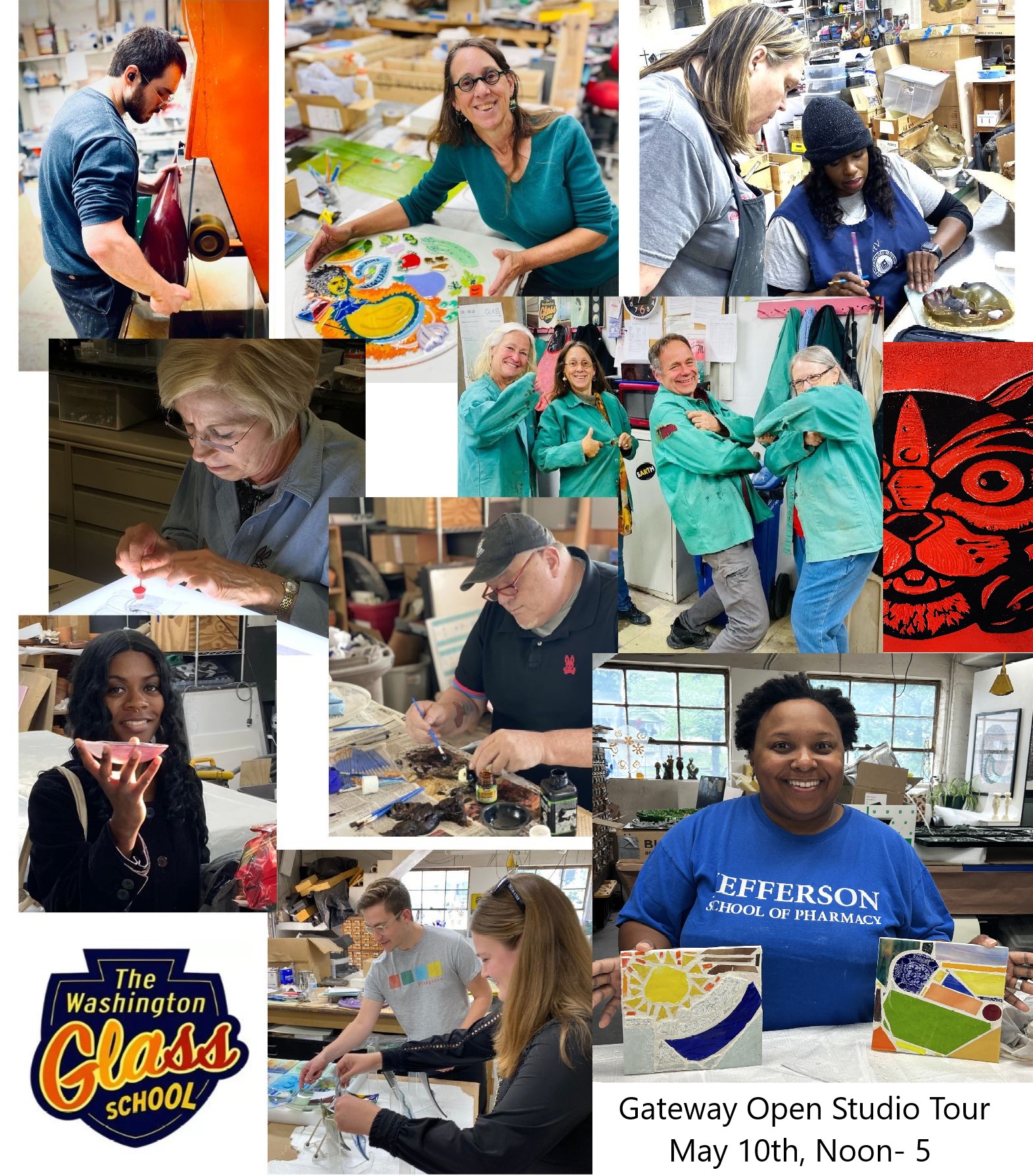
Unleash your inner art enthusiast at the largest Open Studios Tour (OST) in the DMV. Set your compass for a creative escapade at the Washington Glass School, nestled in the vibrant Gateway Arts District on May 10th, 2025. From noon until 5 PM, prepare to be captivated by the harmonic merger of four towns united in artistic expression: Mount Rainier, Brentwood, North Brentwood, and Hyattsville, MD.
Start the tour of the Gateway Open Studio Tours at the Washington Glass School – 3700 Otis St, Mt Rainier
Join us as we celebrate the 29th edition of this distinguished OST event. Immerse yourself in the creative energy that pulses along Route 1, stretching from the DC line to Hyattsville. Witness the renaissance of art through the eyes of hundreds of local artists, debuting their latest masterpieces in an array of unique mediums.
The Washington Glass School, renowned for nurturing visionary artistry, will be one of the focal points in this year’s tour. Marvel at the dazzling displays of resident artists and instructors, showcasing an eclectic mix of glasswork and more. Whether you’re an avid collector or simply on a quest for the perfect Mother’s Day gift (May 11th!), this is an opportunity not to be missed.
Enjoy in the spectrum of creativity that flows through our community, echoing the spirit of innovation and collaboration. Mark your calendar and step into a world where imagination knows no bounds. See you on May 10th for an unforgettable journey through the art-filled avenues of the Gateway Arts District.
To end 2024 on a positive note – We are looking forward to 2025: DC’s new Cedar Hill hospital commissioned Washington Glass Studio to make a ‘DC themed’ glass mural (8 foot x 5 foot high). All our studio artists were invited to make inset panels in their glass style. Just started process fitting out glass panels into the steel framework- here’s a sneak peek! The artwork will be installed early in 2025!! Happy New Year!
Artists involved include: Nancy Kronstadt, Erwin Timmers, Tim Tate, Arden Colley, John Henderson, Patricia de Poel Wilberg, Graciela Granek, April Shelford, Jaelin Jones, Jun Lee, Trish Kent, Chip Montague and Michael Janis.
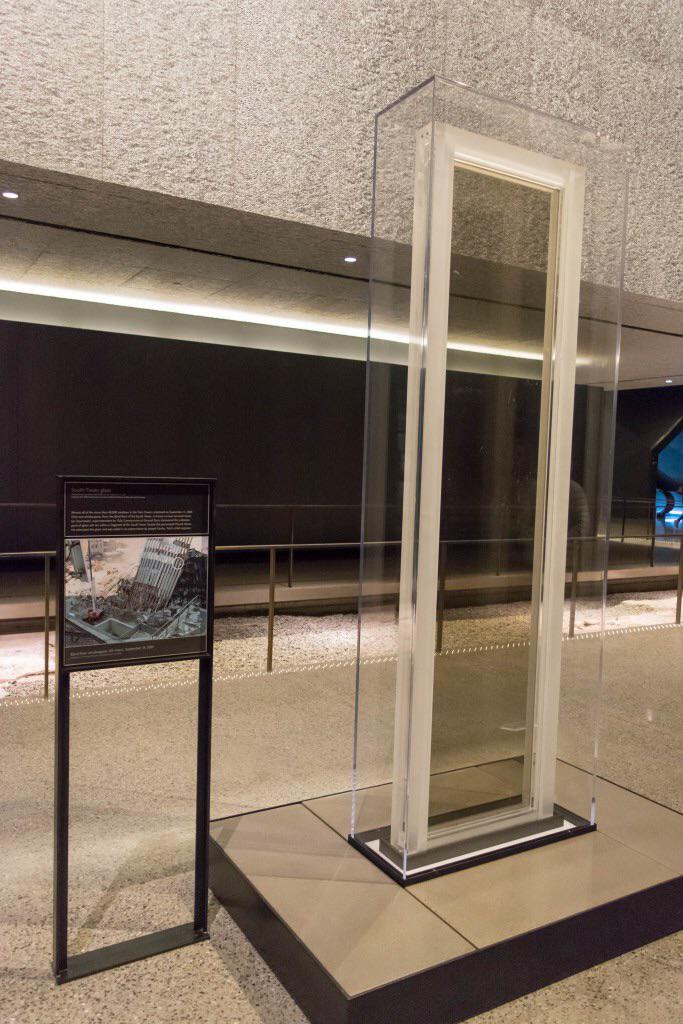
On this 9/11 day of remembrance, we reflect on the resilience embodied by the “Survivor Glass”—the only window to remain intact out of over 40,000 at the World Trade Center. Found near Ground Zero, this piece of glass from the 82nd floor of the South Tower stands as a symbol of strength amid unimaginable loss. As artists who work with glass, we understand the qualities of the material and the powerful stories it can hold. Today, we honor the lives lost, the strength of the survivors, and the enduring spirit of our nation. On this day of remembrance, we reflect on the resilience and strength found in the smallest things.
Unbroken glass from the 82nd floor of the South Tower on display at the 9/11 Memorial Museum.Circle shows location of window in the Twin Tower rubble.
WGS Co-Founder and Director Tim Tate sent the blog a preview of his spectacular new work – have a read of Tim’s thoughts on the work:
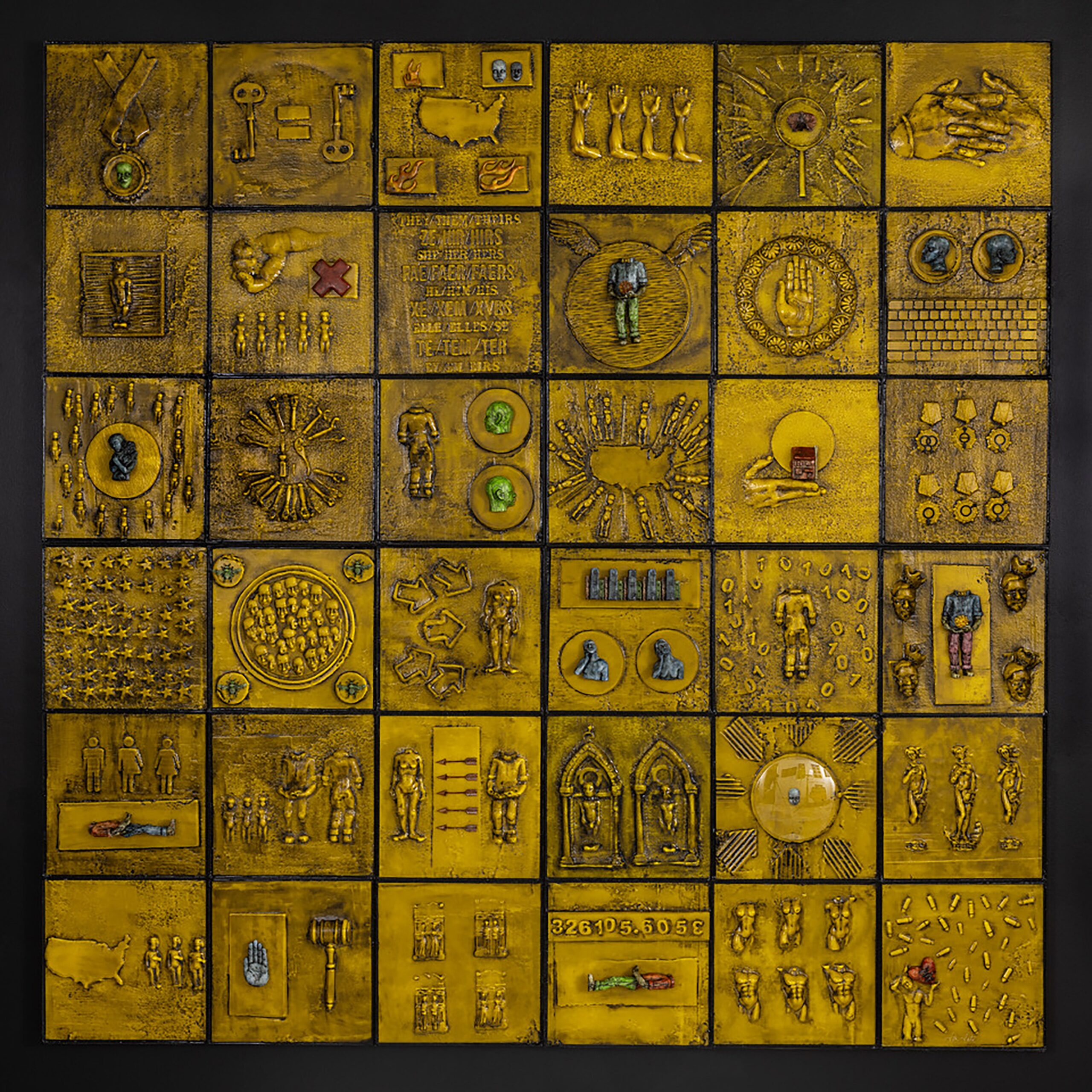
“Just finished what may be one of my most important pieces of my career. This is a piece dealing with LGTBQIA+ issues in the United States. These 36 points (one for each tile) will hopefully be in place when our children become adults. It is shipping out tomorrow to the INTO ACTION 2024 show in Chicago to be held in conjunction with the Democratic National Convention.
As you know, the stakes of our democracy have never been higher as they are in the 2024 election cycle. So this August, we are bringing together artists, activists, and communities from across the nation for INTO ACTION 2024, a large-scale art exhibition and community festival against the backdrop of the convention.”
TIM TATE “Universal LGBTQIA+ Bill of Rights : A Discussion of 36 points”; Cast Glass, Steel; 6ft x 6ft x 2in We, the members of a global community committed to justice and equality, proclaim this Charter of Rights for LGBTQIA+ Individuals to affirm the inherent dignity and the equal and inalienable rights of all members of the human family. Recognizing the unique challenges faced by LGBTQIA+ individuals, this charter is dedicated to fostering an environment of respect, safety, and inclusion.
1.Right to Commemorations and Monuments Description: Public recognition through monuments or memorials that honor LGBTQ+ history and individuals. Importance: Preserves and highlights the contributions and struggles of the LGBTQ+ community, fostering respect and historical awareness. 2. Equitable Tax Policies and Social Security Benefits Description: Fair treatment in tax legislation and social security benefits that recognize all family structures. Importance: Ensures financial equity and security for LGBTQ+ individuals and their families, reflecting diverse living arrangements. 3.Inclusion in Emergency Response Plans Description: Specific consideration of LGBTQ+ needs in emergency preparedness and response strategies. Importance: Guarantees that safety measures address the unique vulnerabilities of LGBTQ+ persons, ensuring effective aid during crises. 4.Participation in Public and Political Life Description: Full rights to engage in political processes and public service without discrimination. Importance: Encourages active civic engagement and ensures LGBTQ+ voices are represented in decision-making processes. 5.Protections for Intersex Children Description: Prohibition of invasive medical procedures without the informed consent of intersex children or their guardians. Importance: Protects bodily autonomy and prevents unnecessary medical interventions that can have lifelong consequences. 6.Right to Marry Freely Description: The ability for LGBTQ+ individuals to legally marry any consenting adult they choose. Importance: Affirms equality and supports the legal recognition of diverse relationships. 7. Protection Against Solitary Confinement Based on Gender Identity Description: Prohibits the use of solitary confinement for LGBTQ+ individuals based solely on their gender identity in detention settings. Importance: Prevents cruel and inhumane treatment and safeguards mental health. 8. Protection from Bullying in Schools Description: Implementation of strong anti-bullying policies to protect LGBTQ+ youths in educational institutions. Importance: Creates a safe learning environment, critical for personal development and mental health. 9. Recognition of Chosen Pronouns Description: Respect and legal recognition of an individual’s chosen pronouns in all settings. Importance: Validates and affirms gender identity, which is essential for psychological well-being. 10. Right to Safe Spaces Description: Assurance of access to safe spaces specifically for LGBTQ+ individuals in various environments. Importance: Provides environments where individuals can freely express their identity without fear. 11. Right to a Bright Future Description: Policies and practices that aim to provide optimistic and equitable future opportunities for LGBTQ+ individuals. Importance: Encourages the development of supportive and inclusive frameworks in education, employment, and beyond. 12. Online and Internet Protection Description: Enhanced protections against cyberbullying and harassment for LGBTQ+ individuals. Importance: Ensures safety in digital environments, which is vital given the high rates of online abuse targeting the community. 13. Protections for Queer Parents Description: Legal safeguards that ensure LGBTQ+ parents have equal rights in adoption, surrogacy, and parenting. Importance: Recognizes and supports diverse family dynamics, ensuring all parents and children are respected and protected. 14. Employment Protection Description: Strong workplace non-discrimination policies covering sexual orientation and gender identity. Importance: Promotes a fair and inclusive labor market that allows individuals to work without fear of prejudice. 15. Equal Healthcare Access Description: Access to comprehensive, non-discriminatory healthcare services, including specific health needs of the LGBTQ+ community. Importance: Reduces health disparities and ensures appropriate medical care for all, irrespective of sexual orientation or gender identity. 16. Inclusion in Census Data Description: Ensuring LGBTQ+ individuals are accurately represented in census data collection. Importance: Provides critical data for policy-making and resource allocation, helping to meet the community’s specific needs. 17. Queer Community Initiatives Description: Support for initiatives led by and for the LGBTQ+ community to foster social, economic, and cultural development. Importance: Empowers community members and enhances their overall well-being and visibility. 18. Right to Serve Openly in the Military Description: Allows LGBTQ+ individuals to serve openly in the military without discrimination. Importance: Promotes equality and capitalizes on the talents of all service members, regardless of their gender identity or sexual orientation. 19. Right to Personal Assembly and Associations Description: Freedom to form and participate in LGBTQ+ groups and events without interference. Importance: Facilitates community building and support networks, crucial for social empowerment and advocacy. 20. Recognition of Chosen Families Description: Legal acknowledgment of chosen families, which are non-biological kinship bonds crucial within the LGBTQ+ community. Importance: Supports the reality of diverse family units and ensures they receive the same legal and social benefits as traditional families. 21. Freedom from Torture and Degrading Treatment Description: Absolute protection against torture and degrading treatment, especially in contexts of detention and healthcare. Importance: Ensures humane treatment and upholds the dignity of LGBTQ+ individuals, particularly vulnerable in such settings. 22. Educational Curriculum Inclusion Description: Integration of LGBTQIA+ history and awareness into educational curriculums. Importance: Educates young people on diversity and inclusion, promoting respect and understanding from an early age. 23. Protection Against Forced Sterilizations Description: Explicit prohibition of forced sterilizations, often targeted at transgender and intersex individuals. Importance: Protects bodily autonomy and prevents abuses in medical and institutional settings. 24. Equality and Non-Discrimination Laws Description: Comprehensive laws that ensure equality and protect against discrimination for all LGBTQ+ individuals. Importance: Forms the legal basis for equal treatment and protection under the law, essential for all aspects of public and private life. 25. Gender Neutral Bathrooms Description: Availability of gender-neutral bathrooms in public and private venues to ensure safety and comfort. Importance: Accommodates all gender identities and enhances privacy and security. 26. Right to Adopt Children Description: Ensures that LGBTQ+ individuals and couples have the right to adopt children. Importance: Provides children with loving homes and respects the rights of LGBTQ+ people to form families. 27. Ban on Conversion Therapy Description: Prohibition of any practices aimed at changing an individual’s sexual orientation or gender identity. Importance: Protects individuals from harmful and discredited practices that attempt to alter their fundamental identities. 28. Freedom of Thought, Conscience, and Religion Description: Guarantees that individuals can freely practice their religion and express their thoughts and conscience without discrimination. Importance: Ensures that LGBTQ+ individuals are not excluded from religious or philosophical communities based on their identity. 29. Right to Privacy Description: Protection of personal data and the right to privacy in all matters, including those related to gender and sexual orientation. Importance: Safeguards individuals from invasive inquiries, discrimination, and harassment. 30. Freedom of Artistic Expression Description: Freedom for LGBTQ+ individuals to express themselves artistically without censorship. Importance: Encourages cultural enrichment and personal expression, important for societal diversity and understanding. 31. Access to Asylum Description: Right to seek asylum based on persecution due to sexual orientation or gender identity. Importance: Provides refuge and safety for those facing serious threats in their home countries due to their LGBTQ+ status. 32. Legal Protection Against Bias Description: Strong legal frameworks that address and penalize discrimination against LGBTQ+ individuals. Importance: Ensures justice and recourse in cases of discrimination, crucial for upholding rights and equality. 33. Equal Housing Laws Description: Protection against discrimination in housing based on sexual orientation or gender identity. Importance: Ensures that all individuals have equal opportunity to secure housing without fear of prejudice. 34. Protection from Imposed Moral Codes Description: Ensuring that no one’s personal moral or religious beliefs justify discrimination against LGBTQ+ individuals. Importance: Upholds the principle that personal beliefs should not infringe on the rights of others, ensuring a tolerant and diverse society. 35. Gender-Affirming Healthcare and Treatment Description: Access to healthcare that recognizes and supports an individual’s gender identity, including hormonal and surgical treatments. Importance: Essential for the well-being and health of transgender individuals, ensuring they receive appropriate and supportive medical care. 36. Protection from Violence and Hate Crimes Description: Strong laws and enforcement against hate crimes and violence targeted at LGBTQ+ individuals. Importance: Provides a secure environment for LGBTQ+ individuals to live without fear, crucial for their safety and mental health.
This declaration aims to eliminate all forms of discrimination, uphold the rights to privacy, expression, and love, and ensure that each individual may live authentically and without fear. Through this document, we commit to protecting these rights as fundamental to the structure of our society and indispensable for the free and full development of each person’s potential
The James Renwick Alliance for Craft (JRA) is a vibrant group of art enthusiasts, collectors, artists, educators, students and art professionals who share a passion for contemporary American craft. Their group explored Artomatic on Sunday March 25th- and for fun, picked their favorite works of craft-based art that they found. Great to have the collector group be introduced to new art and artists! No particular order to this list (with AOM Room listed)
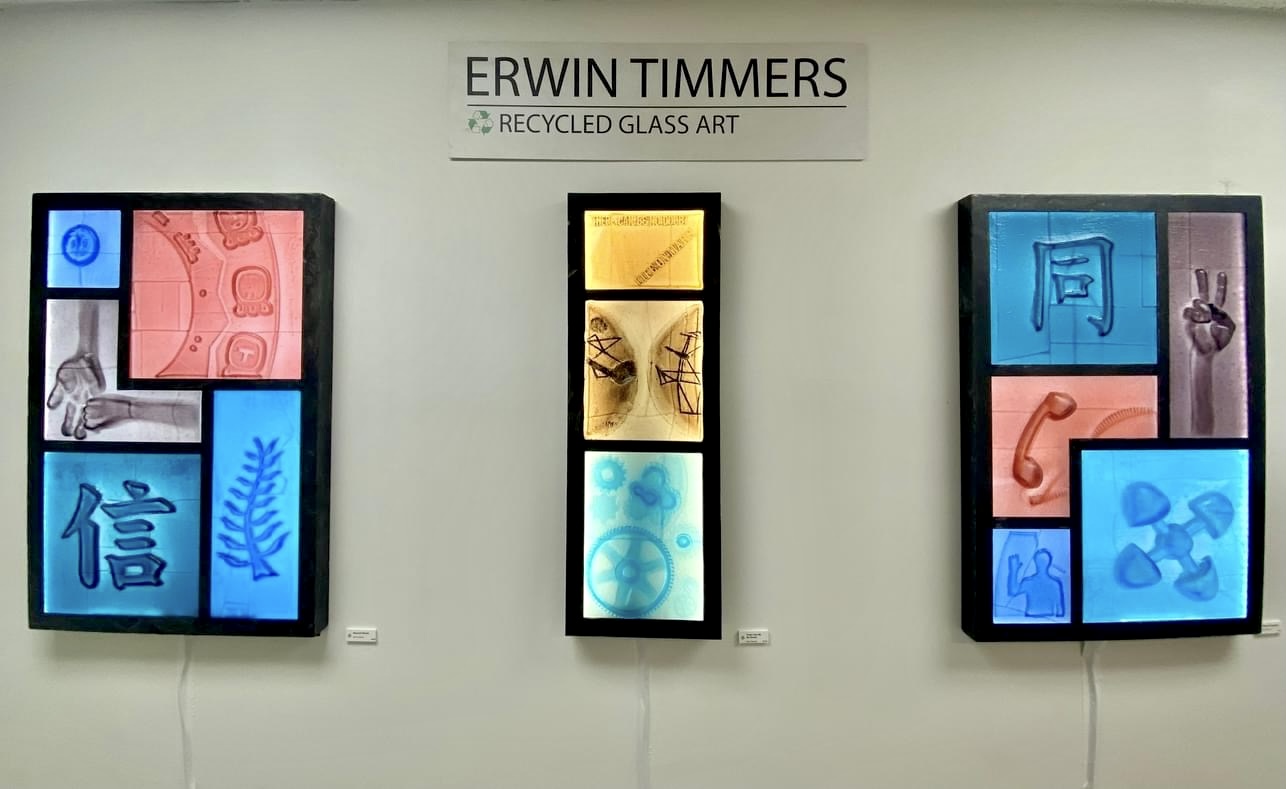
Full Top Ten pList: Erwin Timmers (Glass lobby L5), Jun Lee (7057), Davide Prete (808), Michael Sirvet (6108), Jeff Wilson (7058), Valerie Theberge (808), Laurel Lukazewski (5094), Griffon Dillon (Glass Lobby L5), Anthony D’Amico (818, 5100) & Melissa Burley (5103). Congrats to the JRA picks- but all at AOM are winners!
The first comprehensive book about the Washington, D.C., art world, this study features humorous and unique stories about the artists and art districts of one of the U.S.’s most visited cities. The city’s many firsts include are the first modern art museum, the first African-American gallery, and the first art fair. Important in the feminist art movement, it hosted the opening of the National Museum of Women in the Arts.
Featuring trends in portraits and landscapes, galleries and museums, nonprofits, cooperatives, art fairs, family stories and the “Artomatic Experience”!

 Friday, July 11, 2025 at 1PM Eastern time