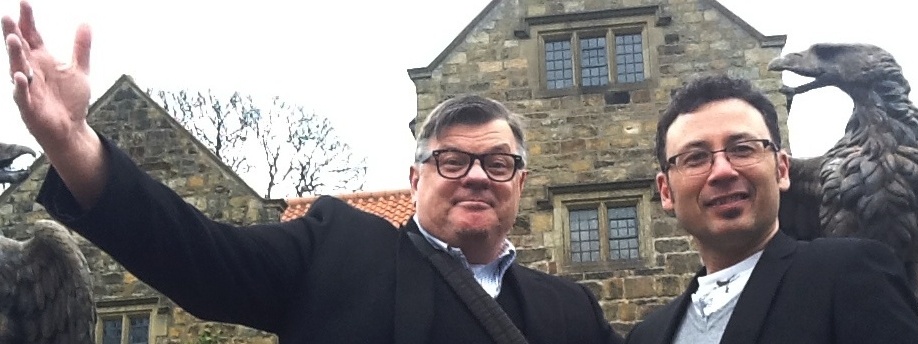
The Experiment That Lasted 25 Years

Tim Tate co-founded the Washington Glass School to break every rule he’d inherited. A quarter century later, it’s still running — and so is he.

Washington Glass School in Mt Rainier, MD

The first thing you should know about Tim Tate is that he didn’t expect any of this to last.

When he and his co-founders — Michael Janis and Erwin Timmers — opened the Washington Glass School in the early 2000s, Tate gave the whole project maybe three years. He was running an experiment, not building an institution. The question driving it was deceptively simple: what would a glass school look like if it wasn’t tethered to the conventions of classic studio glass? Could it survive? Could it actually make something?

Twenty-five years and thousands of students later, the answer is self-evident.

Tim Tate circa 1999. (so young!)

Tate began his art career as a young HIV-positive queer man in the full, brutal heat of the AIDS crisis. He was the founder and director of the Triangle Artist Group in Washington, DC, and the director of the city’s first Art Against AIDS charity event — a benefit that raised funds for the newly established DC LGBTQ+ Community Center and the HIV-positive children’s ward at Washington Children’s Hospital. He was shaped by that community, trained in its values, fluent in its urgency. Civil rights and human justice weren’t themes he would later introduce into his work. They were the water he swam in from the beginning.

Tim Tate, “Two Paths Taken”, photo by Pete Duvall

That formation never left him. It structured how he thought about art, about purpose, and eventually about what a school could be.

_________________________________

The Washington Glass School was founded on a principle that sounds obvious but is, in practice, radical: everyone’s success is not achieved at the expense of anyone else’s. Tate had spent time in studios corroded by envy, watching artists diminish each other. He wanted something different. A rising tide, he believed, floated all boats — and so the school was built with that ethos embedded in its architecture.

Images from The Washington Post newspaper article about the Glass School, 2002. Photos by Mark Sypher.

The governance structure reflects the same logic. Tate, Janis, and Timmers operate as equal co-directors, each carrying a different set of responsibilities. When disagreement arises, they vote — and two out of three must agree. “We all had the same goal,” Tate says simply. “To keep the school alive and thriving.”

Washington Glass School directors in 2022, L-R the oh-so-handsome and super sexy compelling Michael Janis, Tim Tate and Erwin Timmers.
L-R Washington Glass School trinity: Michael Janis, Tim Tate, Erwin Timmers

That structure has held for 25 years. Not because there have been no disagreements, but because the underlying commitment was always shared.

_________________________________

The artistic agenda was never modest. Tate wanted to use electronics. Video. Wood, plastic, ceramics, paint. He wanted to find out what glass could become when it wasn’t required to stay within the boundaries drawn by 20th-century studio tradition.

Early on, he and William Warmus — the former curator of glass at the Corning Museum — founded a Facebook discussion group they called “Glass Secessionism,” a deliberate echo of Alfred Stieglitz’s Photo Secessionism movement. The name alone provoked. People were annoyed. Definitions were demanded. The two men eventually produced a 17-page warrant articulating what they meant.

Tim Tate and William Warmus reviewing artwork at Chicago art fair, 2014

Monica Moses, the then-editor of American Craft Magazine told them the controversy would be short-lived — that the ideas would simply become the norm. “And so it did,” Tate says now, with something closer to relief than triumph.

American Craft Magazine, April May 2014

Technology in his work, he explains, was never an end in itself. It was a tool. A metaphor. “A video was worth a thousand words” — an expansion of a single image, a way of deepening what glass alone could carry.

_________________________________

The work deepened alongside the politics. What had seemed to wane in the calmer early 2000s — the appetite for socially engaged art — came back hard as the political climate grew more charged. Today, one of Tate’s favorite classes to teach is called “Using Glass for Social Justice.” The curriculum, in a sense, is his biography.

Tim Tate, 12 Souls, 12 Resurrections, photo by Pete Duvall

His sculptures move through reliquary traditions and Victorian curiosity cabinets, through early cinema and the formal logic of Georges Méliès. They are blown and cast, embedded with video screens, built around found objects, animated by the tension between fragility and permanence that glass uniquely embodies. They hold names, poems, histories.

His piece Nine Future Supreme Court Justices imagines an LGBTQ+ legal future — nine figures, each identified, each carrying biographical weight. In Service, In Secret animates archival photographs of queer men and women in uniform, from the Civil War through World War II. When the Armor Becomes Wings places two glass figures in the act of shedding the armor of survival — one holding a crocus, one a red bird — beneath a blown glass dome crowned with a winged heart.

These are not decorative objects. They are arguments in glass.

_________________________________

The recognition has arrived steadily, and Tate wears it carefully. He has shown at the Venice Biennale exhibitions three times. He exhibited at the State Hermitage Museum in St. Petersburg before the Russia–Ukraine war made that world inaccessible. His work is held in the permanent collection of the Smithsonian American Art Museum and the Renwick Gallery. He designed the New Orleans AIDS Memorial.

New Orleans AIDS Memorial

He carries all of it back to DC deliberately. “I want DC and the glass school to be realized as major players in the art world,” he says. “It’s such a great city with astounding artists. I add what I can.”

_________________________________

Now comes the largest undertaking of his career.

Imagining Utopia: What Would America Look Like If It Were a Queer Accepting Country? is a major solo traveling exhibition that opens in September 2027 at the Katzen Arts Center at American University in Washington, then travels to the Lowe Art Museum in Miami, the Asheville Art Museum, and finally the Palm Springs Art Museum, where it runs through all of 2029. It is the kind of show that, as Tate acknowledges quietly, he couldn’t have imagined mounting a decade ago. He credits a seven-month collaborative relationship with the MacArthur Fellow Joyce Scott — an artist who works at the intersection of beadwork, performance, and social critique — as a turning point. Scott showed him the scale his thinking could reach.

Tim Tate, Charter of 36 Points of the LGBTQIA+ Bill of Rights, kiln cast glass, mixed media

The exhibition poses its question directly, without softening. It does not ask audiences to abstract the politics into aesthetics. It asks them to imagine — concretely — what a more accepting America would look like, feel like, be.

The piece The Common Thread, a six-foot collaborative cast glass tile wall made with Michael Janis, anchors the exhibition’s material ambition. The Resurrections series — which includes 12 Souls, 12 Resurrections — enacts a different kind of memorial, one that refuses finality.

Six-foot cast glass tile wall titled The Common Thread, collaborative artwork by Tim Tate and Michael Janis, presented as part of the Imagining Utopia exhibition. The work uses layered fused glass panels to explore collective memory and social justice themes alongside the Resurrections series (12 Souls, 12 Resurrections), which reframe memorialization through contemporary glass sculpture.
Tim Tate & Michael Janis, The Common Thread, 2026, 3′-0″ H x 6′-0″W, kiln cast glass, mixed media. Photo by Pete Duvall.

_________________________________

Ask Tim Tate what he’s most proud of that has nothing to do with his own artwork, and the answer comes without hesitation: Over 6,000 students in 25 years. A school that chose DC and that DC chose back.

Ask him what belief he’s completely reversed in 25 years: “That there is but one way to do anything. Everything has numerous paths.”

Ask him what he would do if he couldn’t make glass for five years: “I would become the world’s best pie maker.”

And ask him what would happen if that 25-year-old version of himself walked into the studio today — the young HIV-positive artist navigating the AIDS crisis, running benefits, learning to make things out of fire — and he pauses.

“He would probably start crying tears of joy.”

Stay tuned for exhibit updates!

_________________________________

The Washington Glass School celebrates its 25th anniversary this year, with a group exhibit at Brentwood Arts Exchange in Brentwood, MD. Tim Tate’s touring exhibition Imagining Utopia opens at the Katzen Arts Center at American University in September 2027.

Washington Glass School Artists Featured in Major Museum Gift

Washington Glass School is excited to share that co-directors Michael Janis and Tim Tate are among the artists included in a significant new acquisition by The Baker Museum in Naples, Florida. The museum has received The Dr. Laurence and Rita Sibrack Collection of Contemporary Glass and Ceramics, a gift that brings 74 works by 60 artists into the museum’s permanent collection.
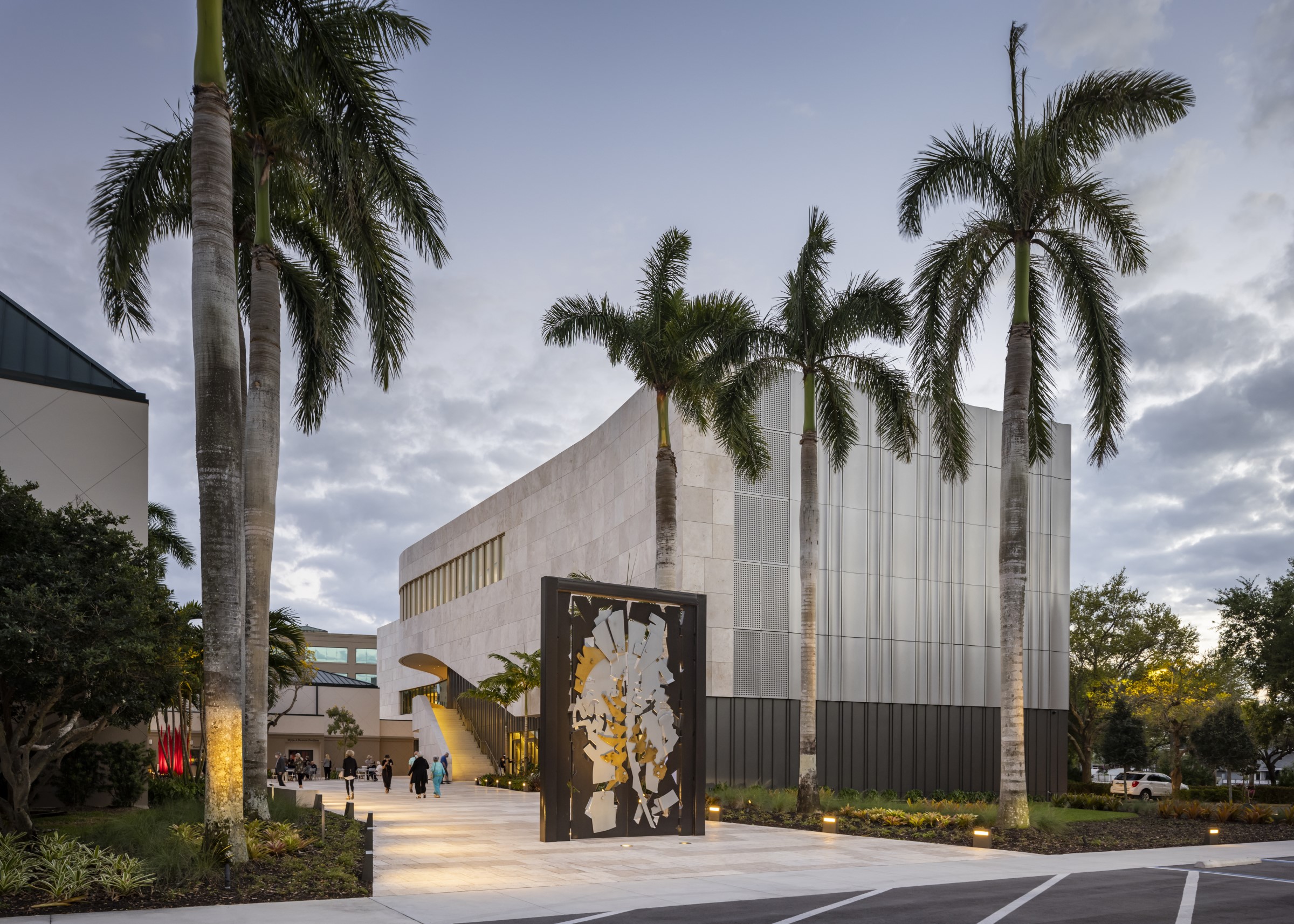
The Baker Museum in Naples, FL

The Sibrack Collection includes works by some of the most influential names in contemporary glass and ceramics, including Dale Chihuly, Judith Schaechter, Amber Cowan, Preston Singletary, Lucio Bubacco—and now, Michael Janis and Tim Tate. This collection spans nearly every major glass technique, from flame-worked to blown and cast, and reflects a deep appreciation for material, form, and light.

The Baker Museum’s decision to fully integrate these works into its broader holdings marks a continued shift in how museums value glass and ceramics—not as separate from fine art, but as essential parts of its story. For Janis and Tate, who have each spent decades advancing contemporary glass as a narrative and conceptual art form, this recognition is especially meaningful.

“Our work is about storytelling through material,” said Michael Janis. “Being included in a collection like this, which treats glass as a vehicle for meaning and not just decoration, affirms why we do what we do.”

Tim Tate added, “What the Sibracks have built is not just a personal collection—it’s a statement about the relevance and emotional range of glass today.”
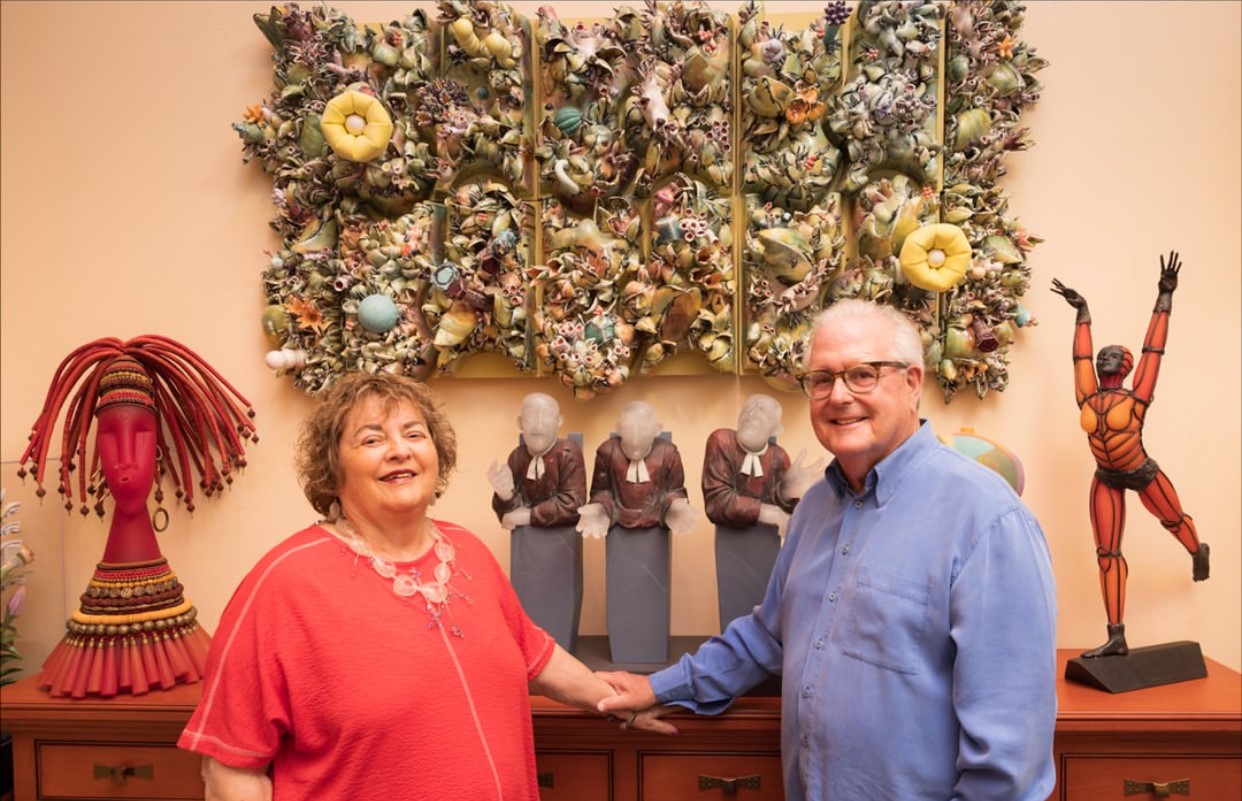
Rita and Dr Laurence Sibrak

The Sibracks, longtime supporters of Artis—Naples, were first inspired by a 2000 exhibition of Chihuly’s work at the museum. Their decision to make this donation stems from a long commitment to both the institution and the idea that art should be lived with, shared, and accessible to all.

This acquisition places the work of two DC-based artists into one of the most respected collections in the region, further establishing the impact of the Washington Glass School on the national stage. We’re proud to see Michael and Tim’s work recognized alongside such powerful voices in the field and grateful to the Sibracks and the Baker Museum for helping bring greater visibility to the language of glass.

The collection will be celebrated in the upcoming exhibition “The Passion of Collecting: Stories in Glass and Ceramics from the Sibrack Collection,” opening January 10, 2026 at The Baker Museum and remaining on view through the fall.

Following is a complete list of artists in the The Dr. Laurence and Rita Sibrack Collection of Contemporary Glass and Ceramics: Dean Allison, Adrian Arleo, Michael Behrens, Susan Beiner, Alex Bernstein, Charles Birbaum, Christina Bothwell, Peter Bremers, Emily Brock, Lucio Bubacco, Jim Budde, Nancy Callan, Dale Chihuly, A-Mi Choi, Amber Cowan, Dan Dailey, Stefen Dam, Laura Donefer, Michael Glancy, Peter Hora, Agnes Husz, Jannet Iskander, Martin Janecky, Michael Janis, William Kidd, Sabrina Knowles, Velarde Kukuli, K. William LeQuier, Dianne Martin Lublinski, Emma Luna, Robert Mickelsen, Shelley Muzylowski Allen, Harumi Nakashima, Sybelle Peretti, Lindsay Pichaske, Jenny Pohlman, Clyfford Rainey, David Regan, Colin Reid, Ross Richmond, George Rodriquez, Davide Salvadore, Judith Schaechter, Livio Seguso, Preston Singletary, Carmen Spera, Kristen Stingle, April Surgent, Matthew Szösz, Etsuko Tashimu, Tim Tate, Tip Toland, Margit Tóth, Hidenori Tsumori, Sam Tuffnell, Janusz Walentynowicz, Patti Warashina, Ann Wolff, Loretta Yang and Mary Ann Zynsky.

To learn more about the museum and the artists in the collection, visit artisnaples.org.

Reminder: Panel Discussion about Fulbright Program @ Pepco Edison Place Gallery

Today, Saturday, March 9

The Fulbright Program, now in its 65th year, has amassed an alumni body of almost 300,000 participants, representing nearly every nation of the world. The Program awards approximately 8,000 grants annually. Roughly 1,700 U.S. students, 4,000 foreign students, 1,200 U.S. scholars, and 900 visiting scholars receive awards, in addition to several hundred teachers and professionals. Approximately 318,000 “Fulbrighters” have participated in the Program since its inception in 1946.

Michael Janis Fulbright Scholar
WGS Fulbrighter Michael Janis
WGS Fulbrighter Tim Tate

Join us today, Saturday, March 9th as we discuss the “Fulbright Experience ” with a roundtable of Fulbright Scholars from area universities.

Details: Saturday, March 9th

Reception 12:00 – 1:00 pm

Panel Discussion 1:00 – 2:30 pm


The Fulbright roundtable discussion is part of the events that make up the International Glass and Clay 2013 exhibit held at the Pepco Edison Gallery at 702 Eighth Street, NW, Washington, DC. The show is organized by Artomatic and the DCCAH.

Congrats on Creative Cohesion Relaunch

>

Artists Phil Vickery and Roger Tye work in Creative Cohesion’s hotshop.

Last spring, Washington Glass School Co-Directors Michael Janis and Tim Tate were in the UK on their Fulbright assignment to the University of Sunderland and the National Glass Centre. The guys also held workshops at the City of Sunderland’s professional artist center “Creative Cohesion”.

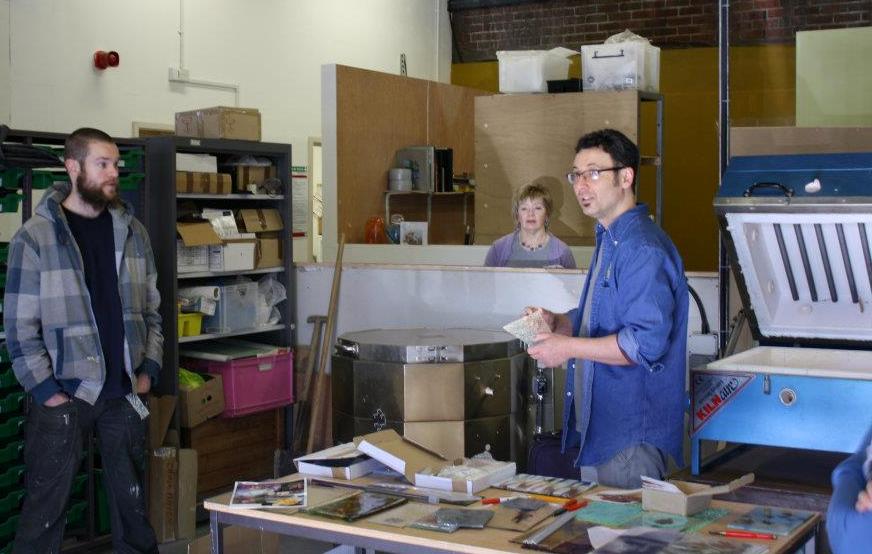
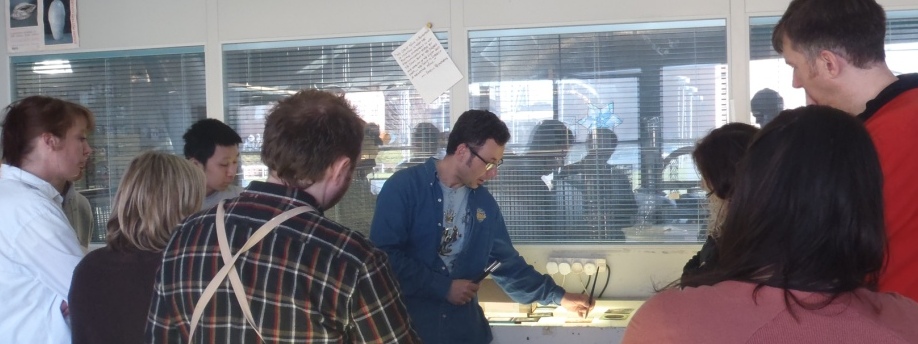
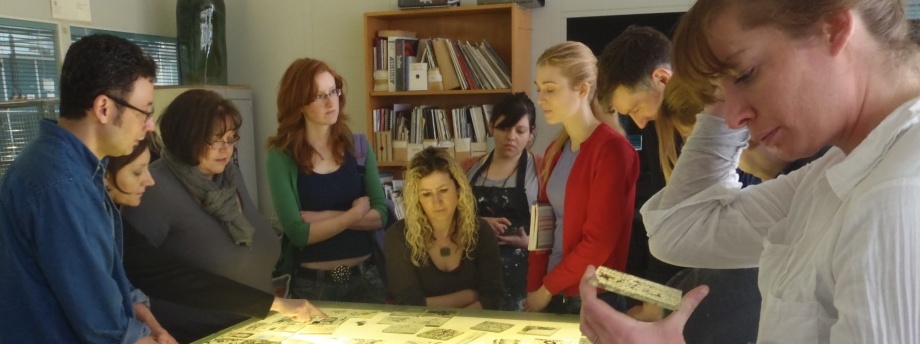
Fulbright Scholar Michael Janis introduces the Bullseye Roll-up technique to artists at Creative Cohesion.
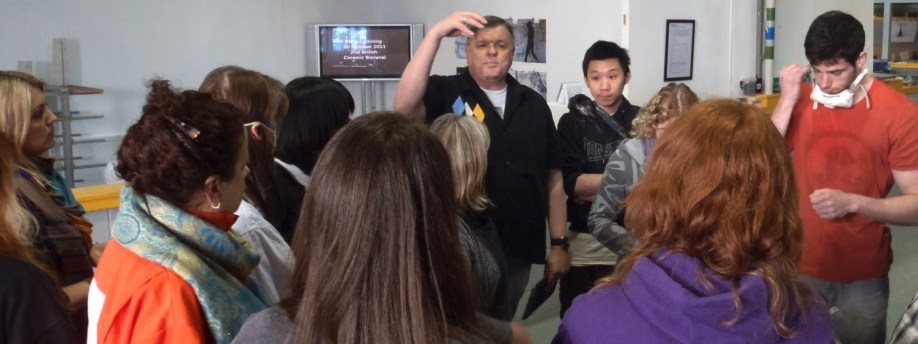
UK artists gather for a talk with Fulbright Scholar Tim Tate at the Cohesion Center in March.

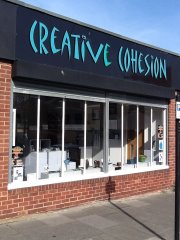
 Creative Cohesion is a center for creativity in Sunniside, Sunderland, providing not only studios for artists, but provision for community, arts and business activities, as well as a retail outlet for art. Creative Cohesion runs monthly workshops for professional creative practitioners and is home to graduates from the University of Sunderland who are recipients of the ‘Sunniside Graduate Scheme’.

The Creative Cohesion building was damaged by high winds that caused the adjacent building to collapse onto the center’s roof  in April . 

Last Spring, high winds caused their neighboring building to collapse onto the center’s roof, resulting in a lot of damage. After months of disruption for the non-profit center and its tenants as the repair work was implemented, they are happy to be finally back in full working order, and are holding a Relaunch of the Center on Oct 18!

Artist Frank Styles was commissioned to create the visual graphics on the center’s exterior shutters.

Their celebrations continue in welcoming new tenants, a new logo for the center, the launch of their new website and completion of the center’s shutter artwork by graffiti artist Frank Styles.

There will be happy faces all round on the opening launch day with the building’s face lift, the opening of a new exhibition titled ‘Reconnection’ and entertainment with local glass blowers having a play day in the glass hotshop.

Congratulations to Creative Cohesion on making Sunderland a hotbed of creativity again!

Click HERE to jump Creative Cohesion’s website.

Glass Art Magazine features Fulbright Scholars Michael Janis & Tim Tate’s UK Assignment

>

The recent issue of Glass Art Magazine features all of the Washington Glass School’s co- directors in the latest issue and online. 

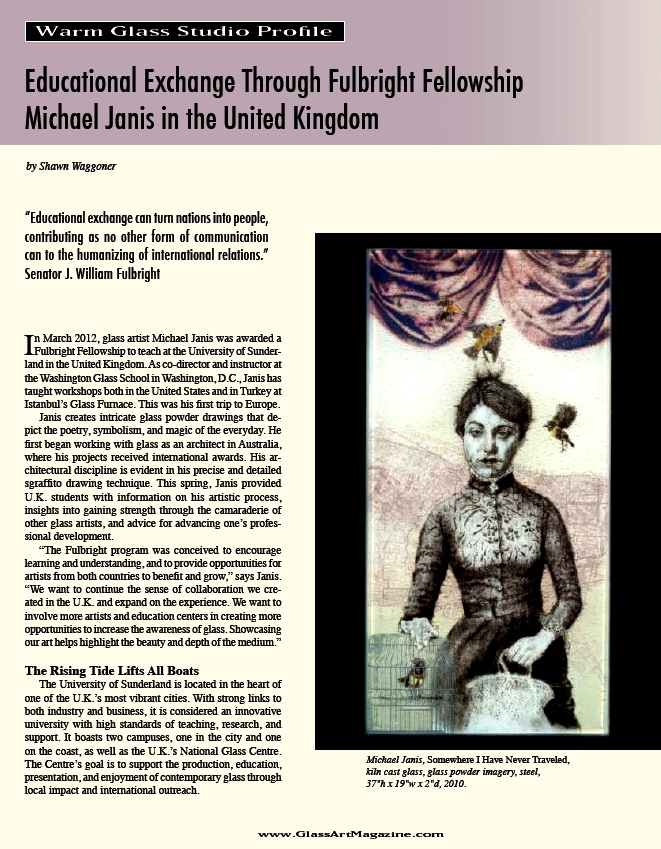
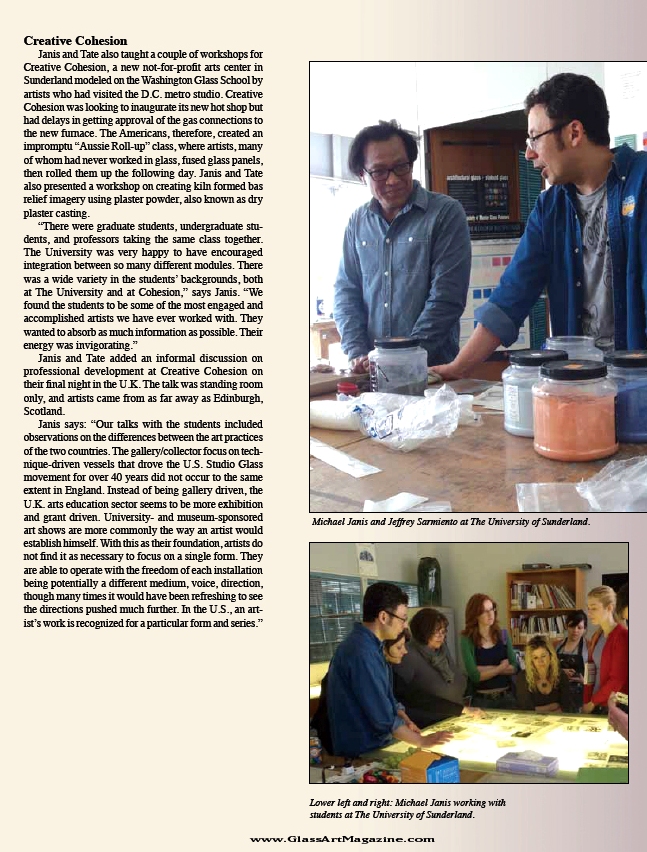
Michael Janis’ work on the cover and his profile as the centerfold story, and the same issue also features Erwin Timmers work across a five page story on his work in ecologically sustainable artwork. The magazine’s online website now features a new story on Michael and Tim Tate’s work as Fulbright Scholars in England, while at the University of Sunderland, the National Glass Centre, the London AAF, and Creative Cohesion studios. 

The article has a great synopsis of the differences between the US & UK approach to the artistic medium of glass and also has some photos of Jeffrey Sarmiento joining Michael’s sgraffito class. Click HERE to jump to Glass Art Magazine’s downloadable pdf of the article.

The Fulbright program has announced its new awards – have a read!

The Fulbright Commission US Scholar Awards for 2013-14 are now open. The US Scholar Awards offer US academics and professionals the chance to undertake research and/or teaching at any accredited UK higher education institution. Opportunities are available for college and university faculty as well as for professionals, artists, journalists, scientists, lawyers, independent scholars and many others. As well as an All-disciplines award they also have specific partner awards. 

If you in going to a UK university through the Fulbright programme to contribute to research and/or teaching then please take a look at the awards on offer – or if you know of any US scholars or professionals that would be interested then pass this information on to them.

Fulbright Awards offer generous financial support for academic projects in the UK. Additionally, Fulbright scholars in the UK are invited to participate in a wide range of events, and benefit from a variety of additional opportunities and support provided by the Fulbright Commission. Fulbright scholars also benefit from an extensive range of alumni and global networking opportunities after their exchange.

The application deadline is Wednesday, August 1, 2012. For eligibility requirements and detailed award descriptions please consult our webpages: http://www.fulbright.org.uk/fulbright-awards/exchanges-to-the-uk/scholars-and-professionals/all-disciplines-scholar-awards

Tim Tate on the Telly!

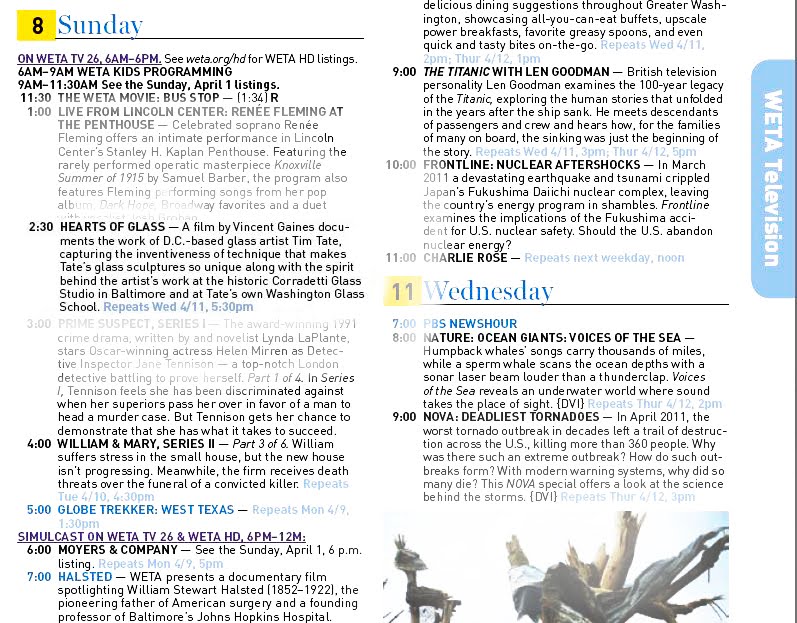
>This Sunday – April 8, 2012, public television WETA TV (channel 26) will broadcast Vincent Gaines’ documentary on the work and motivations of our superstar Professor Tim Tate – just returned from his successful Fulbright assignment in the UK. The film is “Hearts of Glass” and it is scheduled to air at 2:30 pm on Sunday, and again Wednesday, April 11, 2012 at 5:30 pm. Get those TiVos set!

Fulbright Scholars Janis & Tate Final Report

>Final Report by Michael Janis and Tim Tate regarding their Fulbright Specialist Program at the University Of Sunderland and the National Glass Center.

The bonds that were forged years ago when The City of Washington & Washington Glass School hosted the UK artists from Cohesion Glass Network art Artomatic’s Glass 3 event in Georgetown have been strengthened. Our connection with Washington, DC’s UK Sister City, Sunderland, the National Glass Center and the University of Sunderland; will continue throughout our careers. While our mission as Fulbright Scholars was to impart information, we leave having learned many lessons.

Our time in England began with presentations of our artwork and discussions of on new directions the glass world was embracing, such as Glass Secessionism, where artists are looking to move from the aesthetic of pure technique, materials and process and are advancing glass as a medium of sculptural expression in the narrative realm. The participants in the audiences came from the student body of the University as well as working artists from Sunderland, Newcastle, even as far away as Edinburgh, Scotland. The audience stayed long after the talk, and topics from the discussion continued to come up during our entire Fulbright program stay (and indeed, afterwards via the internet) showing the strong relevance of the concepts.

We created workshops for both the National Glass Center and Sunderland’s Creative Cohesion studio; the city’s artist incubator (that, in fact, used the Washington Glass School as its educational and business model). The City of Sunderland invited us to speak with students at a local secondary school during our stay, where we talked about careers in art. We also worked with the Leaders of the University’s Glass and Ceramics program and outlined methods we could extend the cooperative agreement that exists between Sunderland and Washington, DC.

The British tertiary arts education system is different from the US university model. Their MA program blends an MFA and BFA into a very concentrated program. The amount of expertise, materials and techniques they make available to students seems staggering. Sunderland’s may be the finest glass program in the world. With the National Glass Center, the physical space alone dwarfs any facility in the US (or even if one combined the arts centers of Pilchuck, Penland, Corning into one place). The University of Sunderland also offer a doctorate in glass, which is similar to an MFA, though the focus is research, as this is one of the primary methods for the University to receive funds. At the end of a student’s time at Sunderland University, they have a much broader base of knowledge regarding glass and its parameters. In many ways the educational system in the UK is ahead of the US, especially in how they treat glass sculpturally.

Our talks with the students included observations on the differences between the art practices of the two countries. The gallery/collector focus on technique driven vessels that drove the US Studio Glass Movement for over 40 years did not occur to the same extent in England. Instead of being gallery driven, the UK arts education sector seems to be more exhibition and grant driven. University and museum -sponsored art shows are more common as the way an artist would establish themselves. With this as their foundation, artists do not find it as necessary to focus on a single form. They are able operate with the freedom of each installation being potentially a different medium, voice, direction (though many times I would have liked to see the directions pushed much further.) In the US, with the galleries / collector based system, there exists the perception that an artist’s work be recognized for a particular form and for the work be within a series format.

The courses we held at the University included a mix of graduate and undergraduate students, and the workshops allowed and encouraged students working in different modules to interact. We found the students of the University to be some of the most engaged and accomplished students we have ever worked with. They wanted to absorb as much information as possible. Their energy was refreshing, and we added another workshop and added one talk more into the schedule.

Our final discussion was on Artist Covenant’s and how artists can create a network using social media as a way to support each other as a group. This informal talk was packed, standing room only. The artists were voracious in seeking advice on how to get their work seen and recognized. We hope we have helped energize them and perhaps rally them to work together towards their common good. The interest and respect we received from the students was over-whelming. Many of the artists have connected to us online.

We would like to thank all those who made this academic interaction possible: The Fulbright Commission, the Council for International Exchange of Scholars (CIES), The University of Sunderland and the National Glass Center, The City of Sunderland and Creative Cohesion. Each in their own way has made our visit into a life changing experience.

Our mission is to now to reflect and contemplate on not only what we have achieved, but to think of ways on how best to extend our hand and continue our symbiotic and synergistic relationship so that it will not only survive but thrive.

Lets all bridge the Atlantic for many more decades.

Tim Tate & Michael Janis , Co-Directors, Washington Glass School